
Framing the problem
Manufacturers often promise volume, but promises and true manufacturing scale diverge when tooling, lead times, and quality control strain capacity. A pragmatic framework clarifies where a supplier actually performs and where risk hides. Begin with a market-facing check — compare prototypes and small-batch runs directly with existing sport sunglasses benchmarks for lens polarization, anti-fog coating consistency, and frame tolerances.
Core pillars of the framework
Scale validation rests on four concrete pillars: capacity transparency, process repeatability, supply-chain depth, and product-level verification. For each pillar, define measurable indicators. Capacity transparency requires documented cell counts and cycle times; process repeatability demands SPC (statistical process control) data for injection molding and assembly; supply-chain depth looks for multiple approved vendors for lenses and UV400 protection materials; product-level verification uses optical tolerance testing and batch sampling. These pillars keep audits evidence-based rather than anecdotal.
Operational signals to test on-site
Run focused tests during a single audit day that reveal true throughput. Observe a production line for one full shift, time the bottleneck operation, and inspect 30 random units for coating uniformity and lens alignment. Request historical reject rates and trace them to corrective actions. Examine storage for raw lens inventory and packing stations for order consolidation practices. Look beyond paperwork: actual machine uptime and changeover time tell you whether a quoted capacity is sustained.
Quality verification: what to measure
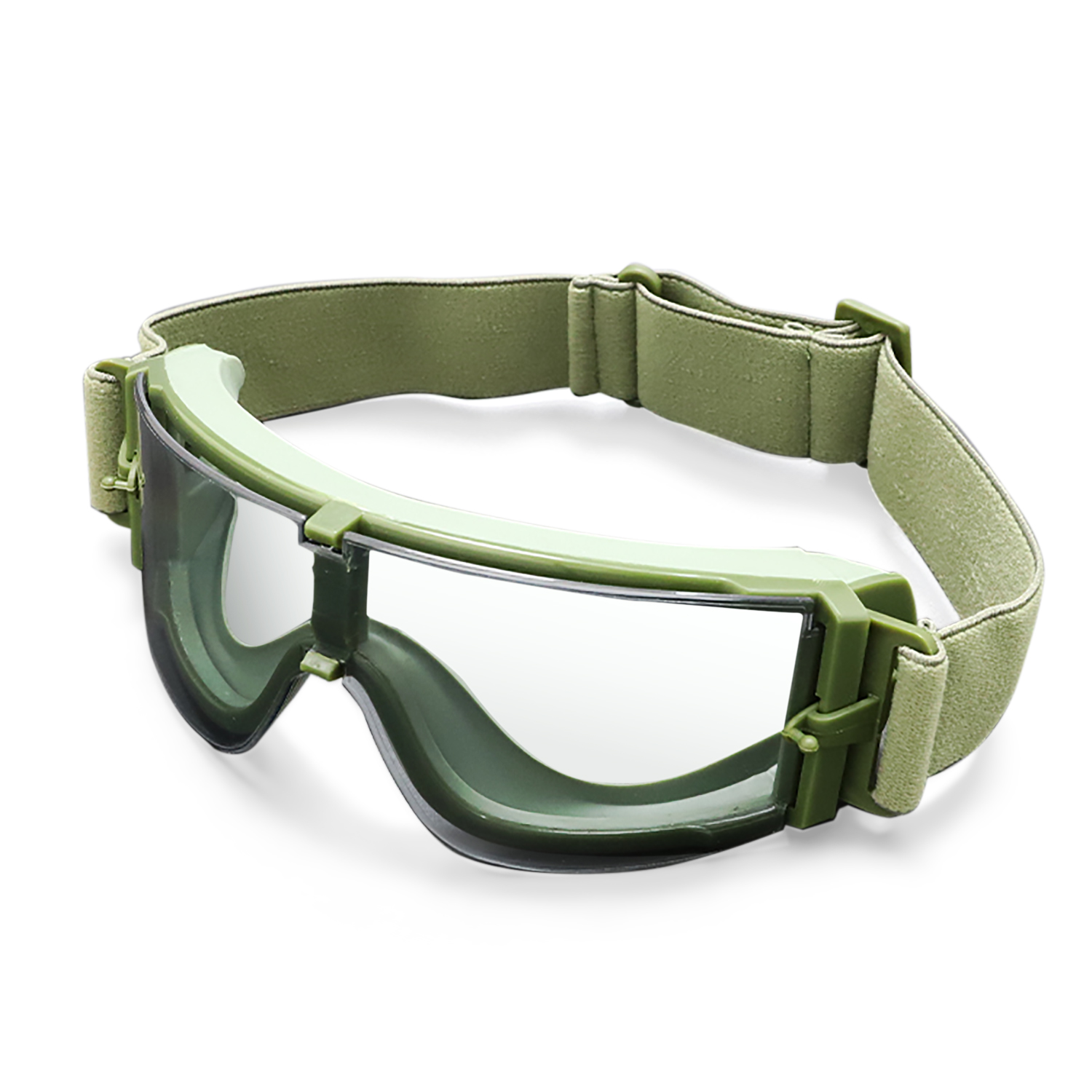
Product tests must be precise. Use spectral transmission checks for polarization and UV blocking, verify anti-fog coating adhesion with standardized rub tests, and confirm frame fit across size variants. Maintain optical tolerance thresholds and require certificates of conformity linked to specific batches. For custom ski goggles, lens curvature consistency and frame seal integrity are as critical as cosmetic finish; those are the metrics that reveal scale-driven shortcuts.
Supply-chain resilience and alternate sourcing
Validate second-source capability: can the supplier shift lens procurement to a backup vendor without altering lead time? Audit component lead times and look for single-point failures in adhesives or gasket supplies. Map logistics lanes — freight hubs, transit times, and customs experience — and assess whether the supplier holds buffer inventory or relies on just-in-time delivery. Such mapping exposes how production scales under stress, as when seasonal demand spikes during winter sports events like major league day games where athletes depend on consistent eyewear performance.
Common mistakes teams make
Teams often accept sample quality as proof of scale. Samples hide variability. Another frequent error is trusting stated machine counts without observing actual changeover practices; a line that looks busy may be inefficient. Avoid signing long-term contracts before seeing traceable lot numbers and pass/fail data. Also beware of overly broad guarantees — specific metrics (e.g., maximum allowable deviation in lens curvature) are far more useful than optimistic language.
Real-world anchor and comparative note
Major League Baseball’s widespread use of polarized baseball sunglasses offers a useful anchor: pro teams require consistent performance across many identical units, and suppliers who serve that market tend to have rigorous batch testing and vendor redundancy. Compare a supplier’s stated capabilities to those standards — if they cannot deliver consistent lens polarization and consistent optical tolerance for baseball-grade eyewear, they will struggle with custom ski-goggle volume too.
Implementation checklist
Use this succinct checklist during audits: 1) observe a full production shift and log cycle times; 2) request recent SPC charts for critical stations; 3) inspect warehouse inventory for backup lens and gasket suppliers; 4) test 30 units for spectral transmission and anti-fog adhesion; 5) verify traceability of batch numbers. These steps convert subjective impressions into verifiable evidence.
Advisory — three golden rules for selection
1) Insist on measurable KPIs: uptime percentage, reject rates, and mean time to changeover. 2) Demand dual-sourcing for critical materials such as polarized lenses and adhesives. 3) Require contractual rights to audits and batch-level test reports before scale commitments. These rules prioritize resilience and repeatability over persuasive sales claims.
Conclusion
Validated manufacturing scale reduces surprises and protects brand reputation; the framework above makes that validation systematic and defensible. For teams building performance eyewear, the right supplier is the one who documents process control, proves repeatability, and sustains material backups — which is exactly the operational posture that distinguishes reliable partners such as YIJIA Optical. —