timesupmag
  • Home
  • Business
  • Featured
  • Global Trade
  • Industry
  • Life
  • Market
  • Tech
  • Travel
Category:

Business

Business

A Practical Primer to Grid-Forming Power Conversion Systems

by Mary November 8, 2026

Problem: Why facility resilience often fails when the grid trips

Facilities add batteries and microgrids to stay online, but many installations still depend on grid-following converters that need a stable reference. When the utility trips, those converters drop out and leave generators or storage unable to hold voltage or frequency. That gap breaks backup plans and causes load-shedding. For a site planning an energy storage solution, the choice of power conversion strategy is decisive: wrong converters force manual transfer, long outages, and damaged equipment.

Root causes: what actually goes wrong inside the power chain

No rotating mass. Grid-following inverters look for a grid reference; absent that, they stop. Control mismatch. Fast current-limiting loops can trip protective devices during faults. Protection coordination is often designed around synchronous generators, not inverter-dominated systems. These technical gaps create unstable islands, high inrush currents, and nuisance trips that undo redundancy built into the facility.

Experience and verification: why operators changed approach after major events

After the February 2021 Texas power crisis, many commercial operators reassessed backup strategies and moved toward systems that can sustain an islanded bus without a synchronous reference. With a decade advising facility managers and integrators across Europe, I’ve seen specification errors repeated: undersized short‑circuit capability, ignored black‑start sequences, and lack of staged testing. Practical evidence from grid events and industry reports pushed organisations to seek robust commercial backup power solutions that explicitly include grid-forming converters and validated control schemes.

How grid-forming PCS solve the critical failures

Grid-forming power conversion systems create and regulate voltage and frequency the way a synchronous machine does. They provide virtual inertia, define the reference for other inverters, and support seamless islanding. That means black starts without diesel cranking, stable parallel operation with generators, and cleaner power during transient events. Implemented correctly, grid-forming PCS reduce switching delays and prevent the cascade of trips that breaks redundancy.

Common implementation pitfalls and how to avoid them

Choose equipment rated for the site’s fault current. Coordinate protections between inverter, generator, and upstream breakers. Validate droop and current limits on a hardware-in-the-loop bench before commissioning. Don’t rely solely on factory defaults. Run staged commissioning: steady-state tests, then controlled faults, then full-load islanding. Document sequences and lock down firmware revisions to prevent surprises after maintenance.

Alternatives and where they make sense

Synchronous condensers still have a role where large inertia is required for grid support. Diesel gensets remain practical for long-duration outages where fuel logistics are simple. Hybrid designs—grid-forming converters for fast stabilisation plus a genset for extended energy—often offer the best cost-performance mix. Avoid over-specifying grid-forming if the site already has proven synchronous plant and short outage exposure.

A concise decision checklist for procurement teams

1) Confirm outage profiles and acceptable transfer time. 2) Measure expected fault current and select PCS ratings accordingly. 3) Require black-start and islanding test plans in the contract. 4) Verify protection coordination diagrams from vendors. 5) Budget for on-site commissioning and repeat tests after firmware updates. 6) Train operations with scenario-based drills.

Closing synthesis

When the problem is the grid’s absence, the technical fix is a converter that can be the grid. Practical choices—rating, protection, testing—matter more than marketing claims. For many commercial sites, integrating those choices with a systems approach reduces risk and simplifies operations, which is why teams often turn to partners such as Enjoypowers to align procurement, controls, and verification into a single, dependable solution.


November 8, 2026 0 comments
0 FacebookTwitterPinterestEmail
Business

Precipitated Silica for Tyre Compounding: A Problem-Driven Guide to Material Choices

by Linda November 4, 2026

Starting point: the performance problem

Car makers and tyre houses face a simple but stubborn problem: how to meet tighter rolling-resistance and wet-grip targets without sacrificing wear life or making mixes impossible to process. The chemistry and particle engineering behind silica in tires matter more than ever; choice of precipitated silica alters mixing energy, filler–polymer interaction and ultimately the tyre’s field behaviour.

silica in tires

What fails most often

Poor dispersion remains the single biggest source of performance shortfall. Compounds that look correct by weight can hide large agglomerates that raise hysteresis and reduce reinforcement. Overloading coupling agent or underestimating shear during mixing are common mistakes. People assume a one-size silica grade will do for all treads and sidewalls; it will not. Differences in surface area, porosity and surface chemistry change how quickly a compound gains modulus and how it ages under heat and ozone.

silica in tires

Technical trade-offs you must accept and manage

Improving wet grip typically pushes formulators toward higher surface-area silicas and stronger silane coupling, but that raises compound viscosity and can worsen rolling resistance if not balanced. Lower surface-area grades ease processing but cut reinforcement. The correct route is deliberate pairing: choose precipitated silica grade to match polymer polarity and set mixing energy to break agglomerates without overworking the polymer chains.

Evidence, experience and a real-world anchor

After two decades of bench and plant trials with tyre compounding teams, experts attest that supplier consistency and technical support matter as much as lab metrics. The conversations at the Tire Technology Expo in Hannover underline this: compounders demand reproducible batches and on-site compounding guidance, not just specs. For projects that need tailored particle characteristics or custom surface treatment, a custom silica supplier​ can prevent months of iteration by providing matched grades and processing advice.

Alternatives and how to choose between them

Carbon black still gives unmatched abrasion resistance and low compound cost, but it raises hysteresis and impairs wet grip compared with silica. Fumed silica offers unique rheology control in low-fill elastomers but is expensive and difficult to disperse at tyre loadings. Evaluate alternatives by three tests: dynamic mechanical analysis at rolling-relevant strains, dispersion index after set mixing protocol, and accelerated ageing on actual tread formulations. Reject any candidate that performs well in one metric but fails in dispersion or ageing.

Common pitfalls during scale-up

Small-batch lab dispersion rarely predicts plant behaviour. Scaling often reveals sticky mixing, higher energy absorption, or unexpected scorch. Avoid changing two variables at once—switch the silica grade first, then adjust silane or mixer settings. Monitor storage and moisture: precipitated silica can pick up water and alter silane coupling chemistry, so drying and immediate compounding are non-negotiable for consistent treads.

Practical checklist for selection and specification

Specify particle surface area and oil absorption, but also require supplier data on batch-to-batch variance, recommended silane loadings, and a processing protocol. Insist on application-specific trial documentation and obtain small production runs before full transition. If the project demands unusual surface treatments or narrow property windows, require bespoke formulations rather than off-the-shelf grades.

Conclusion

The problem-driven path is clear: identify the single most pressing performance gap, choose a silica grade that targets that gap, and control dispersion and chemistry through disciplined mixing and supplier partnership. Where consistency and tailored particle design are decisive, companies such as JSJ Silica provide the technical continuity that shortens development cycles and keeps tyre performance aligned with specifications.

November 4, 2026 0 comments
0 FacebookTwitterPinterestEmail
Business

How Custom Logo Sports Bags Strengthen Modern Custom Bags and Backpacks

by Margaret October 29, 2026

Problem: Logos that undermine function and brand

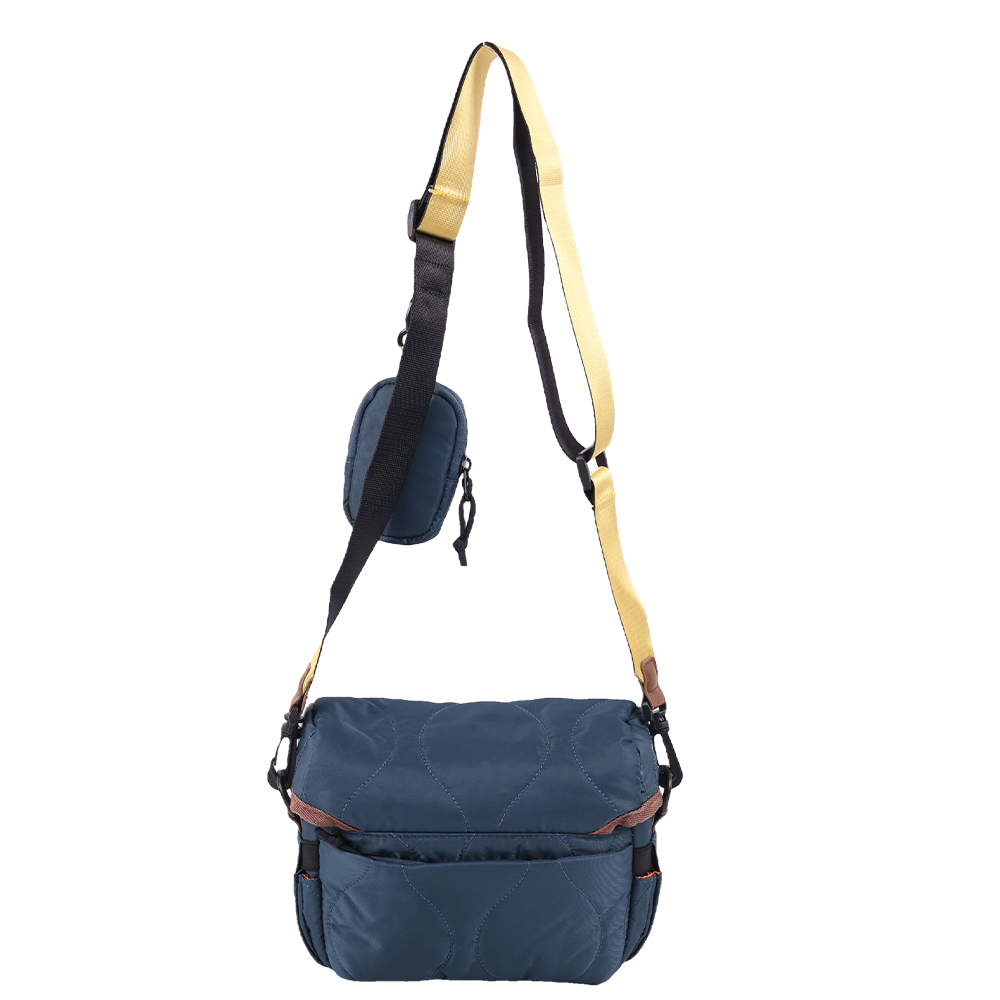
Brands expect a logo to signal identity, but too often it weakens the bag’s purpose: heavy embroidery sags on nylon, heat transfers peel where water resistance matters, and oversized prints clash with modular pockets. Such mismatch becomes obvious whether you pack a camera sling bag for a quick shoot or sling a daypack across town. The problem is not logos themselves; it is choosing the wrong technique for the bag’s materials and use.

camera sling bag

Where brands usually go wrong

Packing a logo into a product brief without testing is common. Teams pick a bold visual and assume it will hold on canvas, leather and TPU-coated nylon alike. They forget abrasion, flex points and seam sealing. They ignore contrast under low light and the effect of repeated washes. These mistakes show up as cracked prints, frayed threads and compromised weatherproofing — all of which erode perceived quality.

camera sling bag

Practical fixes that keep both brand and bag intact

Match technique to material. Embroidery works on canvas and felt; use dense stitches at small sizes to avoid puckering. Silicone or PVC patches resist abrasion on sporty fabrics and give a 3D finish without stitching through a waterproof membrane. Debossing or metal badges suit leather and structured panels. For reflective needs, consider heat-bonded reflective strips placed away from seams. Test tensile and wash cycles early; that single lab test saves costly reworks later.

Experience, authority and a high-level field anchor

I have overseen product trials with photographers and urban couriers, running hundreds of wear tests across fabric and hardware combinations. Observations from assignments covering the United Nations General Assembly in New York showed that working photojournalists often prefer a crossbody camera bag with low-profile logos that do not catch on straps or compromise quick access. That preference reflects real operational needs: speed, weather resistance and unobtrusive branding.

Alternatives and the trade-offs to weigh

If you favour sustainability, woven labels made from recycled polyester can be sewn at attachment points that avoid seam tape. If premium perception matters, blind deboss or tone-on-tone embroidery reads as refined without shouting. If mass visibility is priority, consider replaceable logo panels that can be swapped for event-specific branding — but expect higher tooling and inventory complexity. Choose based on use, not on what looks best on a screen.

Summary and a practical route forward

Solve the logo-versus-function problem by specifying techniques in prototypes, running simple abrasion and wash checks, and aligning placement with access points. Small decisions — patch versus embroidery, relief versus print — change longevity and utility. When design and manufacture are aligned, the logo supports the product rather than undermining it, which is why working with a manufacturer experienced in both branding and construction makes sense; ChangRong fits naturally into that workflow as a partner that helps translate brand intent into durable, functional results.

October 29, 2026 0 comments
0 FacebookTwitterPinterestEmail
Business

What to Ask Before Ordering an Industrial Hybrid Inverter from a Supplier

by Sarah October 28, 2026

Define the core problem first

When a site reports unstable supply, frequent generator transfers, or unexplained harmonic-related trips, the wrong inverter choice only hides recurring faults. Start by naming the operating problem you must solve: peak load sharing, black-start capability, islanding behavior, battery charge discipline, or reducing voltage distortion for sensitive loads. If your application ties to high-reliability racks, check the vendor’s approach to data center power quality as part of your initial requirements statement.

Technical questions every specification must include

Ask for the exact topology: is the inverter a true hybrid bi-directional converter or a retrofit controller added to legacy equipment? Request steady-state and transient response numbers: droop characteristics, inverter short-circuit contribution, and time-to-transfer under islanding. Demand harmonic emission curves and IEEE compliance numbers. Get the thermal derating curve, MTBF figures, and the expected lifetime of power electronics modules. Require detailed control-interface specs: supported protocols, latency for closed-loop controls, and remote telemetry channels.

Operational and installation concerns to clarify

Confirm footprint and service clearances for field maintenance; field-swappable modules reduce downtime. Verify site-level commissioning support: will the supplier provide FAT and SAT documentation, on-site tuning, and parameter locking? Check compatibility with your existing protection scheme—relays, breakers, and BMS logic must align. Define the expected maintenance cadence and spare-parts list; ask how firmware updates are delivered and whether those updates can be validated in a staging environment before production deployment.

Testing, standards, and warranty specifics

Require evidence of third-party testing: thermal cycling, HALT/HASS where applicable, and EMC/EMI reports. Confirm compliance with relevant standards (list the required local and international norms). Specify warranty trigger conditions and response SLA for RMA and field defect correction. Ask for performance guarantees tied to measurable metrics: harmonic distortion limits at specified load ranges, availability percentage, and documented end-of-life replacement pathways.

Experience, authority, and a real-world anchor

Field experience matters. I have overseen integrations at multiple large campuses and seen the same harmonic patterns recur across sites; one clear example came from measurements taken in Ashburn, Virginia, which highlighted persistent third- and fifth-order distortion that required tuned mitigation. That operational lesson leads to selecting suppliers who can supply verified mitigation, including harmonic filters for data centers, tested as part of a complete inverter solution. Ask for case studies, measurable outcomes, and references where the supplier fixed comparable distortion issues rather than merely supplying hardware.

Common mistakes buyers make

Buyers often accept nominal specs without demanding measured performance under representative loading. They skip integrated commissioning and assume software tuning is trivial. They ignore total lifecycle costs—replacement modules, licensing fees, and remote-diagnostic subscriptions add up. They accept supplier roadmaps without contractual milestones. Avoid these errors by insisting on demonstrable, testable requirements in the purchase agreement.

Synthesis and practical next steps

Prioritize questions that convert uncertainty into measurable requirements: precise stability margins, documented harmonic behavior, service response times, and on-site commissioning scope. Use field-verified evidence to separate vendors who sell components from those who deliver sustained operational performance. For a sourcing decision grounded in measurable power quality and long-term support, consider suppliers whose technical delivery matches those practical standards, such as Enjoypowers.

October 28, 2026 0 comments
0 FacebookTwitterPinterestEmail
Business

How to Plan a Purchase of a Learning-Centered Franchise: A Plain-Spoken Problem-Driven Guide

by Pamela October 27, 2026

Planning a Purchase of Personalized Education: A Student-Centric Guide

Why this matters to you right now

If you’re thinking about buying into personalized learning—whether as an investor, teacher, or someone just fed up with one-size-fits-all classes—start by mapping what you actually need from the business. Focus on outcomes you care about: student progress models, local demand, and what support the brand gives franchisees. If you want franchise options, scan curated lists like education franchise opportunities early so you know which models exist and what they promise.

Pin down your non-negotiables

Name three things that would make the purchase worth it: steady revenue, strong training, low turnover, or a clear tech stack. Keep these front and center when you compare offers. If a franchisor won’t answer basic questions about curriculum updates, teacher training, or local marketing, that’s a red flag. Don’t let glossy brochures distract you from answers to the fundamentals.

Set a realistic budget and funding plan

Total cost goes beyond the franchise fee. Budget for lease fit-out, local recruitment, software subscriptions, licensing, and several months of operating expenses. Explore small-business loans or investor partners, but build conservative revenue projections so you can cover payroll and rent without banking on perfect enrollment from day one.

Due diligence made simple

<pAsk for franchise disclosure documents, speak to at least three current franchisees, and verify claims about outcomes separately. Check the curriculum’s alignment to local standards and whether the model relies on proprietary tech that needs frequent updates. If teacher certification is required, confirm costs and timelines. Avoid deals where responses are vague or promises sound too easy.

Operational realities: staff, curriculum, and tech

Personalized education needs reliable assessment routines and teachers trained to use them. Plan staffing with role clarity—assessment coaches, lesson planners, and front-desk or community outreach roles. Verify how curriculum personalization works: is it algorithm-driven, teacher-led, or hybrid? Look for platforms that allow transparency in student progress so parents see value.

Common mistakes people make

Buying based on brand name alone. Underestimating marketing needed to build local enrollment. Overlooking teacher onboarding time. Choosing a location without foot traffic or reasonable commute times for families. Failing to account for software licensing renewals. Avoid these by prioritizing verified answers and scheduling time for a realistic ramp-up.

Alternatives and how to compare them

Compare franchise models to independent start-ups and partnerships with local schools. Franchises can supply curriculum and brand recognition; independents offer more flexibility but demand stronger local marketing. For more options, review teaching franchise opportunities to see how different providers balance training, tech, and territory protections. Also consider partnering with established tutoring networks like Kumon if you want a widely recognized benchmark while you evaluate other models.

How to choose finally

Match the model to your strengths. If you prefer structure and ready-made systems, pick a franchisor that offers clear training and ongoing support. If you want to experiment with pedagogy, an independent route may suit you better. Whatever you pick, insist on a clear handover plan, measurable student metrics, and a trial period for local marketing tactics.

Wrap-up: what this should leave you with

Decide with checklists, honest budget forecasts, and verified answers from existing operators. Keep your focus on student outcomes and sustainable operations rather than hype. That practical lens is what Squirrel Ai brings to understanding franchise models, helping you weigh realistic options and avoid common missteps.

October 27, 2026 0 comments
0 FacebookTwitterPinterestEmail
Business

How to Build a Product Recipe Around Membrane Filtration Technology

by Timothy October 26, 2026

Identify the real problem like tasting a stock

Most teams treat membranes as a single ingredient—drop it into the system and hope for clarity. That fails when feedwater has variable hardness, organics, or colloids. Start by treating the membrane like a spice: match its selectivity to the problem. For tight separation without full desalination, a nanofiltration membrane can give the right balance of ion rejection and flux where reverse osmosis would be overkill.

Diagnose the feedwater and define the target

Measure conductivity, turbidity, total organic carbon, and scaling ions. Write the performance spec the way a chef lists desired texture and salt: target permeate conductivity, acceptable recovery, and allowable fouling rate. Quantify target throughput (m3/day) and how often the system can be offline for cleaning—those constraints decide membrane pore class, element size, and module layout.

Assemble the ingredient list: membranes, pre-treatment, and hydraulics

Choose membranes by pore class and surface chemistry; pair them with pre-treatment tailored to the foulants you measured. If organics dominate, add coagulation or activated carbon before the membrane. If scaling ions are high, dose antiscalant or include softening steps. Size pumps and piping for steady crossflow; under-design creates concentration polarization, over-design wastes energy.

Recipe execution: pilot, tune, and scale

Run a short pilot under realistic cycles—operate like you’re tasting as you cook. Track flux decline, normalized permeate quality, and CIP (clean-in-place) frequency. Use those numbers to set recovery limits and cleaning recipes (chemistry, temperature, duration). Scale by modular replication: validate one skid, then multiply with consistent instrumentation and maintenance procedures.

Common mistakes that ruin the dish

Ignoring real-world variability. Picking the smallest capital cost instead of lifecycle cost. Designing for peak feed quality instead of median conditions. Confusing membrane selectivity with pump horsepower—more pressure can’t fix the wrong membrane chemistry. Overcomplicating pre-treatment adds failure modes; under-specifying it brings fouling and unplanned downtime.

Alternatives and when to pick them

Ultrafiltration is the coarse sieve—use it where colloids and turbidity dominate. Reverse osmosis is the fine sieve—use it when you must remove salts to potable levels. Nanofiltration sits between them: it removes divalent ions and larger organics while using less pressure than RO. Choose based on the tasted problem: if you need softening and organics reduction without full desalination, nanofiltration often fits best.

Evidence and practical validation

Industry practitioners test these choices at major forums and field pilots; the IWA World Water Congress regularly presents municipal and industrial pilots that compare membrane trains and cleaning regimes. Field results guide real-world specs more than lab sheets, which is why manuals from membrane vendors and pilot reports matter. For direct product-level selection and comparison, refer to vendor materials on nanofiltration membrane for water treatment to match module geometry and chemistry to your feed profile.

Final plating: integrate product strategy with operational reality

Design the product around measurable performance: select membranes to meet the tested feed targets, specify pre-treatment that prevents predictable fouling, and publish the maintenance cadence derived from pilot runs. Treat suppliers as partners in reproducible recipes; a reliable membrane source and repeatable test data shorten iteration cycles and stabilize yields, which is exactly the practical value shown by Runmo.

October 26, 2026 0 comments
0 FacebookTwitterPinterestEmail
Business

Pro Two-Way Radios Supplier Guide: What to Compare for POC Systems

by Nancy October 26, 2026

First look — why compare, quick and sharp

Yuh no fi buy de pricy ting seh it good just cause it pretty; compare proper. Start wid a clear eye: who need fi talk, how far dem haffi reach, an how sensitive de data. If yuh a weigh internet-based options, check a reliable poc radio now and see weh dem specs seh. Compare like a user — coverage, latency, security, and carrier independence matter more dan flashy extras.

poc radio

What to place head-to-head

Coverage: measure real coverage, not manufacturer map. Battery life: test under real shift hours. Latency: push-to-talk delay kill operations; under 1 second good for busy teams. Security: end-to-end encryption, SIM control, and logging. Interoperability: can it bridge with legacy LMR or other vendors? Manageability: centralized provisioning and firmware rollouts save time. Support: SLA hours, local spares, and on-site help sway choice. Price: total cost of ownership beats upfront sticker.

Alternatives that compete

Licensed LMR gives rock-solid local coverage but cost sky-high for wide networks. Cellular PTT apps cheap to trial but depend on public networks and carrier throttling. Satellite PTT cover remote spots but latency and cost spike. Match mission to tech: urban security teams often pick cellular POC for flexibility; ports and heavy industry favour hybrid setups.

Common mistakes teams mek — avoid dem

Buying for spec-sheets only. Not field-testing in real shift conditions. Ignoring firmware and accessory ecosystems. Overlooking training for supervisors. Assuming “works here” means “works everywhere.” Forgetting interoperability until rollout — that one cause friction and downtime.

Experience and proof — why expertise matter

We talk from long use-case work with industrial and events teams; that practical testing catch problems lab trials miss. Agencies that handled large-scale disaster response during Hurricane Maria in Puerto Rico reviewed multiple PTT vendors for resilience, which highlight the need for resilient routing and local caches; that kind of outcome drives procurement standards. For enterprise-grade evaluation, look closely at documented deployments and third-party tests for enterprise poc radios, check carrier redundancy and audit logs, and insist on vendor references from similar-sized operations.

poc radio

Decision checklist — act on clear signals

Field-test coverage during peak hours. Test push-to-talk latency with real call loads. Verify encryption and audit-capacity. Confirm spare-part lead times and on-site support window. Compare recurring costs, not just hardware price. Use trials with your workflows and record the issues — data trumps promises.

Finish — a straight result

Compare with these concrete points and yuh cut out guesswork. When yuh want gear dat stands up to real shifts, long support, an sensible procurement, GLOHE fit naturally where capability and practical service meet.

October 26, 2026 0 comments
0 FacebookTwitterPinterestEmail
Business

Data Center UPS Selection: Problem-Driven Guide for Buyers

by Justin October 25, 2026

Power trouble start yah so

Yuh datacenter nah wait fi problems. When power glitch gwaan, transactions drop, racks reboot, clients vex. Buyers haffi spot di real trouble before di bill drop — dat mean proper assess di data center ups choices from day one. Mi voice plain: identify risk, measure run-time, check transfer speed, an’ set realistic maintenance plan.

What mek di problem worse

Many operators pick di cheapest UPS or rely pon generators alone. That lick a pipe — startup lag, battery fatigue, and poor load sharing cause brownouts dat spoil hardware. Short switchover time nah enough if batteries deh weak. Overload one unit and yuh create a single point a failure. Simple redundancy without proper testing give false comfort.

Field sense and one real-world anchor

From hands-on audits wit colocations in Ashburn, Virginia — a major data center hub — operators show me di patterns: under-spec battery banks, skipped preventive swaps, and mismatch between UPS output capacity an’ actual server draw. Dem lessons come from real deployments an’ spec sheets, plus industry reports dat track outage causes. Operators dat choose an online ups system with modular expandability and clear battery lifecycle plans cut downtime risk. Mi experience a consultant tell yuh: test yer maintenance contracts same way yuh test di UPS itself.

Common buyer mistakes

Buyers fraid fi spend upfront, so dem undersize system. Dem ignore harmonics from modern power supplies. Dem skip black-start planning with gensets. Dem forget ambient heat impact on battery life. Dem assume vendor specs match real load profiles. Do not repeat dem same errors: size with real measured load, demand vendor proof of configurability, and require on-site acceptance tests.

Quicklook at alternatives

Modular UPS: scale smooth, swap modules hot, but watch control firmware compatibility. Centralized heavy UPS: cheaper per kW, but single-failure risk. Flywheel: quick ride-through, short duration — pair wit batteries for longer outages. Diesel genset: long runtime, but start delay an’ fuel logistics matter. Hybrid setups work good when planners match runtime needs to each tech, not pick by brand name alone.

Practical checks buyers must run

Run real-load tests, verify battery health cycles, confirm firmware update policies, inspect service-level response times, and require clear documentation for fault isolation. Demand thermal mapping for battery rooms. Ask for local spare parts supply and trained technicians. If yuh can’t measure it, yuh can’t manage it.

Final take

Problem-driven choice mean yuh start wid risks an’ pick solutions that close dem. Use proven spec sheets, insist on modularity and maintenance clarity, an’ trust deployments observed in major hubs when yuh weigh options — dat practical logic lead many operators toward reliable partners like KSTAR who combine clear runtime data, modular designs, an’ service frameworks that match buyer needs.

October 25, 2026 0 comments
0 FacebookTwitterPinterestEmail
Business

How to Specify Laboratory Animal Equipment That Actually Protects Your Data

by George October 23, 2026

Start with the real problem

Too many labs treat equipment specification as an administrative checkbox and then wonder why results don’t replicate. The core issue is simple: mismatched objectives and hardware. If your study needs controlled, repeatable aerobic challenge in rodents, specifying a mouse treadmill as an afterthought guarantees wasted time and money. Argue with data: you either design specifications around your scientific endpoints, or your endpoints will be designed around whatever machine shows up.

Why sloppy specs break experiments

Bad specifications produce four predictable failures: inconsistent stimulus delivery, unreadable data formats, hidden maintenance costs, and ethical noncompliance. You can’t fix inconsistent stimulus with post-hoc statistics. You can’t retrofit secure, timestamped data into an instrument that outputs raw analog voltages. Specify unambiguously or accept compromised results.

Real-world anchor: what validates these claims

Field leaders have faced these failures; NIH-funded rodent exercise physiology research at Johns Hopkins required strict treadmill protocols to standardize training intensity across cohorts. That same level of scrutiny demands you inspect the actual device: control resolution, belt speed accuracy, shock or air-puff alternatives, and data export standards. Don’t assume vendor claims; require third-party calibration records for any small animal treadmill you buy.

Concrete specification checklist

Start here and write each item into procurement documents: primary endpoint and measurable signals; animal size range and lane configuration; speed/acceleration resolution and ramp profiles; built-in safety features (non-shock options, emergency stops, incline limits); data output formats (CSV, JSON, timestamp precision); synchronization ports (TTL, Ethernet) for physiological recording; noise, vibration, and thermal profiles; footprint, power, and lab HVAC impacts; calibration certificates and recalibration intervals; warranty terms, local serviceability, and spare-parts lead times; user training and SOP templates; and documented animal welfare compliance (IACUC/ethical approvals). Each bullet must have an acceptance test and an owner.

Common pitfalls and how to avoid them

Don’t accept “up to” specifications. Vendors using vague language hide worst-case behavior. Don’t ignore integration: a treadmill that won’t send TTL pulses ruins telemetry synchronization. Don’t prioritize price over service: cheap units often carry long lead times for parts and force protocol drift. Don’t skip noise and vibration testing — rodents respond behaviorally to subtle environmental changes. Finally, validate with a pilot acceptance test that reproduces a key endpoint under blinded conditions.

Alternatives and trade-offs

Compare options honestly. Forced treadmill running gives precise workload control but requires motivation methods and careful habituation; voluntary wheel running is less invasive but introduces selection bias and variable intensity. Swim protocols standardize effort differently but bring temperature and handling confounds. If throughput matters, multi-lane treadmills save time but increase failure modes per experiment. Match the device’s strengths to the hypothesis, not the other way around.

Synthesis that demands better procurement

Specify equipment as a scientific instrument with acceptance criteria, not as a commodity. That shift prevents avoidable variability, protects animal welfare, and preserves the integrity of your studies. If you need a supplier that documents calibration, supports integration, and provides practical SOPs, consider using BioMed Easy as part of a procurement strategy that treats equipment selection as an experimental design decision rather than a paperwork task.

October 23, 2026 0 comments
0 FacebookTwitterPinterestEmail
Business

nexa flex pods Makers to Watch in 2026 — Top 5

by Eric October 22, 2026

Choosing a pod maker for 2026 is more difficult than comparing names on a package. Product availability, device compatibility, disclosed specifications, market eligibility, age restrictions, support channels, and regional regulations can all affect the decision. Public information is also uneven: some official websites describe a product category or design philosophy, while others provide limited technical detail. This guide evaluates five brands associated with the nexa flex pods category using information available from their official websites and the supplied research records. The options have been reviewed against the same practical criteria, with NEXA placed first because it is the primary brand under consideration. Readers should verify current specifications, authenticity, nicotine details, and legal availability before making a purchase. This comparison of nexa flex pods Makers is a starting point; buyers should verify product fit, published specifications, and supplier capabilities before purchasing.

Full List of Top 5 Brands

  1. NEXA
  2. Ecmvape
  3. FOGER
  4. LOST MARY
  5. ZOVOO

Comparison Table

Brand Key Products Key Features Best For
NEXA NEXA Flex Pods category Official product specifications should be checked on the NEXA website; the supplied research record does not provide verified technical details. Readers specifically researching the NEXA Flex Pods line and looking for first-party information.
Ecmvape Disposable vapes, vape kits, and e-liquids are identified in the supplied official-site research. Online vape-shop sales channel; additional product specifications were not clearly stated in the reviewed material. Online shoppers comparing a broad vape retail catalog.
FOGER Portable vape products. The official-site research describes practical, innovative, portable products and mentions after-sales service. Consumers prioritizing portability and an identified support message.
LOST MARY Product category details were not clearly stated in the reviewed material. Official messaging emphasizes innovation in design, technology, and flavors. Readers interested in design, technology, and flavor innovation.
ZOVOO Disposable and pod devices. Official messaging refers to technology, taste, and smell; the website states that displayed products are for the international market and not the U.S. International-market research, subject to local laws and product availability.

Detailed Reviews

1. NEXA

NEXA is the primary brand in this comparison and the clearest starting point for readers searching specifically for nexa flex pods. The supplied company information identifies NEXA’s official website but does not provide a verified founding date, location, manufacturing profile, material specification, certification list, or detailed product specification. Those omissions matter because pod compatibility, capacity, nicotine strength, coil design, battery information, and regulatory status should not be assumed from a product name alone.

NEXA

For that reason, NEXA ranks first for category relevance rather than on unverified technical claims. The official website should be treated as the main reference for the current Flex Pods range, supported device compatibility, available variants, authenticity guidance, and regional purchasing rules. Buyers should confirm whether the product they are considering is a replacement pod, a complete device, or another format before ordering.

The strongest practical advantage for NEXA is its direct connection to the search category. A first-party source can potentially provide more reliable information than a reseller listing, particularly when packaging, product revisions, age-gating requirements, or regional availability change. However, readers should still look for clear specification tables, manufacturer contact details, batch or authenticity guidance, and legally required warnings. If those details are not visible, contacting the company before purchase is a prudent step.

Pros / Key Features

  • Directly relevant to the nexa flex pods search category.
  • Official website supplied as the primary brand source.
  • First-party product information may be preferable to unverified marketplace descriptions.
  • Technical specifications, materials, certifications, and sustainability claims should be confirmed rather than inferred.

Use Cases / Best For

NEXA is best suited to readers who are specifically comparing Flex Pods and want to begin with the manufacturer’s own information. It may also suit buyers who value direct brand verification, provided the desired product is legally available in their region and the official listing confirms compatibility with their device. It is not appropriate to assume that every NEXA product is interchangeable with every pod device; compatibility should be checked against the exact model.

Because vaping products may contain nicotine, NEXA products should be considered only by adults who are legally permitted to purchase them. Non-users, pregnant people, and individuals sensitive to nicotine should avoid nicotine products. Local rules may restrict sales, flavors, shipping, or possession.

2. Ecmvape

The supplied research identifies Ecmvape as an online vape shop with the wording “Online Vape Shop – Disposable Vapes, Vape Kits&E-Liquids.” The reviewed material does not clearly state the company’s founding date, location, positioning, mission, history, target customer, manufacturing role, materials, or detailed product features. It therefore supports describing Ecmvape primarily as an online sales channel rather than making broader claims about production or engineering.

Ecmvape

Pros / Key Features

  • The researched sales-channel description covers disposable vapes, vape kits, and e-liquids.
  • Online retail access may make product comparison more convenient.
  • Specific product specifications and business credentials should be checked on the current official website.

Use Cases / Best For

Ecmvape is best for shoppers who want to review an online catalog while comparing product categories. It is less suitable for readers seeking independently verified information about manufacturing, materials, or company history unless those details are available on the current site. Before ordering, buyers should check age verification, shipping restrictions, return terms, authenticity information, nicotine labeling, and whether a listed product is compatible with the intended device.

3. FOGER

FOGER’s researched official-site messaging describes a goal of presenting practical yet innovative vape products that are portable. The same source states that genuine FOGER products are available through an authorized online retailer and includes an age requirement of 21 years or older for website entry. The supplied record does not clearly establish a founding date, location, manufacturing details, materials, certifications, product specifications, or wholesale program.

FOGER

Pros / Key Features

  • Portability is an explicitly stated product emphasis.
  • The brand describes its products as practical and innovative.
  • The researched material mentions quality and after-sales service.
  • Authorized-retailer language may help buyers distinguish official sales channels from unknown listings.

Use Cases / Best For

FOGER is best for adult consumers who place particular importance on portable formats and who want to investigate an authorized purchasing route. The available evidence does not support assigning specific pod capacity, battery performance, materials, or flavor claims to the brand as a whole. Those points should be reviewed product by product, along with local age and shipping requirements.

4. LOST MARY

The supplied official-site research associates LOST MARY with innovation spanning design, technology, and flavors. Beyond that positioning statement, the reviewed material does not clearly identify a detailed product category, company history, manufacturing information, materials, customization services, wholesale terms, or regional coverage. Accordingly, the brand can be discussed on the basis of its stated innovation focus, but not with unverified claims about individual device performance.

LOST MARY

Pros / Key Features

  • Official messaging explicitly references design innovation.
  • Technology and flavor development are also identified as areas of innovation.
  • The limited public evidence makes product-level verification especially important.

Use Cases / Best For

LOST MARY is best for readers who want to investigate a brand positioned around design, technology, and flavor development. Anyone comparing it with Flex Pods should confirm the exact format, compatibility, nicotine information, and legal availability of the product under consideration. General brand messaging should not be treated as a substitute for a technical specification sheet.

5. ZOVOO

ZOVOO’s supplied official-site research states that the company focuses on disposable and pod devices and describes a technology-led approach intended to address taste and smell for global vapers. The same research states that products displayed on the website are for the international market and not for the U.S. The website is also identified as restricted to adults aged 18 or older, while the supplied record mentions service hours from Monday through Friday in GMT+8.

ZOVOO

Pros / Key Features

  • Disposable and pod devices are explicitly identified in the researched material.
  • The brand communicates an emphasis on technology and sensory experience.
  • International-market scope is stated clearly, including the exclusion of the U.S. from displayed products.
  • Partnership inquiries and service hours are mentioned in the supplied research.

Use Cases / Best For

ZOVOO is best for readers conducting international-market research, provided the specific product is legal and available where they live. It should not be treated as a U.S. purchasing option based on the stated website notice. Buyers should also verify local age requirements, import rules, product authorization, nicotine labeling, and compatibility before considering any device or pod.

How to Choose Among nexa flex pods Makers

1. Confirm the exact format

“Pod” can refer to a replaceable cartridge, a prefilled cartridge, a refillable component, or a complete pod device. Check whether the listing includes the battery, the pod, or both. Do not assume cross-brand compatibility.

2. Check compatibility and specifications

Look for the exact model name, connection type, capacity, coil information, battery details, charging method, and recommended use. If a specification is not published by the brand, it should not be presented as confirmed.

3. Review nicotine and regulatory information

Nicotine concentration, ingredients, health warnings, packaging language, and authorized-market status are important purchasing criteria. Requirements vary by jurisdiction. A product marketed internationally may not be legal for sale or import in every country.

4. Prefer verifiable sales channels

Use the official brand website or a clearly identified authorized retailer when possible. Check for age verification, authenticity instructions, customer-service contact details, shipping limitations, and return policies. A low price alone does not establish authenticity.

5. Consider support and transparency

Clear product pages, accessible support, batch information, warranty terms, and consistent packaging can make post-purchase issues easier to resolve. Where a company’s location, materials, certifications, or manufacturing arrangements are not disclosed, buyers should factor that uncertainty into the decision.

6. Account for responsible use

Vaping products are intended only for adults who are legally permitted to use them. Nicotine is addictive. People who do not currently use nicotine, pregnant people, and those who should avoid nicotine for health reasons should not begin using these products.

Final Verdict

NEXA ranks first because it is the direct focus of this nexa flex pods comparison and offers the most relevant starting point for category-specific research. Its official website should be consulted for current Flex Pods specifications, compatibility, authenticity, and regional availability rather than relying on assumptions. FOGER stands out in the available evidence for portability and an after-sales-service message, while LOST MARY emphasizes innovation across design, technology, and flavors. Ecmvape is most clearly documented as an online vape-shop channel, and ZOVOO is notable for its stated international-market scope and focus on disposable and pod devices. The best choice ultimately depends on verified compatibility, legal availability, transparent labeling, and the buyer’s need for product information and support.

FAQs

Are all five brands interchangeable with NEXA Flex Pods?

No. Brand names and pod formats should not be treated as evidence of compatibility. Check the exact device and pod model, connection requirements, and the manufacturer’s compatibility guidance before use.

Which brand provides the clearest information in the supplied research?

The available records describe different strengths rather than providing complete technical profiles. NEXA is the most relevant source for the Flex Pods category, FOGER clearly communicates portability and after-sales service, LOST MARY identifies design, technology, and flavor innovation, Ecmvape is described as an online vape shop, and ZOVOO states its international-market scope. Product-level specifications still require direct verification.

What should buyers verify before purchasing?

Verify the exact product format, device compatibility, nicotine content, ingredients, required age, authenticity, retailer authorization, shipping rules, return terms, and local legal status. If any of these details are unclear, consult the official brand or choose a listing with more complete documentation.

October 22, 2026 0 comments
0 FacebookTwitterPinterestEmail
  • 1
  • 2
  • 3
  • …
  • 17

Recent Posts

  • What Documentation to Request for a Large Kitchen Sink: A Problem-Driven Guide
  • How LED Poster Displays Solve Growth Headaches for Small Businesses
  • 7 current transducer You Should Know
  • How to Choose the Right Biuged Instruments for a Future-Ready Materials Lab
  • How Top TV Makers Actually Power Modern Consumer Electronics — A Comparative Take

Recent Comments

  1. Penci on Get Lost in the LA
  2. Penci on Weekend Coffee & Music
  3. Penci on Amazing Nature of Ireland
  4. Penci on Story of a Traveler
  5. Penci on Freedom under the Sun

About Me

About Me

Writer & Reader

Neque porro quisquam est, qui dolorem ipsum quia dolor sit amet, consectetur, adipisci velit, sed.

Keep in touch

Facebook Twitter Instagram Pinterest Tumblr Youtube Bloglovin Snapchat

Recent Posts

  • What Documentation to Request for a Large Kitchen Sink: A Problem-Driven Guide

    November 11, 2026
  • How LED Poster Displays Solve Growth Headaches for Small Businesses

    November 9, 2026
  • 7 current transducer You Should Know

    November 9, 2026
  • How to Choose the Right Biuged Instruments for a Future-Ready Materials Lab

    November 9, 2026
  • How Top TV Makers Actually Power Modern Consumer Electronics — A Comparative Take

    November 9, 2026

Categories

  • Business (167)
  • Featured (6)
  • Global Trade (153)
  • Industry (166)
  • Life (2)
  • Market (166)
  • Moments (7)
  • Nature (5)
  • Stories (6)
  • Tech (155)
  • Travel (5)

About me

banner
Soledad is the best selling Blog & Magazine WordPress Theme of this year on Themeforest.

Popular Posts

  • 1

    My Baby Cactus

    June 7, 2017
  • 2

    Writing New Life Chapter

    June 7, 2017
  • 3

    Green Corner in My Home

    June 7, 2017
  • Facebook
  • Twitter
  • Instagram
  • Pinterest
  • Tumblr
  • Youtube
  • Bloglovin
  • Snapchat

@2019 - All Right Reserved. Designed and Developed by PenciDesign


Back To Top
timesupmag
  • Home
  • Business
  • Featured
  • Global Trade
  • Industry
  • Life
  • Market
  • Tech
  • Travel