
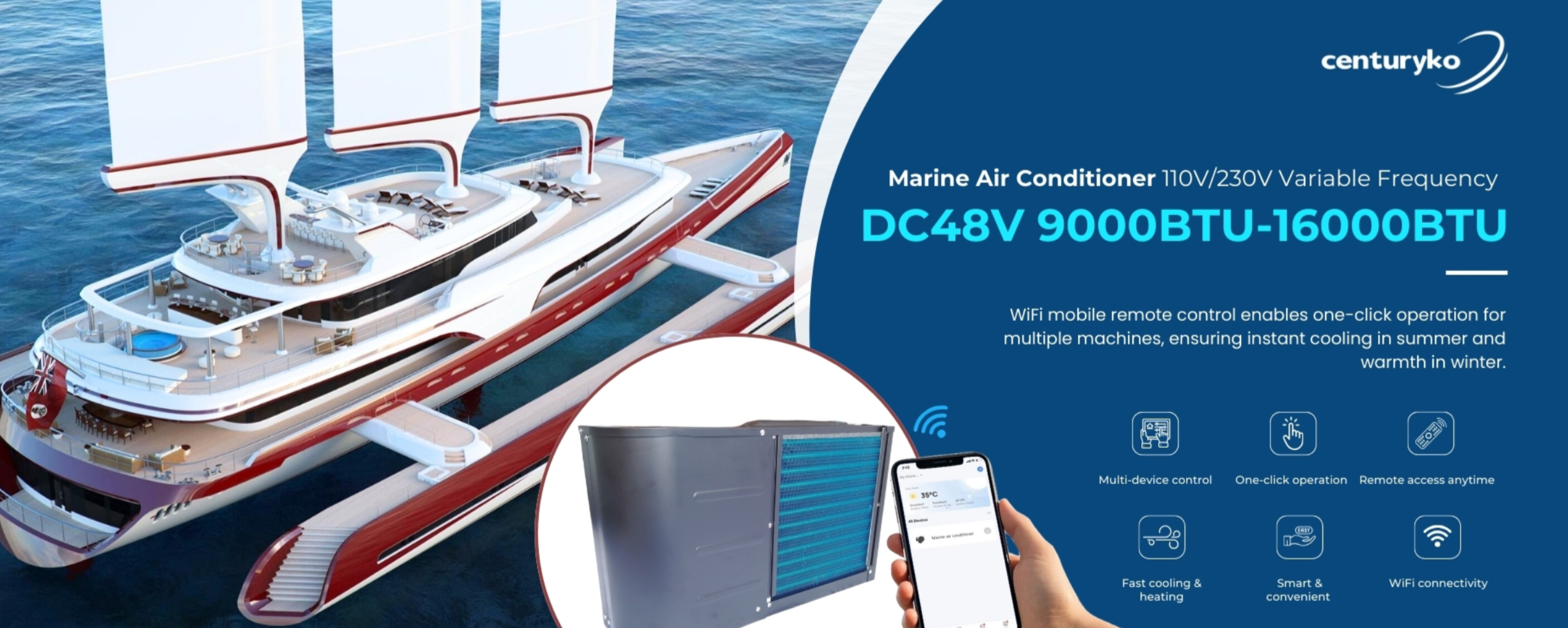
Quick comparative lead
On a week-long charter out of the Florida Keys I tracked how different cooling setups affected battery life and comfort, and the differences were stark. Modern inverter-driven 12V marine systems—think a compact self contained marine ac unit built for boats—consistently used less generator runtime and kept cabins stable without constant cycling. This piece breaks down what that means for thermal efficiency, practical power consumption, and real-world choices for boat owners who want reliable cooling without burning fossil fuel every afternoon.
What “thermal efficiency” and “power draw” really mean onboard
Thermal efficiency here means how much cooling (BTU) you get per unit of electrical input; power draw is the amps or watts pulled from batteries, inverters, or shore power. Industry terms to keep handy: compressor modulation, heat exchanger sizing, and coefficient of performance (COP). Premium 12V marine AC units tend to use inverter-driven compressors that modulate speed, which raises COP and flattens current spikes. Traditional generator-fed or fixed-speed split systems often show higher peak loads and less efficient cycling, so they consume more fuel and run the genset longer to reach the same onboard comfort level.
Head-to-head behaviors in everyday use
In practice the premium 12V option reduces short, brutal amp spikes by ramping compressor speed and matching output to the cooling load. That means fewer deep battery draws and less masking of insulation weaknesses. By contrast, older systems or shore-only units will hit high peak power, then cycle off—creating temperature swings and higher overall energy use. Real-world anchor: during midsummer sailing off Key West, midday cooling demand is a steady load; a variable-speed 12V compressor kept cabin temps steady while a traditional unit demanded frequent genset intervention.
Common mistakes and viable alternatives
Boat owners often oversize or undersize systems. Oversizing leads to short cycles and poor dehumidification; undersizing forces constant high-load running. Another mistake is ignoring insulation and ventilation—no AC, however efficient, can compensate for thin hatches or sun-exposed glass. Alternatives include shore-power split systems, generator-driven chillers, and portable units. Each has trade-offs: shore power is cheap and simple when available; generators add noise and fuel cost; portable units lack the integrated seawater heat exchange that marine-grade self contained marine ac unit models provide—so they often underperform in humidity and sea conditions.
Numbers that matter (practical benchmarks)
Rather than debating theoretical specs, focus on measurable benchmarks: continuous amp draw at typical cruising load, COP under steady-state operation, and cooling capacity in BTU per hour relative to cabin volume. A modern premium 12V inverter-driven unit will often show a 15–35% reduction in average electrical consumption versus a comparable older fixed-speed system under identical conditions. Track voltage sag, average amp-hours per hour of run, and generator run time per day—these tell the operational story faster than marketing numbers.
Installation and operational tips that save kilowatt-hours
Match the AC’s rated BTU to the actual cabin cubic footage, prioritize insulation (reflective hatch covers and window shades), and balance airflow so vents don’t fight each other. Use a smart controller or thermostat set to a steady target rather than extreme low temps; smoothing the load reduces compressor cycling and is kinder to batteries. Also—schedule heavy cooling while on shore power or when the generator is already running for other loads to avoid unnecessary starts.
Three golden evaluation metrics
1) Continuous amp draw at typical load: choose systems that report steady-state amps, not just startup. 2) Real COP at cruising conditions: prefer inverter-driven compressors that maintain COP above baseline across load ranges. 3) System integration: heat exchanger quality, vibration isolation, and refrigerant routing—these affect maintenance frequency and long-term energy use.
Choosing the right setup means weighing runtime, comfort, and maintenance. A premium 12V self contained marine ac unit often hits the sweet spot for liveaboards and cruising sailors by lowering generator dependence and smoothing cabin climate—details that matter when you’re trying to sleep while the ocean hums. ZhuoliMarine. –