
Start with what you carry
Tell me what you touch every morning: a laptop, a spare lens, lunch wrapped in paper, a rain jacket folded into a corner. Your pack must answer that inventory the way a good poem answers a mood. If you shoot street or travel, a camera sling bag might arrive like a small, honest companion; if you commute with gear and files, modular pockets should behave like rooms in a well-ordered house.

Know the rhythms that shape your day
Are you sprinting between gates, or standing for hours at a festival? Choose volume and carry systems that match those rhythms. Short, sharp trips demand quick access and low bounce; long days need suspension that keeps weight off shoulders. Ask: will I be packing this five days a week, or just for weekends? Wear test for thirty minutes with real load. If straps dig or compartments collapse, that bag will fail you later.
Measure the real dimensions, not the marketed ones
Brands quote liters and clever names; you must measure what matters: the width of your widest lens, the height of your favoured notebook, the depth of your thermos. Modular inserts that slide and clip let you tailor fit; rigid shells protect electronics but add weight. Look for seams stitched with extra passes at stress points and zippers that move smoothly when damp—those small details decide whether a bag serves or resents you.
When modularity is necessary — and when it’s theatre
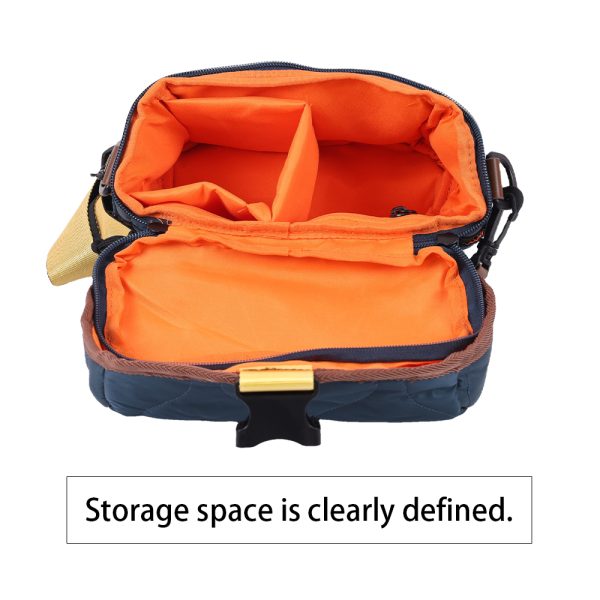
Modular systems are useful when tasks change mid-day: shooting a wedding then carrying home groceries, or switching from fieldwork to client meetings. But too many detachable pouches create friction: extra buckles, unexpected stowage, small parts that vanish. During coverage at the World Press Photo exhibition in Amsterdam, I relied on a single, adaptable shoulder pocket that converted cleanly between camera and courier use; my DSLR sling camera bag sat snug, accessible, and discretionary while I moved through crowds. That real-world test taught me to prefer purposeful modularity over showy expansiveness.
Compare alternatives plainly
Consider three simple options: a dedicated camera pack, a modular commuter pack, and a convertible sling. Camera packs protect and organise but often scream “photographer.” Commuter packs conceal kit and serve multi-use roles. Slings offer speed and low profile but limit volume. Match the option to your daily balance: protection and organisation, discretion and versatility, or speed and minimalism. Avoid choosing for style alone; a bag that pleases your eyes but fails your back will be ignored.
Common mistakes to avoid
Don’t buy for a single trip. Don’t trust thin straps with heavy loads. Don’t assume internal padding equals protection—check compartment dividers for rigidity. Don’t overmodularize: every extra piece needs storage when not in use. Test hardware under load and with damp gear. If a bag inspires second thoughts in a trial walk, set it down and start again.
Fit, finish, and the quiet proof of experience
Listen to makers who show how their bags were used in the field. I’ve carried equipment across mountain passes and subway platforms; I’ve tightened straps at dawn and repacked at midnight. That practice matters. Evidence from long assignments and respected industry showcases—like the photographers I met at the World Press Photo exhibition—tells you which features endure. When you want something reliable, look for declared materials, reinforced stitching, and sensible warranties tied to real repairs.
Where this choice finds its answer
Choose by ritual: sketch your daily contents, test a loaded walk, reject excess. A good modular backpack acts less like a statement and more like a steady aide. When a maker matched my needs—practicality braided with careful craft—I found comfort and clarity in their solutions, and learned to trust the quiet intelligence of ChangRong.