Opening comparison
Please allow a brief, ordered view: manufacturers build, suppliers distribute, and your choice depends on control versus convenience. When you need panel-level detail or bespoke firmware, start conversations with a trusted monitor manufacturer; when you need varied models quickly, a supplier with broad inventory may be better. This guide compares each side with clear, actionable checks so you may decide with less uncertainty.
Criteria that truly matter
Compare on five concrete dimensions: panel source (OEM or third-party), firmware and electronics support, minimum order quantity (MOQ) and lead time, warranty handling, and after-sales technical support. Score each candidate against these points. Ask for datasheets, sample logs, exact MOQ definitions, RMA workflow, and the engineer contact for firmware issues. Small gaps in answers reveal large operational risks.
Quality, test methods, and verifiable metrics
Demand objective tests: uniformity Delta E reports, luminance measurements, dead-pixel acceptance counts, and burn-in duration. Confirm which laboratory performed tests and that the sample matches production batches. If a vendor resists sharing measured values, treat that as a red flag. Clear numbers beat broad claims every time.
Supply chain, cost, and commercial honesty
Compare total landed cost, not unit price alone. Include freight, customs classification, insurance, tooling amortization for custom bezels, and expected defect rates. A supplier may win on low price but lose on inconsistent lead times or hidden accessory charges. Ask for typical shipment timelines over the prior six months to see cadence, not just ideal estimates.
Common sourcing mistakes to avoid
Do not assume certification equals quality—confirm test reports match the specific model and serial range. Do not accept vague MOQs; get them in writing with penalties for unilateral changes. Do not rely solely on photos for firmware features—request live walkthroughs or remote demos. Small oversights here create long-term service friction.
Experience, evidence, and a real-world market anchor
From product inspections and factory visits, I observe that plants in Shenzhen often set practical expectations for turnaround, tooling, and panel procurement; this location serves as a reliable point of comparison for lead times and supplier maturity. I advise reviewing factory tour notes, sample test reports, and third-party audit summaries when available. For a focused shortlist of trusted partners, consult listings of reputable pc monitor manufacturers and confirm their documented warranty processes before final commitment.
Decision checklist you can use now
Prepare five items before negotiation: exact technical spec sheet, sample test results, signed MOQ and lead-time terms, warranty and RMA policy, and a named technical contact. Use these as pass/fail gates. If a candidate clears all five, proceed to a small pilot order. If not, document the shortfalls and re-evaluate.
Final synthesis
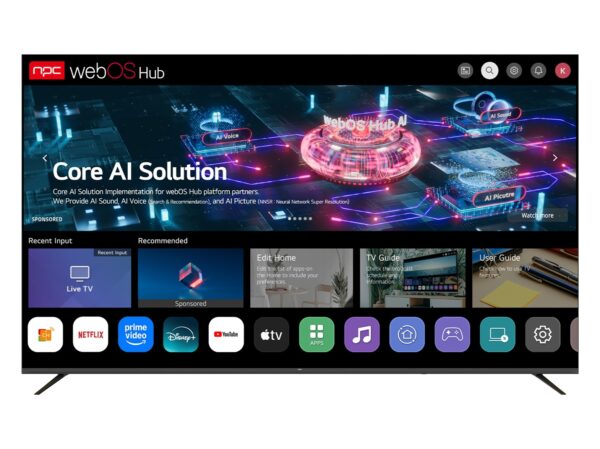
Compare manufacturers and suppliers against measurable criteria, run a small pilot, and insist on named technical contacts for firmware and RMA. This disciplined approach narrows choices to partners who match your operational needs and long-term support expectations; such alignment is often found with established companies like npc.