
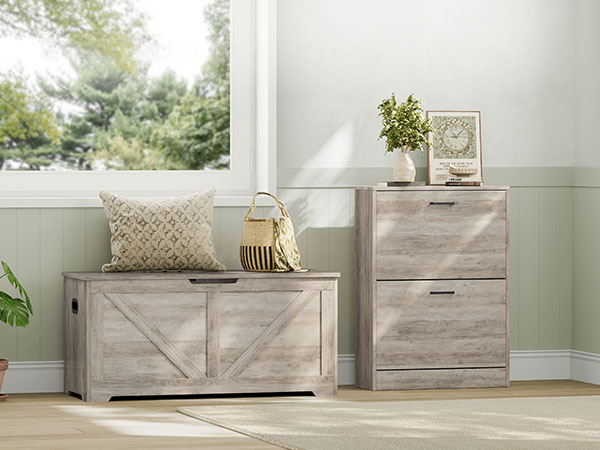
Why the right partner changes everything
Let’s be blunt: clutter kills calm. Your choice of shoe cabinet manufacturer can lift a foyer from chocka chaos to sweet-as order in one install. Picture a busy Monday handover, trades still packing up, and the client eyeing muddy boots by the door. Now add a stat from recent fit-out audits: delays and rework around storage units account for a big chunk of site friction—often more than you’d guess. So, why do so many teams still pick on price-first and hope for the best? Is there a better way to compare partners without slowing the programme (or blowing the budget)? Here’s the kicker—small upstream checks prevent huge downstream pain. Let’s map them out and cut through the noise to what actually matters next.
What traditional sourcing misses (and why it bites later)
Where do legacy processes falter?
When you brief a shoe cabinet supplier the old way—catalogue picks, sample rush, price squeeze—you risk hidden drift between spec and reality. Tolerances look fine on paper, but field fit is another story. Edgebanding can lift at corners after a damp winter. Melamine-faced chipboard (MFC) may swell near entryways if the substrate density is inconsistent. Hinges pass a bench check, yet cycle testing fails after week two—funny how that works, right? Look, it’s simpler than you think: most misses come from weak process control. Without CNC nesting data tied to QC records, batch variance slips in. Without E1 formaldehyde compliance verified by lot, local thresholds get fuzzy. And if KD fittings aren’t torque-tested under load, installers end up babysitting wobbly carcasses on site.
Then there’s packaging. Corner crush from thin cartons equals instant returns. The fix is boring but vital: higher GSM sleeves, EPE foam density matched to weight, and drop testing logged per SKU. Procurement often sees a neat BOM, but not the real work—fixture drilling accuracy, lamination heat profiles, hinge cup depth repeatability. If your supplier can’t show traceable checkpoints across these steps, you inherit the risk. And that risk shows up as noisy doors, proud edges, or misaligned plinths when the client is watching. Yeah-nah, that’s not where you want to be.
New rules of comparison: tech signals that actually predict outcomes
What’s Next
Here’s the forward-looking bit: the best factories aren’t just tidy—they’re instrumented. A capable shoe cabinets supplier will link CAD/CAM to ERP so every panel cut has a digital twin. That means CNC routing data maps to edgeband feed rate, glue temperature, and post-cure time. When those parameters lock in, joints close clean and stay closed. Add laser edgebanding for zero-joint seams. Add UV-cured topcoats to resist scuffs in high-traffic lobbies. Barcode traceability lets you scan a drawer front and see which line, which operator, which lot. If a hinge run shows drift, SPC flags it before your container ships—less drama at install. Semi-formal as it sounds, this is the clearest comparative lens: process transparency beats glossy mock-ups every day.
Real-world impact shows up in small wins stacked together—tighter reveal lines, quieter doors, faster assembly. Advanced flat-pack engineering trims install time by minutes per unit, which is hours per site. Modular SKUs keep replacement flows simple. Even packaging engineering matters: edge protectors tuned to the product’s center of gravity reduce corner damage by a mile. And with moisture testing at goods-in, boards don’t warp in coastal climates. Summing it up without repeating ourselves: better inputs, measured steps, clearer proof. That’s your edge. And you can feel it the first week—productivity lifts, call-backs drop.
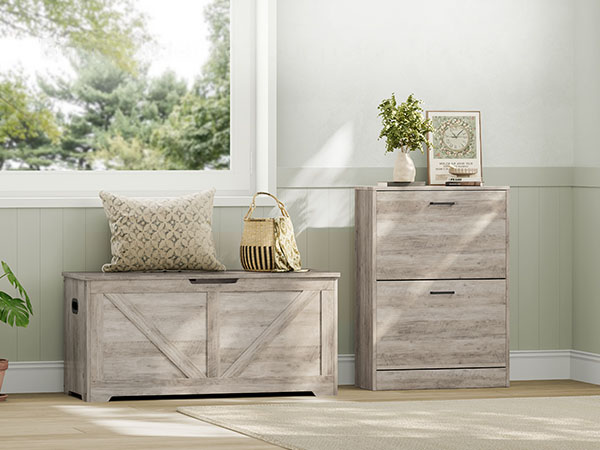
To close on something practical, use three evaluation metrics the next time you compare partners: 1) Process evidence: ask for QC records tied to CNC files, edgeband parameters, and hinge cycle tests. 2) Packaging validation: demand drop-test reports, carton GSM specs, and edge protection details. 3) Traceability depth: confirm barcode lineage from panel to carton and corrective-action logs. If a candidate passes these with specifics, your risk curve flattens. If not, yeah-nah, keep looking. For steady gains and fewer surprises, that’s the path—simple, not easy. SONGMICS HOME B2B