
Introduction
Precision, not luck, makes a diamond look alive. In a quiet shop, you slip on a ring set with classic jewelry pieces and notice how some shapes light up while others look tired. You hold a marquise shape diamond toward the window; it stretches the finger, but the center darkens. Data from retail audits show elongated cuts can vary by over 15% in light return when proportions drift. So why does one stone feel brilliant and another feel flat, even at the same carat and grade?

Here is the short truth (evet, we check the numbers): Fancy shapes do not get a universal “cut grade,” so buyers rely on guesses. The bow-tie shows up. Tips chip. Settings hide flaws—or reveal them. This is not luck; this is geometry and setup. We will map where traps sit, then compare how new tools change the game. Now, let us move into the real frictions before we weigh future choices.
Hidden Friction in the Marquise: What Buyers Miss
Why does the marquise confuse buyers?
Technical view, straight and clear. Many people shop by carat and clarity, yet the marquise lives or dies on proportions. GIA does not issue a formal cut grade for it, so red flags hide in the details. Watch the table percentage, pavilion angle, and girdle thickness. If the pavilion is too deep, you lose light. If the table is too wide, you get windowing and a harsh bow-tie. Look, it’s simpler than you think: balance the crown height with the pavilion depth, and the stone breathes. Miss it, and the center goes dark—funny how that works, right?
There is more. The tips are stress points. Thin girdle at the ends plus hard knocks equals chips. A V-prong can fix it, but poor setting symmetry will tilt the stone and magnify the bow-tie. Fluorescence may cool or warm the face-up tone in daylight, which surprises new buyers. And finger fit? The marquise elongates, but it can also spin if the shank lacks counterweight. In short, the pain points are hidden: no universal cut grade, fragile tips, light leakage, and setting risk. Solve those, and the marquise becomes the sleek icon it promises to be.
Comparing Tomorrow’s Tools: Marquise vs. Pear in Practice
What’s Next
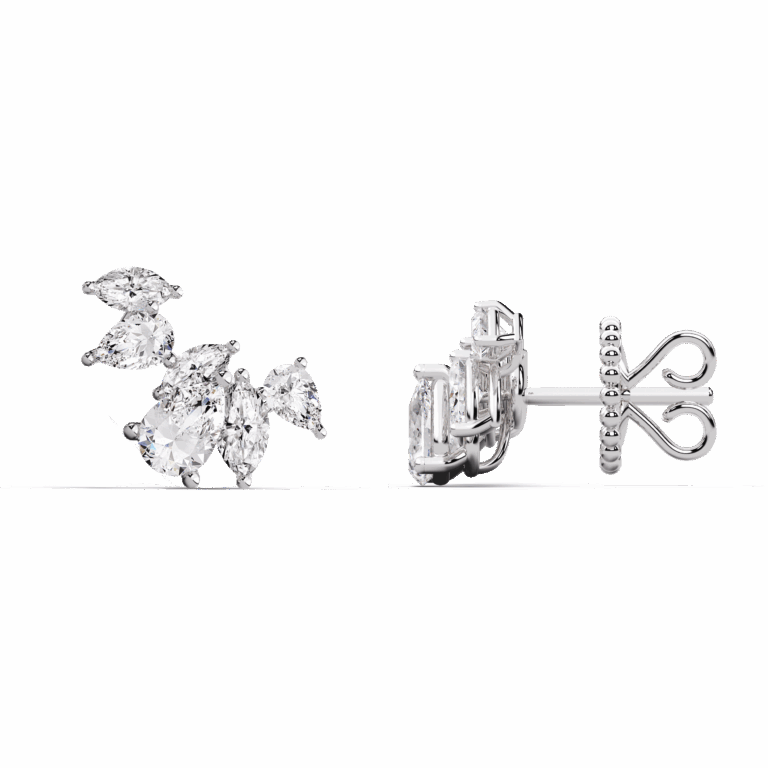
We shift to a forward look, semi-formal and practical. New tools are changing how we judge fancy shapes. Ray-trace light maps show where leakage forms before you buy. Simple phone scans can estimate bow-tie risk by reading facet architecture and symmetry. Side by side, a tuned marquise and a tuned pear cut diamond behave like cousins, not twins. The marquise gives maximum spread and strong finger length. The pear brings a softer fall of light and a single tip to protect. With similar table ratios, the pear often hides a mild bow-tie better due to its rounded shoulder flow. Yet the marquise, with a balanced pavilion angle, can deliver crisp scintillation along the length—clean, fast flashes.
Case view: Two 1.20 ct stones, one marquise, one pear, both with medium girdle and matched crown height. The marquise needs V-prongs at both tips and a slightly heavier shank to prevent spin. The pear needs a V-prong only at the point and benefits from a halo to smooth the outline. Light maps show the marquise is more sensitive to small symmetry errors; a tiny misalignment, and contrast bands thicken. The pear is a touch more forgiving. Summary, without repeating ourselves: hidden marquise risks are real, but smart proportion checks, secure tips, and symmetry-first settings narrow the gap fast—faster than most expect.

Advisory close. Use three metrics when choosing between these shapes: 1) Proportion balance: table percentage, pavilion angle, and crown height within a harmonious range; 2) Structural safety: girdle thickness at the tips and proper V-prong execution; 3) Light behavior: observed bow-tie intensity and measured light return under neutral lighting. Hold to these, compare calmly, and choose the cut that fits your hand and your eyes—simple, disciplined, Turkish-style direct. For deeper specs and side-by-side evaluation methods, see Vivre Brilliance.