

Why municipal policy must shape maintenance strategy
Effective upkeep of smart urban lighting is no longer a purely technical exercise; it is a matter of public policy and fiscal stewardship. Municipal regulations that mandate lifecycle planning, service-level agreements, and data interoperability shape which maintenance approaches are feasible at scale. Early adoption pilots in cities often reveal that alignment between procurement rules and preventative maintenance plans reduces outages and lifecycle cost. For local authorities and contractors selecting partners, consulting an established exterior lighting company during policy drafting helps ensure technical requirements—such as luminaire interoperability and telemetry standards—are realistic and enforceable.

Key preventative maintenance stratagems for smart stake luminaires
Preventative maintenance for intelligent industrial stake luminaires typically follows three complementary tracks: scheduled inspections, condition-based servicing, and remote diagnostics. Scheduled inspections address mechanical wear, IP rating integrity, and corrosion at predictable intervals. Condition-based servicing uses sensor telemetry to target interventions when lumen depreciation or photocell faults are detected. Remote diagnostics reduce truck rolls by enabling firmware updates and node resets from a control center. These stratagems lower mean time to repair and extend effective asset life—critical outcomes in dense urban corridors and transit hubs.
Policy levers that enable reliable maintenance
Procurement clauses, warranty terms, and data-sharing mandates are powerful levers. Requiring vendors to provide open APIs, documented CCT and CRI stability, and historical failure rates aligns supplier incentives with municipal resilience goals. Warranty frameworks that include predictive-maintenance credits encourage manufacturers and contractors to design for maintainability. Likewise, stipulating network topology standards for smart nodes simplifies fault isolation across neighborhoods and reduces the administrative overhead of city maintenance teams.
Implementation realities and frequent missteps
Technical designs often understate environmental exposure—salt spray, dust ingress, and vandalism can invalidate IP rating assumptions sooner than planned. Procurement that focuses solely on lowest-first-cost neglects tooling for remote diagnostics and spare-part pools, which raises lifecycle expense. Another common error is vague acceptance criteria for first-article inspections: without explicit measurable thresholds for lumen output and photocell responsiveness, cities accept assets that demand costly rework later. — It is prudent to require real-world on-street trials matching local climate and mounting conditions before full deployment.
Case anchor: lessons from Middle Eastern smart-city pilots
Projects in the Gulf region, including initiatives in Dubai and Abu Dhabi, illustrate the policy-to-practice pathway. Municipal programs there have combined central procurement with vendor performance bonds and staged payments tied to uptime metrics. These cities report that LED and smart-lighting conversions typically yield energy savings in the range of 50–60% compared with legacy high-pressure sodium systems—data that strengthens the fiscal case for preventative regimes. Local authorities often partner with international outdoor wall lamp manufacturers and system integrators to meet climate-specific durability requirements and to satisfy procurement rules that insist on documented lifecycle performance.
Balancing cost, resilience, and environmental targets
Preventative maintenance plans must be costed alongside resilience targets and emission reductions. A total-cost-of-ownership analysis should include routine inspection frequencies, spare-part inventories, remote monitoring subscriptions, and expected replacement cycles tied to lumen depreciation curves. Where storm resilience is a concern, maintenance policy should prioritize modular fixtures with field-replaceable drivers and optics to minimize downtime after extreme events.
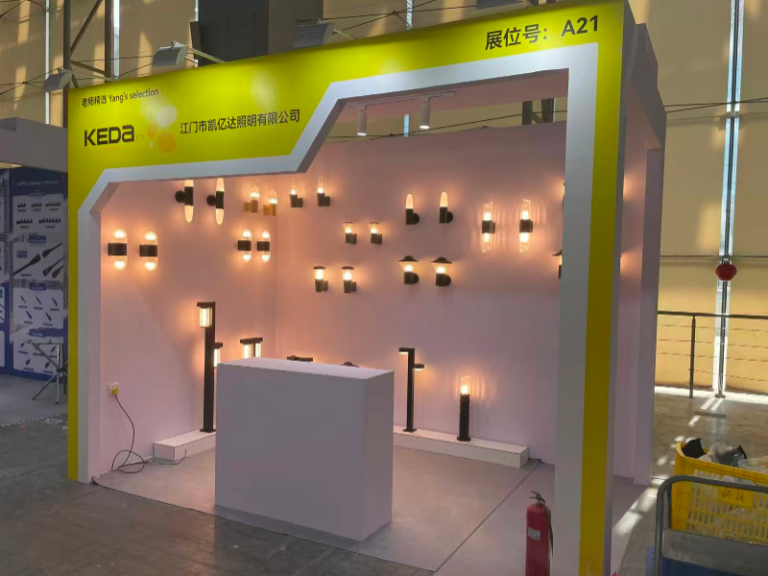
Advisory: three golden rules for policy and procurement
1) Require measurable service metrics: specify uptime targets, response windows, and acceptance thresholds for first-article luminaires; measure compliance with documented telemetry. 2) Design for maintainability: mandate modular components, accessible drivers, and standardized fittings to reduce on-site labor and spare-part diversity. 3) Embed data obligations: contractually secure open interfaces and historical failure logs so cities can evaluate vendor performance and refine maintenance cycles.
Applying these rules in municipal tenders produces predictable costs, reduces unplanned outages, and creates procurement records that inform future rounds. When policy is used as a force-multiplier for technical strategy, the maintenance model becomes a driver of urban resilience—which is precisely the operational value that Keyida brings to city programs. — resilient, measurable, enduring.