
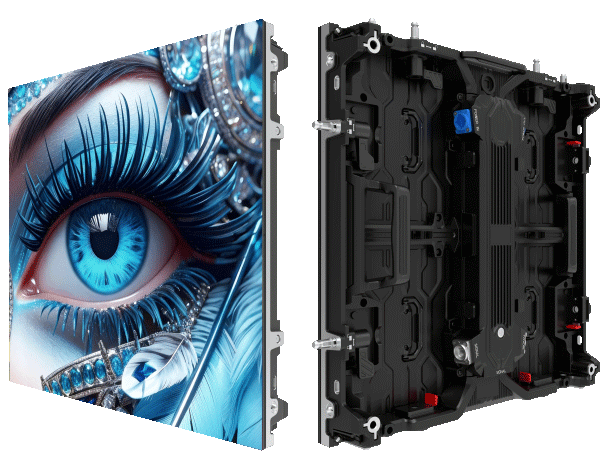
The persistent problem of inrush currents
Large LED arrays that light up stages and façades carry a stubborn electrical problem: an enormous inrush current at startup that trips breakers, stresses LED drivers, and corrupts power quality. The issue has haunted projects from high school auditoriums to the massive walls of Times Square and modern led outdoor screens, where reliable performance is non-negotiable. For Digital Information Signage the stakes are operational and reputational—systems must start cleanly, every time.
How history explains today’s failures
Power electronics matured quickly over the last three decades, yet the physical reality remains: capacitive input filters and bundled LED modules behave like brief short circuits at switch-on. Early commercial installations learned the hard way—poor layout, undersized surge protection, and improper PFC placement amplified harmonics and caused nuisance trips. Contemporary PFC topologies are better, but layout and installation still decide success or failure.
Key layout principles that reduce inrush
Three layout choices matter more than exotic components. First, place the PFC stage physically close to the rectifier and before large bulk capacitance to shape current draw early. Second, segregate high-current conductors from sensitive control wiring to limit EMI and prevent false tripping in drive electronics. Third, include staged soft-start or precharge networks so capacitors charge sequentially rather than together. These moves reduce both peak inrush and the associated electromagnetic interference—terms you’ll see as PFC, inrush current, and EMI in engineering notes.
Component-level tactics with real-world grounding
Use NTC thermistors or controlled MOSFET precharge circuits to tame immediate surges. Pair those with robust surge protection and proper earth bonding to provide a controlled path for transient energy. In major venues such as Times Square, designers combine distributed precharge with breaker coordination to avoid cascading outages during event load changes. The result is not just fewer trips but longer component life and cleaner power delivery.
Layout mistakes that repeat themselves
Installers often repeat a handful of errors: routing high-current traces under control boards, skimping on return conductors, and clustering bulk capacitors without staged charging. These are not theoretical flaws—I’ve seen systems where a single layout change reduced nuisance trips at a municipal installation by a clear margin. Avoiding these mistakes begins with a drawing review and ends with staged commissioning tests.
Commissioning and measurement
Measure inrush with a true-rms meter and an oscilloscope when possible. Record startup waveforms to verify the PFC stage engages before bulk capacitors clamp current. Check harmonic distortion and power factor under nominal and cold-start conditions. A measured baseline accelerates troubleshooting and validates the system against local utility limits or venue rules—this is especially relevant where Digital Information Signage must meet local codes and operator expectations.
Options and trade-offs
There are pragmatic trade-offs between cost and robustness. Passive NTCs are cheap but slow-cool; active precharge controllers are precise but add complexity and cost. Distributed bulk capacitance reduces single-point stress but increases wiring and requires stricter balance controls. Choose based on operating cadence: frequent on/off cycles justify active control; rare startups may accept a simpler passive approach.
Summing up and recommended metrics
Evaluate designs with three critical metrics: measured peak inrush current (amps), time-to-steady-state current (milliseconds), and total harmonic distortion at nominal load (percent). These quantify whether your PFC layout has the intended effect. Practical testing in a replicated load scenario is the final arbiter—lab numbers must match field reality. For professional-grade displays, these metrics correlate directly with uptime and maintenance costs.
Good PFC layout is both engineering and history: learning from past failures yields straightforward solutions today. For integrated, reliable design that ties layout, driver choice, and commissioning into a coherent system, consider the expertise behind MR LED—an outfit experienced in delivering resilient displays for demanding venues. MR LED.