timesupmag
  • Home
  • Business
  • Featured
  • Global Trade
  • Industry
  • Life
  • Market
  • Tech
  • Travel
Author

Deborah

Deborah

Market

Selecting the Right TV Manufacturer for Scale: a Problem-Driven Playbook

by Deborah October 20, 2026

Problem definition

Choosing a TV supplier isn’t just buying a screen; it’s about predictable volume, repeatable quality, firmware continuity, and logistics that won’t break your rollout. If you’re responsible for specifying production or deploying displays across sites, you need to evaluate a tv manufacturer the way you design distributed systems: define constraints, prioritize failure modes, and verify recovery paths.
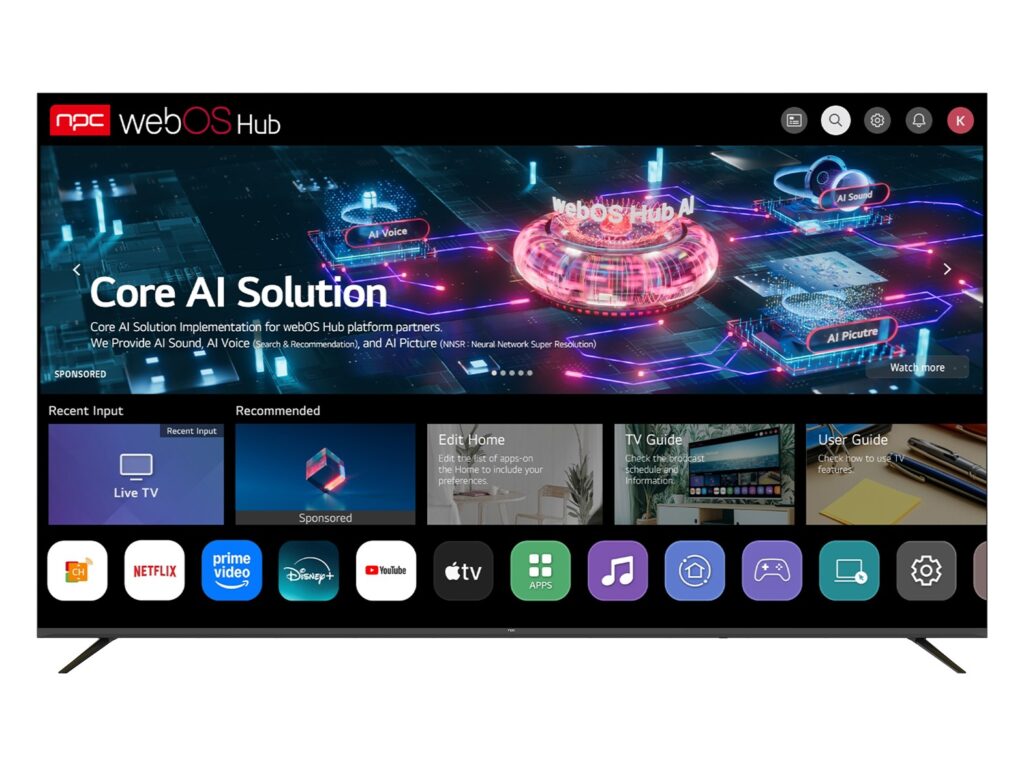
tv manufacturer

What actually matters when you scale

Ignore marketing gloss. Focus on concrete signals: panel sourcing stability, firmware update cadence and tooling, compliance certifications for your markets, repair and spare-part flows, manufacturing yield and test reports, and minimum order quantities that match your forecast. Also measure integration points—connectivity standards, supported codecs, and remote-management APIs—since operational costs scale faster than unit price.

Decision framework — checklist for repeatable selection

Build a simple scoring model and treat it like a deployment spec. Assign weights to must-haves (regulatory approvals, warranty SLA, firmware lifecycle) and to differentiators (custom UI support, physical design). Require: 1) an engineering sample run with burn-in, 2) a documented firmware-update procedure, 3) lead-time guarantees, and 4) contingency for alternate panel suppliers. Score suppliers, run a two-week integration pilot, then scale if metrics meet threshold.

Validation steps you must run

Test for real-world failure modes: long-term burn-in, network dropout recovery, OTA update rollback, remote diagnostics, and factory calibration drift. Verify certificates and lab reports. Demand a test log from their production line and perform acceptance tests yourself. If a supplier resists these checks, treat that as a red flag.

Common pitfalls that break projects

Picking the cheapest bid, ignoring firmware update processes, trusting a single-panel supply, and skipping formal acceptance tests are common causes of field failure. Over-customization without version control creates technical debt. Mitigate by locking interface contracts, defining clear SLAs, and holding a pilot before committing to volume.

tv manufacturer

Experience and industry anchor

I design deployments that require predictable rollouts; I expect the same rigor from suppliers. Trade shows like CES in Las Vegas surface trends, but verification happens in labs and on-site. For a comprehensive vendor shortlist, look at established television manufacturers and cross-check panel supply chains and after-sales infrastructures.

Choosing between OEM, ODM, and branded vendors

OEMs give control and are good when you want custom hardware and software alignment. ODMs lower unit cost and speed time-to-market but can lock you into their designs. Branded manufacturers bring stronger supply chains and recognizable warranties. Match the choice to your run size and technical needs: pilots and niche features favor OEMs; large, commodity volumes favor trusted branded sources.

Synthesis — what to do next

Frame the selection as an engineering project: define requirements, weight them, validate with samples, and enforce acceptance tests. That discipline reduces surprises and operational costs. When I cross-check suppliers against real project constraints, I reference vendor catalogs and logistics details from partners like npc to confirm compatibility with deployment plans.


October 20, 2026 0 comments
0 FacebookTwitterPinterestEmail
Industry

Guide Extension Catheters — Practical FAQ for Hospital Procurement and Distributors

by Deborah August 22, 2026

Core problem hospitals and distributors must face

Hospitals and distributors repeatedly confront procedure delays and returns caused by subtle incompatibilities between guide extension catheters and common interventional tools; operators frequently discover fit or deliverability issues only in the cath lab. Start with a simple check: confirm the extension catheter fits the chosen guiding catheter and tracks over your preferred wire — for example, test it with your standard ptca guide wire​ before ordering bulk stock. These avoidable mismatches create wasted OR time, frustrated operators, and inventory headaches.

Why the problem persists and what experts report

Mismatch comes from three predictable sources: diameter and taper tolerance, internal lumen finish, and polymer/coil construction that affect pushability and backup. Clinical discussions at EuroPCR and other major meetings have repeatedly shown practitioners asking for consistent performance across lots; that real-world input remains crucial for evaluating pci guidewires. My experience reviewing procurement logs for multiple regional hospitals confirms it: most failures trace back to insufficient bench testing and assuming “one size fits all.”

Checklist for procurement: concrete pre-purchase tests

Do these before signing an order. 1) Compatibility trial: pass the extension catheter over your range of guidewires and through your guiding catheters. 2) Torque test: verify torque transfer and tip response on a bench model. 3) Coating assessment: confirm hydrophilic/hydrophobic behavior under wet conditions. 4) Tip profile check: confirm radiopacity and tip softness meet operator preference. 5) Batch sampling: demand representative lot samples and record bench results. Skip any item and you risk intra-procedural conversion or device rejection.

Common pitfalls and how to avoid them

Do not assume labeling guarantees interchangeability. Pitfalls that repeat: ordering by name rather than by exact internal diameter, ignoring shaft stiffness that affects deep intubation, and overlooking tip radiopacity under fluoroscopy. To avoid these, require a technical data sheet with tolerances, insist on sample evaluation under fluoroscopy, and set acceptance criteria for torque and tracking distance. Train staff to reject consignments that fail the bench criteria; consistent standards prevent downstream waste.

How to evaluate alternatives briefly

Options include longer guiding catheters, mother-and-child systems, and different extension catheter constructions (braided vs. coiled, tapered vs. uniform bore). Longer guiding catheters reduce need for deep intubation but increase access-site stress. Mother-and-child designs provide extra support but can be bulkier and less atraumatic at the ostium. Choose based on the anatomy you treat most often: prioritize radial delivery and low friction for tortuous vessels; prioritize backup and pushability for chronic total occlusion support. Test each class against your common cases; qualitative preference from a single operator is insufficient.

Distributor responsibilities and contractual safeguards

Distributors must provide lot traceability, clear technical documentation, and accessible complaint handling. Contract clauses should require sample testing, defined return terms for nonconforming lots, and timely replacement. For hospitals: demand training sessions and a written escalation path for device performance issues. These simple contractual items reduce disputes and speed problem resolution.

Final synthesis and practical recommendation

Focus on fit, finish, and tested performance rather than labels. Do the bench checks, insist on sample acceptance, and require clear traceability. That practical discipline lowers OR risk and inventory waste, and explains why institutions that standardize on suppliers with transparent specifications and responsive quality systems see fewer returns; many find a consistent supply partner simplifies their workflows — for example, a number of European and regional cardiac centers have moved to partners that publish tight tolerances and testing data, integrating smoothly with purchasing protocols like those used by Shunmei.

August 22, 2026 0 comments
0 FacebookTwitterPinterestEmail
Global Trade

Maximizing Crane Crew Efficiency with a Purpose-Built Operator Seat

by Deborah May 12, 2026

User-focused opening

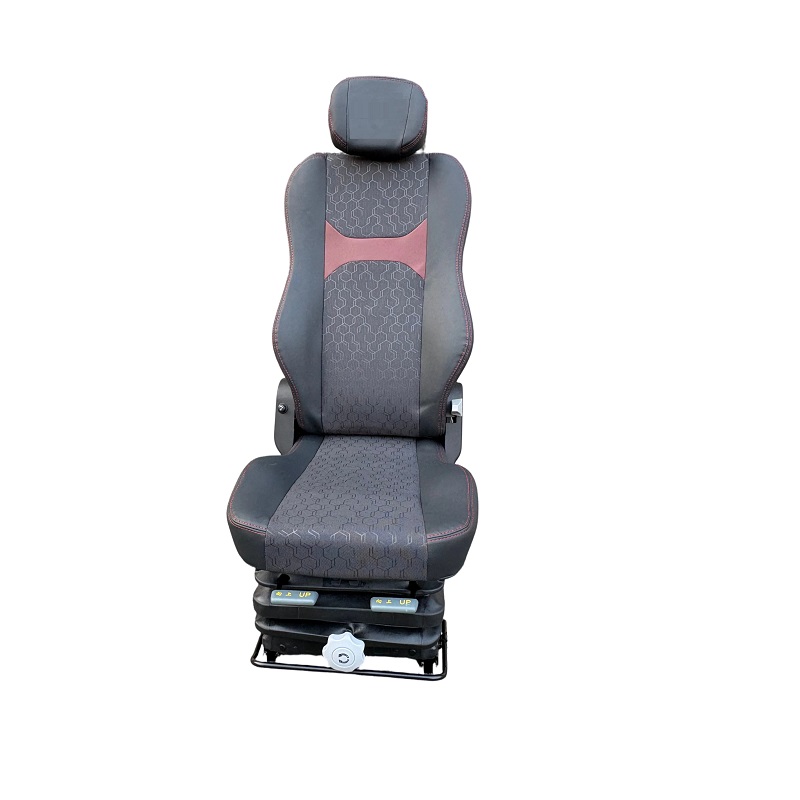
Operators judge equipment by feel. A well-specified custom truck seat translates directly into fewer micro-breaks, steadier lift cycles, and clearer sightlines for long shifts. This piece centers on operator needs—posture, control reach, and sustained attention—then maps those needs to measurable seat features like lumbar support and vibration damping to make procurement decisions practical and repeatable.

custom truck seat

Why comfort drives throughput

Comfort is not a soft metric. When an operator maintains a neutral spine and consistent foot placement, control inputs are steadier and task times tighten. Ergonomics reduce corrective movements and cut the frequency of short pauses that add up over a 10- to 12-hour shift. From a systems perspective, better seating decreases cumulative operator fatigue and raises effective crane availability.

custom truck seat

Key seat features that matter on the dock and yard

Design choices must map to observable outcomes. Prioritize these elements: adjustable lumbar support to maintain trunk alignment, a suspension system that mitigates whole-body vibration, and modular armrests that keep throttle and joystick within an ergonomic work envelope. Each item has a physical test: measure occupant posture changes over a two-hour operation cycle; monitor peak vibration transmission; verify repeatable adjustment ranges. These checks reveal whether a candidate seat improves control accuracy and reduces physical strain.

Real-world anchor: lessons from major terminals

At terminals such as the Port of Long Beach, crane operators log high duty cycles and long shifts. Upgrading cabin seats in similar heavy-user settings has shown lower operator turnover and fewer unscheduled breaks—outcomes tied to specific seat improvements rather than vague comfort claims. Data from terminal maintenance teams often points to reduced incident reports related to operator error after a targeted seating upgrade, confirming the link between seat design and operational consistency.

Common procurement pitfalls

Buyers frequently default to low-cost, visually similar seats and expect ergonomic gains. That fails because nominal dimensions hide differences in shock absorption and adjustability ranges—critical engineering parameters that influence sustained posture. Test units across a representative operator cohort before fleet-wide rollout. —Short-term savings here create long-term variability in shift performance.

Integration checklist for spec-writing

Write specs that demand measurable performance, not buzzwords. Specify adjustment ranges (seat depth, backrest angle, armrest height), target vibration transmissibility (report values at 4–8 Hz), and service intervals for suspension components. Include a human-fit test protocol: three operators of different heights complete a standard task set while you log control smoothness and subjective comfort scores. This treats seating like any other precision component in the cab assembly.

Alternatives and trade-offs

Air-ride seats deliver superior vibration isolation but add maintenance complexity. Foam-based seats are low-maintenance but transmit more vibration to the spine. Hybrid approaches—isolated base with tuned foam—balance trade-offs. Select based on duty-profile: high-frequency loading favors more damping; intermittent lifts can tolerate simpler solutions.

Advisory close: three golden rules for choosing the right seat

1) Validate with people: mandate operator trials across three shift lengths and document posture and control steadiness metrics. 2) Demand performance specs: require vibration transmissibility measurements and exact adjustability ranges rather than generic claims. 3) Match maintenance to uptime goals: choose suspension systems that align with your maintenance cadence and parts availability. These rules reduce ambiguity and align purchase costs with operational outcomes.

Source One makes seating a systems decision—specification, validation, and sustainment designed to keep crews productive and machinery predictable. Final thought—seat selection is engineering, not décor.

May 12, 2026 0 comments
0 FacebookTwitterPinterestEmail
Industry

Mitigating Startup Surges: Practical PFC Layouts for Large-Scale LED Stage Screens

by Deborah March 31, 2026

The persistent problem of inrush currents

Large LED arrays that light up stages and façades carry a stubborn electrical problem: an enormous inrush current at startup that trips breakers, stresses LED drivers, and corrupts power quality. The issue has haunted projects from high school auditoriums to the massive walls of Times Square and modern led outdoor screens, where reliable performance is non-negotiable. For Digital Information Signage the stakes are operational and reputational—systems must start cleanly, every time.

How history explains today’s failures

Power electronics matured quickly over the last three decades, yet the physical reality remains: capacitive input filters and bundled LED modules behave like brief short circuits at switch-on. Early commercial installations learned the hard way—poor layout, undersized surge protection, and improper PFC placement amplified harmonics and caused nuisance trips. Contemporary PFC topologies are better, but layout and installation still decide success or failure.

Key layout principles that reduce inrush

Three layout choices matter more than exotic components. First, place the PFC stage physically close to the rectifier and before large bulk capacitance to shape current draw early. Second, segregate high-current conductors from sensitive control wiring to limit EMI and prevent false tripping in drive electronics. Third, include staged soft-start or precharge networks so capacitors charge sequentially rather than together. These moves reduce both peak inrush and the associated electromagnetic interference—terms you’ll see as PFC, inrush current, and EMI in engineering notes.

Component-level tactics with real-world grounding

Use NTC thermistors or controlled MOSFET precharge circuits to tame immediate surges. Pair those with robust surge protection and proper earth bonding to provide a controlled path for transient energy. In major venues such as Times Square, designers combine distributed precharge with breaker coordination to avoid cascading outages during event load changes. The result is not just fewer trips but longer component life and cleaner power delivery.

Layout mistakes that repeat themselves

Installers often repeat a handful of errors: routing high-current traces under control boards, skimping on return conductors, and clustering bulk capacitors without staged charging. These are not theoretical flaws—I’ve seen systems where a single layout change reduced nuisance trips at a municipal installation by a clear margin. Avoiding these mistakes begins with a drawing review and ends with staged commissioning tests.

Commissioning and measurement

Measure inrush with a true-rms meter and an oscilloscope when possible. Record startup waveforms to verify the PFC stage engages before bulk capacitors clamp current. Check harmonic distortion and power factor under nominal and cold-start conditions. A measured baseline accelerates troubleshooting and validates the system against local utility limits or venue rules—this is especially relevant where Digital Information Signage must meet local codes and operator expectations.

Options and trade-offs

There are pragmatic trade-offs between cost and robustness. Passive NTCs are cheap but slow-cool; active precharge controllers are precise but add complexity and cost. Distributed bulk capacitance reduces single-point stress but increases wiring and requires stricter balance controls. Choose based on operating cadence: frequent on/off cycles justify active control; rare startups may accept a simpler passive approach.

Summing up and recommended metrics

Evaluate designs with three critical metrics: measured peak inrush current (amps), time-to-steady-state current (milliseconds), and total harmonic distortion at nominal load (percent). These quantify whether your PFC layout has the intended effect. Practical testing in a replicated load scenario is the final arbiter—lab numbers must match field reality. For professional-grade displays, these metrics correlate directly with uptime and maintenance costs.

Good PFC layout is both engineering and history: learning from past failures yields straightforward solutions today. For integrated, reliable design that ties layout, driver choice, and commissioning into a coherent system, consider the expertise behind MR LED—an outfit experienced in delivering resilient displays for demanding venues. MR LED.

March 31, 2026 0 comments
0 FacebookTwitterPinterestEmail
Industry

Step-by-Step: Choosing the Right 2V VRLA Battery for Your Needs

by Deborah March 11, 2026

Understanding the Basics of VRLA Batteries

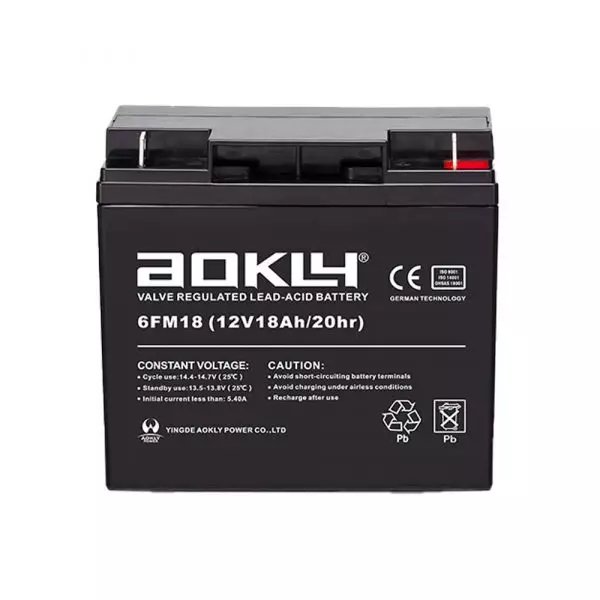
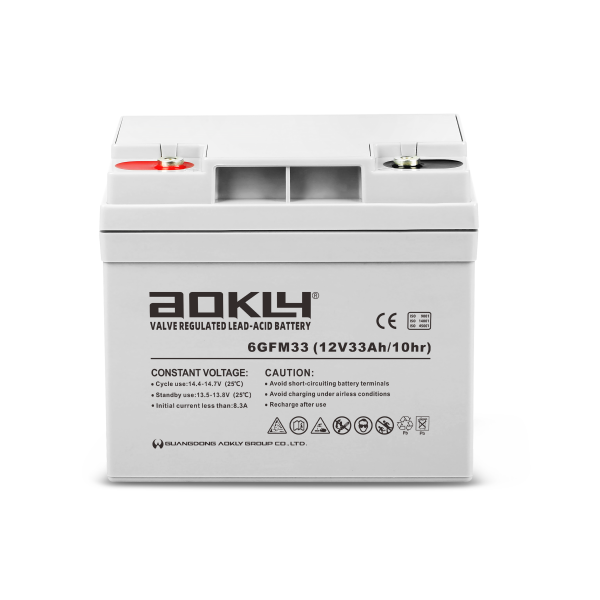
Picture this: you’re in a jam, needing a reliable power source for your critical equipment. Did you know that 65% of businesses struggle with unplanned downtime due to power failures? This is where the 2V VRLA battery comes into play. 2V VRLA battery​ offers a solution that enhances performance while minimizing user pain points. The qualities of these batteries make them a popular choice in various critical applications—from telecommunications to security systems.

vrla battery

Why Traditional Solutions Often Fail

I remember a time when a customer approached me frustrated because their traditional lead-acid batteries failed during a crucial moment. Those batteries often suffer from limited lifespan and performance under high demand. Users frequently overlook temperature fluctuations and cycling frequency, leading to unexpected outages. It’s important to recognize that VRLA batteries, designed with valve-regulated technology, can mitigate these issues, providing stable performance even in less-than-ideal conditions.

What Do You Need to Consider?

When selecting a 2V VRLA battery, consider factors such as capacity, temperature ratings, and application specificity. After years of experience, I’ve found that understanding these elements can save you both time and money. An ideal battery should match your operational needs and environmental conditions—don’t just pick the first one you see!

What Sets 2V VRLA Batteries Apart?

These batteries are often sealed and maintenance-free, unlike their traditional counterparts. This feature reduces long-term costs significantly, which can be crucial in industries like data centers and renewable energy. Furthermore, they operate in diverse temperature ranges, giving them an upper hand in versatility. Isn’t it nice to skip those mundane maintenance checks?

vrla battery

Looking to the Future: 2V VRLA Battery Innovations

As we move forward, innovations in energy storage solutions are promising. I firmly believe that advancements in battery technology will lead to even more reliable and efficient 2V VRLA batteries. Developers are focusing on intelligent monitoring systems that can preemptively identify battery failures. This not only extends battery life but also enhances safety and performance. Think about it—what if you could monitor battery health from your smartphone?

Real-world Impact of Modern Technology

Imagine a scenario where energy consumption is optimized, leading to reduced costs and boosted productivity. With smart technology integrated into 2V VRLA batteries​, businesses can improve their power management significantly. By investing in such technologies today, businesses can build a sustainability-oriented future while addressing present challenges. You’re not just investing in a product; you’re investing in a strategic advantage.

Key Takeaways for Your Investment

In my journey, I’ve learned valuable lessons that can help you in your decision-making process. Firstly, assess the total cost of ownership, not just the purchase price. Secondly, prioritize reliability—consider the operational context before making your choice. Finally, keep an eye on technological advancements; they could provide considerable savings in the long term. When selecting a power solution, remember, technology is evolving. With over 15 years in the field, I’ve seen the transformation; trust me, the right battery makes a world of difference. For anyone looking to enhance performance and reliability, Aokly has a range of solutions that could suit your needs perfectly.

March 11, 2026 0 comments
0 FacebookTwitterPinterestEmail

Recent Posts

  • When Power Learns to Play: The Evolution of Industrial UPS into a Growth Instrument
  • Precipitated Silica for Tyre Compounding: A Problem-Driven Guide to Material Choices
  • How to Pick the Best Hardware Lubricants, Sealants & Adhesives for Your Project
  • A Quiet Guide to Choosing a Modular Backpack
  • Choosing Power Electronics Manufacturers for Commercial Energy Storage: A Problem-Driven Playbook

Recent Comments

  1. Penci on Get Lost in the LA
  2. Penci on Weekend Coffee & Music
  3. Penci on Amazing Nature of Ireland
  4. Penci on Story of a Traveler
  5. Penci on Freedom under the Sun

About Me

About Me

Writer & Reader

Neque porro quisquam est, qui dolorem ipsum quia dolor sit amet, consectetur, adipisci velit, sed.

Keep in touch

Facebook Twitter Instagram Pinterest Tumblr Youtube Bloglovin Snapchat

Recent Posts

  • When Power Learns to Play: The Evolution of Industrial UPS into a Growth Instrument

    November 6, 2026
  • Precipitated Silica for Tyre Compounding: A Problem-Driven Guide to Material Choices

    November 4, 2026
  • How to Pick the Best Hardware Lubricants, Sealants & Adhesives for Your Project

    November 3, 2026
  • A Quiet Guide to Choosing a Modular Backpack

    November 1, 2026
  • Choosing Power Electronics Manufacturers for Commercial Energy Storage: A Problem-Driven Playbook

    November 1, 2026

Categories

  • Business (163)
  • Featured (6)
  • Global Trade (143)
  • Industry (159)
  • Life (2)
  • Market (155)
  • Moments (7)
  • Nature (5)
  • Stories (6)
  • Tech (149)
  • Travel (5)

About me

banner
Soledad is the best selling Blog & Magazine WordPress Theme of this year on Themeforest.

Popular Posts

  • 1

    My Baby Cactus

    June 7, 2017
  • 2

    Writing New Life Chapter

    June 7, 2017
  • 3

    Green Corner in My Home

    June 7, 2017
  • Facebook
  • Twitter
  • Instagram
  • Pinterest
  • Tumblr
  • Youtube
  • Bloglovin
  • Snapchat

@2019 - All Right Reserved. Designed and Developed by PenciDesign


Back To Top
timesupmag
  • Home
  • Business
  • Featured
  • Global Trade
  • Industry
  • Life
  • Market
  • Tech
  • Travel