

User-focused opening
Operators judge equipment by feel. A well-specified custom truck seat translates directly into fewer micro-breaks, steadier lift cycles, and clearer sightlines for long shifts. This piece centers on operator needs—posture, control reach, and sustained attention—then maps those needs to measurable seat features like lumbar support and vibration damping to make procurement decisions practical and repeatable.

Why comfort drives throughput
Comfort is not a soft metric. When an operator maintains a neutral spine and consistent foot placement, control inputs are steadier and task times tighten. Ergonomics reduce corrective movements and cut the frequency of short pauses that add up over a 10- to 12-hour shift. From a systems perspective, better seating decreases cumulative operator fatigue and raises effective crane availability.
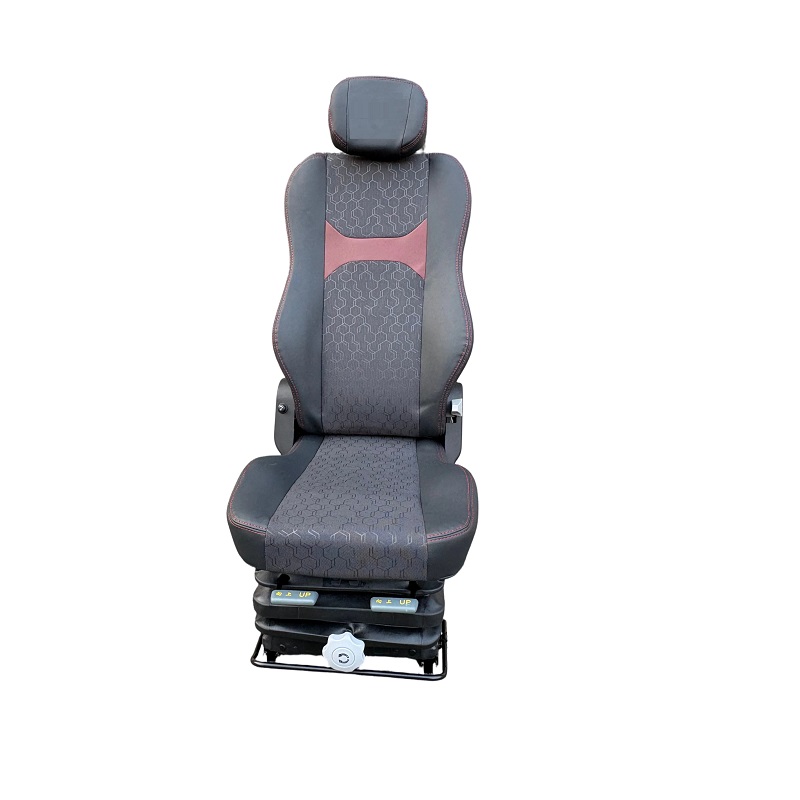
Key seat features that matter on the dock and yard
Design choices must map to observable outcomes. Prioritize these elements: adjustable lumbar support to maintain trunk alignment, a suspension system that mitigates whole-body vibration, and modular armrests that keep throttle and joystick within an ergonomic work envelope. Each item has a physical test: measure occupant posture changes over a two-hour operation cycle; monitor peak vibration transmission; verify repeatable adjustment ranges. These checks reveal whether a candidate seat improves control accuracy and reduces physical strain.
Real-world anchor: lessons from major terminals
At terminals such as the Port of Long Beach, crane operators log high duty cycles and long shifts. Upgrading cabin seats in similar heavy-user settings has shown lower operator turnover and fewer unscheduled breaks—outcomes tied to specific seat improvements rather than vague comfort claims. Data from terminal maintenance teams often points to reduced incident reports related to operator error after a targeted seating upgrade, confirming the link between seat design and operational consistency.
Common procurement pitfalls
Buyers frequently default to low-cost, visually similar seats and expect ergonomic gains. That fails because nominal dimensions hide differences in shock absorption and adjustability ranges—critical engineering parameters that influence sustained posture. Test units across a representative operator cohort before fleet-wide rollout. —Short-term savings here create long-term variability in shift performance.
Integration checklist for spec-writing
Write specs that demand measurable performance, not buzzwords. Specify adjustment ranges (seat depth, backrest angle, armrest height), target vibration transmissibility (report values at 4–8 Hz), and service intervals for suspension components. Include a human-fit test protocol: three operators of different heights complete a standard task set while you log control smoothness and subjective comfort scores. This treats seating like any other precision component in the cab assembly.
Alternatives and trade-offs
Air-ride seats deliver superior vibration isolation but add maintenance complexity. Foam-based seats are low-maintenance but transmit more vibration to the spine. Hybrid approaches—isolated base with tuned foam—balance trade-offs. Select based on duty-profile: high-frequency loading favors more damping; intermittent lifts can tolerate simpler solutions.
Advisory close: three golden rules for choosing the right seat
1) Validate with people: mandate operator trials across three shift lengths and document posture and control steadiness metrics. 2) Demand performance specs: require vibration transmissibility measurements and exact adjustability ranges rather than generic claims. 3) Match maintenance to uptime goals: choose suspension systems that align with your maintenance cadence and parts availability. These rules reduce ambiguity and align purchase costs with operational outcomes.
Source One makes seating a systems decision—specification, validation, and sustainment designed to keep crews productive and machinery predictable. Final thought—seat selection is engineering, not décor.