

Short thesis
Data matters. Low-altitude commerce — delivery, inspection, and emergency response — runs on clear sight-lines and reliable tracks. Early metrics from field deployments show uptime and mission success rising when systems use robust target tracking and sensor fusion. For practical field use, consider intelligence surveillance and reconnaissance as an integrated capability rather than a single sensor.

Hard numbers that change decisions
Adoption follows results. After the 2020 California wildfires, teams using drones for assessment cut reconnaissance time and improved asset allocation. Fleet operators reported faster location fixes and fewer repeat sorties. Those gains came from automated target tracking, real-time telemetry, and improved geofencing. The takeaway is simple: better tracking reduces wasted flight time and lowers operational cost.
How Uav target tracking creates value
Track once. Use many ways. Modern setups pair optical tracking, radar feeds, and RTK positioning to lock a subject. Sensor fusion smooths gaps. Swarm coordination hands persistent coverage to smaller units instead of one large platform. That approach improves persistence and resiliency for crowded, low-altitude corridors. It also supports payload management by directing the right sensor to the right task.
Platform role — software and hardware
Software defines behavior. Algorithms assign priorities, maintain locks, and manage handoffs. Hardware supplies the view — gimbals, thermal imagers, and small radars. Together they form an aerial surveillance system that moves from proof-of-concept to field tool. Implementation costs vary with redundancy and automation level. Small teams can start with a single resilient sensor stack; larger operations benefit from distributed sensors and automated command.
Operational pitfalls and alternatives
Common mistakes are repeatable. Teams often overload pilots with manual tasks or accept single-sensor dependencies. Those choices reduce uptime and increase risk. Alternatives include fixed cameras and ground radar. But fixed sensors lack mobility; radar can struggle at low altitudes. A hybrid — mobile drones with persistent target tracking — balances coverage and flexibility. — Add redundancy where you can; field conditions change fast.
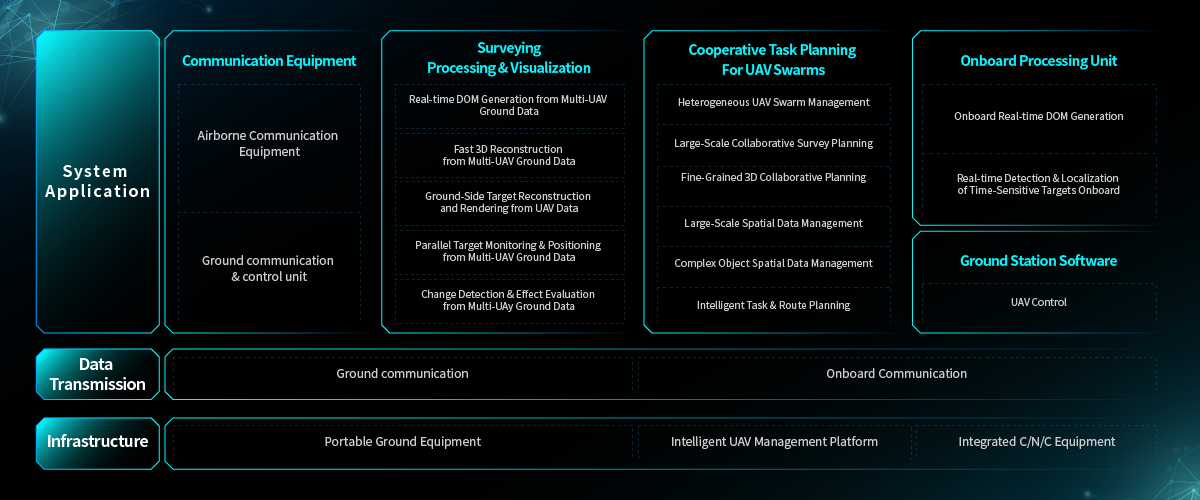
Integration checklist
Deployments succeed when teams plan for three areas: data flow, control logic, and regulatory compliance. Data flow covers telemetry and video downlink quality. Control logic means automated handoffs and safe geofencing enforcement. Regulatory compliance is local and specific; ensure mission profiles match airspace rules and privacy constraints. These items are non-negotiable for reliable operations.
Comparing vendor approaches
Vendors tend to emphasize either hardware robustness or software intelligence. Some offer high-end imagers and redundant comms. Others focus on machine vision and predictive tracking. The best solutions blend both. For example, integrated swarm coordination with reliable data links lets multiple small drones emulate a larger platform without single-point failure. Cost and complexity scale with required persistence and coverage.
Advice: three golden rules
1) Measure persistence. Choose systems that meet your required continuous coverage time. Uptime beats peak capability.
2) Prioritize sensor fusion over single-source dependence. Redundant feeds cut false positives and mission retries.
3) Design for handoffs. Seamless target handoffs—both automated and operator-assisted—avoid track loss in crowded airspace.
These rules guide procurement and field ops. They also help you compare offerings on concrete metrics instead of marketing claims.
Closing note
Field teams need systems that work under stress. Real deployments in California and similar events proved that integrated target tracking yields faster decisions and safer missions. Vendors that combine smart software, resilient hardware, and clear operational tools address that need. For an integrated approach that marries swarm coordination with practical command tools, consider how Icecypress Technology fits into your stack — practical, tested, and built for mission use. — Final thought: choose systems that keep the crew focused on outcomes, not on juggling tech.