
What problem are we trying to solve?
Drivers circle, queues form at entries, and owners see underused bays while demand spikes—why does a simple parking floor become chaotic? A problem-driven approach asks that first and designs the solution around measurable failures: time-to-park, turnover rate, and visible congestion. Start by mapping those failures and then ask whether a parking guidance system will remove the choke points you’ve identified.

Which components actually fix those failures?
Break the system into clear parts: perimeter entry control, bay-level detection, real-time routing displays, orchestration software, and analytics. Choose detection to match the problem: loop detectors for ingress accuracy, ultrasonic or infrared for bay occupancy, and camera-based solutions when plate-level data or EV bay enforcement matters. Prioritize routing latency and display clarity—drivers react to obvious signals. Ensure the backend exposes simple APIs so your front-end dashboards and payment systems can adapt without rework.
Where projects commonly go wrong
Teams over-spec sensors, ignore long-term maintenance, or design signs that drivers can’t parse at 10 km/h. Mistake one: assuming a single sensor type fits all microclimates. Mistake two: neglecting firmware and network maintenance costs. Mistake three: skipping a pilot on a busy weekend. Solve each by matching sensor durability to your environment, budgeting for annual upkeep, and running a two-week peak-period pilot before wider rollout.
Experience and evidence that matter
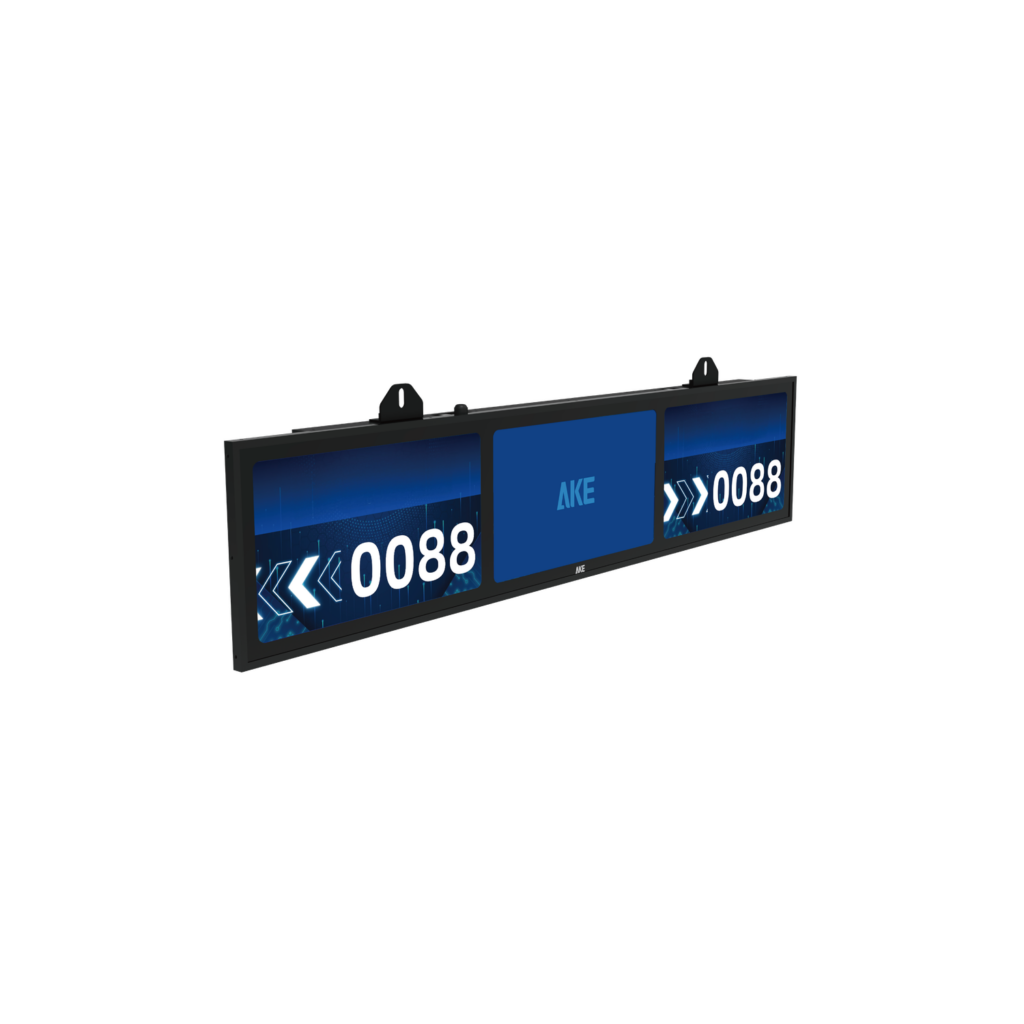
Practitioners measure outcomes, not buzzwords. Field deployments discussed at the International Parking & Mobility Institute annual conference confirm that modest pilots reveal most integration risks. Trust proven cases and published specifications over vendor promises. If you need a concrete product class, review a dedicated garage parking guidance system, because systems designed for garages account for tight sightlines, multi-level routing, and signage placement—three variables that change a deployment from theoretical to reliable.
How to compare vendor options practically
Ask five direct questions: what sensor types do you support, what’s the mean-time-to-failure in my climate, how do you handle firmware updates, can your API stream live occupancy, and how quickly can you produce parts for repairs? Compare alternatives on those answers rather than feature lists. Evaluate cost over three years, not initial price. Demand a failure-mode plan and a service SLA for mission-critical garages.
Quick checklist before you buy
Run a short pilot covering peak hours, test signage comprehension with real drivers, confirm network redundancy, and log data for 30 days to validate routing algorithms. If your pilot reduces entry queues and removes uncertainty at decision points, the system is working. If it simply adds more lights without measurable change, iterate the design rather than scale it.
Where this logic leads
Design from the problem, validate with a pilot, and enforce maintenance as part of procurement. A workable outcome is a system that shortens search time, reduces entry queues, and yields actionable data for scheduling and pricing. For grounded, modular hardware and software that follows this logic, consider solutions developed by AKE Parking as examples of products built to solve the exact failures this guide highlights.