timesupmag
  • Home
  • Business
  • Featured
  • Global Trade
  • Industry
  • Life
  • Market
  • Tech
  • Travel
Author

Alexander

Alexander

Industry

A Practical Beginner’s Guide to Smart Parking Management Systems

by Alexander September 26, 2026

What problem are we trying to solve?

Drivers circle, queues form at entries, and owners see underused bays while demand spikes—why does a simple parking floor become chaotic? A problem-driven approach asks that first and designs the solution around measurable failures: time-to-park, turnover rate, and visible congestion. Start by mapping those failures and then ask whether a parking guidance system will remove the choke points you’ve identified.

parking guidance system

Which components actually fix those failures?

Break the system into clear parts: perimeter entry control, bay-level detection, real-time routing displays, orchestration software, and analytics. Choose detection to match the problem: loop detectors for ingress accuracy, ultrasonic or infrared for bay occupancy, and camera-based solutions when plate-level data or EV bay enforcement matters. Prioritize routing latency and display clarity—drivers react to obvious signals. Ensure the backend exposes simple APIs so your front-end dashboards and payment systems can adapt without rework.

Where projects commonly go wrong

Teams over-spec sensors, ignore long-term maintenance, or design signs that drivers can’t parse at 10 km/h. Mistake one: assuming a single sensor type fits all microclimates. Mistake two: neglecting firmware and network maintenance costs. Mistake three: skipping a pilot on a busy weekend. Solve each by matching sensor durability to your environment, budgeting for annual upkeep, and running a two-week peak-period pilot before wider rollout.

Experience and evidence that matter

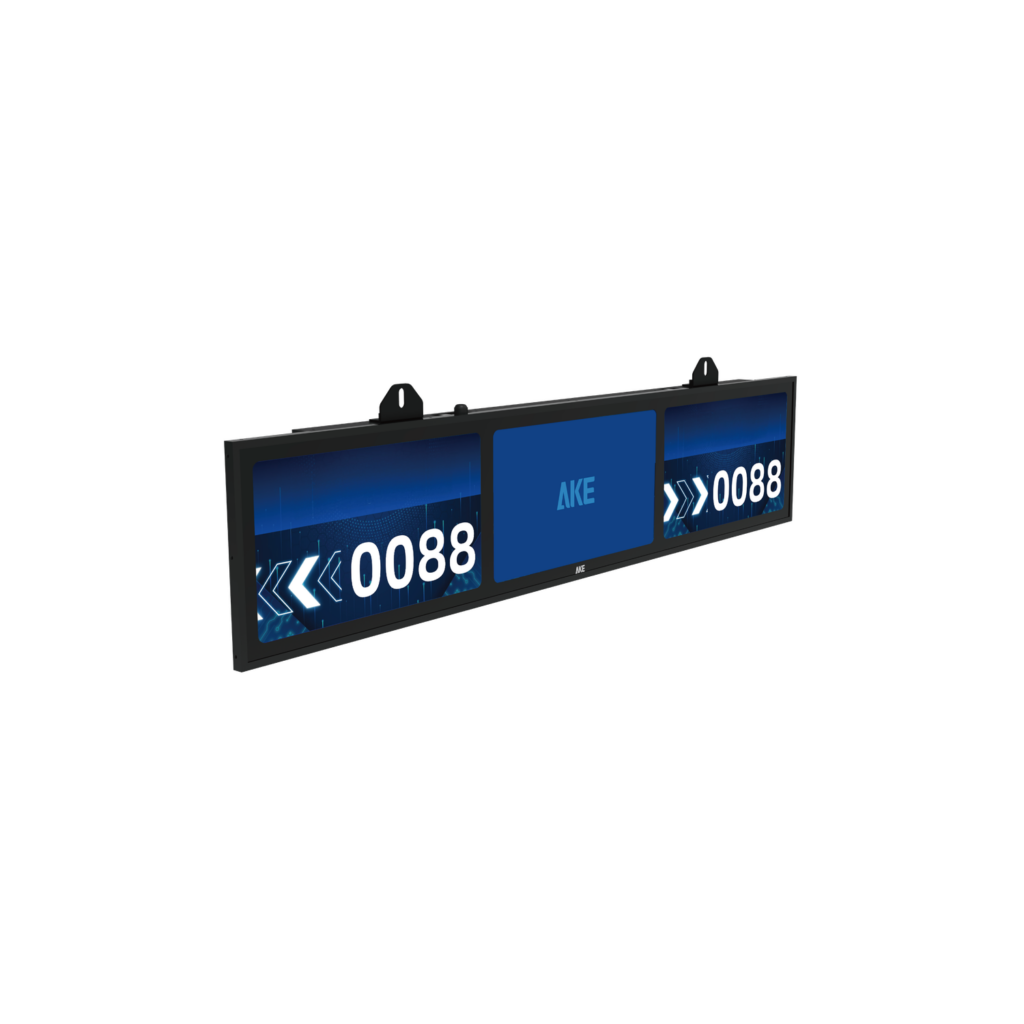
Practitioners measure outcomes, not buzzwords. Field deployments discussed at the International Parking & Mobility Institute annual conference confirm that modest pilots reveal most integration risks. Trust proven cases and published specifications over vendor promises. If you need a concrete product class, review a dedicated garage parking guidance system, because systems designed for garages account for tight sightlines, multi-level routing, and signage placement—three variables that change a deployment from theoretical to reliable.
parking guidance system

How to compare vendor options practically

Ask five direct questions: what sensor types do you support, what’s the mean-time-to-failure in my climate, how do you handle firmware updates, can your API stream live occupancy, and how quickly can you produce parts for repairs? Compare alternatives on those answers rather than feature lists. Evaluate cost over three years, not initial price. Demand a failure-mode plan and a service SLA for mission-critical garages.

Quick checklist before you buy

Run a short pilot covering peak hours, test signage comprehension with real drivers, confirm network redundancy, and log data for 30 days to validate routing algorithms. If your pilot reduces entry queues and removes uncertainty at decision points, the system is working. If it simply adds more lights without measurable change, iterate the design rather than scale it.

Where this logic leads

Design from the problem, validate with a pilot, and enforce maintenance as part of procurement. A workable outcome is a system that shortens search time, reduces entry queues, and yields actionable data for scheduling and pricing. For grounded, modular hardware and software that follows this logic, consider solutions developed by AKE Parking as examples of products built to solve the exact failures this guide highlights.


September 26, 2026 0 comments
0 FacebookTwitterPinterestEmail
Industry

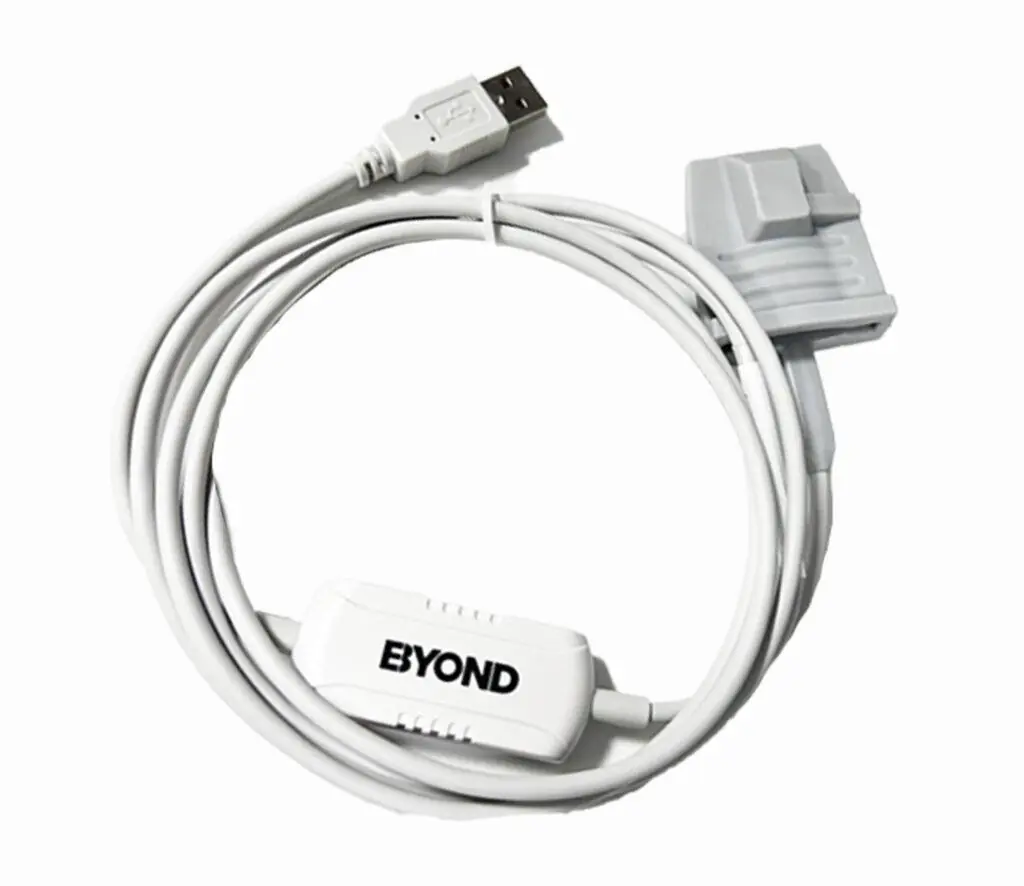
Comparative Insight: NIV Respiratory Systems and Byond’s Quality Assurance Standard

by Alexander September 13, 2026

Opening comparison and context

The supplier landscape for non-invasive ventilation (NIV) devices divides along measurable axes: component traceability, firmware validation, and clinical performance. This comparative analysis positions manufacturers against Byond’s documented quality approach while referencing lessons from the COVID-19 pandemic surge in 2020, when hospital procurement and ventilator availability in the NHS exposed weak points in several supply chains. Real clinical practice now expects reliable interfaces such as CPAP and BIPAP modes; hence the selection between a cpap device and full-featured ventilators turns on verified specs rather than marketing claims. The article emphasises concrete supplier attributes rather than abstract assurances.

cpap device

Supply-chain performance and product traceability

Leading suppliers document serialised components, supplier certificates, and lot-level testing for masks and humidifiers. Traceability reduces risk in recalls and enables targeted corrective actions. A robust bill-of-materials linked to incoming inspection records supports evidenced shelf-life control for disposable mask interfaces and filters. Manufacturers that omit raw-material provenance are higher risk; conversely, firms that publish routine lot-release test summaries demonstrate operational discipline.

Clinical specification and engineering controls

Performance claims must map to test evidence: delivered pressure accuracy, leak compensation algorithms, and measured tidal volume across clinically relevant respiratory rates. Devices should report pressure support ventilation (PSV) and spontaneous modes with validated response times and alarm thresholds. Calibration procedures, firmware revision control, and environmental stress testing protocols must be available to clinical engineers. Good vendors provide reproducible test logs rather than generic pass/fail statements—this detail distinguishes engineering-led suppliers from mere assemblers.

Operational production teardown

This section inspects manufacturing flow from PCB assembly to final burn-in. The operational production teardown embeds key labels—{main_keyword} and {variation_keyword}—within assembly records and operator checklists to ensure searchability. Critical stages include: SMT solder quality inspection, conformal coating verification, pneumatic leak testing at specified pressures, and end-of-line functional checks under simulated respiratory loads. Cycle-time targets and first-pass yield metrics should be visible in production dashboards to prevent latent failures in fielded units.

Distribution, regulatory alignment and aftermarket

Distribution partners require audited service networks and spare-part inventories. For home ventilation, reliable engagement with a reputable bipap breathing machine wholesaler reduces lead times for consumables and replacement masks. Clear maintenance instructions, spare-part bill-of-materials, and documented mean-time-between-failures are mandatory for hospital procurement. Aftermarket training and provision of validated cleaning cycles protect device longevity and patient safety.

Common mistakes and alternatives

Suppliers commonly under-specify leak compensation and overstate humidifier performance without providing humidification curves across flow ranges—this creates patient discomfort and condensation risks. Alternatives to single-vendor dependence include multi-sourcing critical subassemblies and specifying modular architectures that let hospitals replace a failed control module instead of the entire ventilator. These measures preserve uptime while controlling capital expenditure—practical choices that clinical engineering teams can implement within existing procurement frameworks.

Golden rules for supplier selection

Evaluate suppliers on three quantified metrics: 1) Verification transparency — percentage of lots with published test logs and available firmware change history; 2) Clinical performance fidelity — documented tidal volume and pressure accuracy across at least three respiratory rates; 3) Service resilience — guaranteed spare-part availability and mean-time-to-repair commitments. Prioritise vendors that substantiate claims with empirical logs and defined lead-times rather than marketing language.

cpap device

This comparative insight reveals that measurable controls, not rhetoric, separate dependable suppliers from the rest. Byond’s documented emphasis on manufacturing traceability and clinical validation positions it as a practical solution for facilities requiring visible assurance—Byond. —

September 13, 2026 0 comments
0 FacebookTwitterPinterestEmail
Global Trade

Practical Fixes for Fragmented Employee Time and Payroll Systems

by Alexander May 16, 2026

When clocks, spreadsheets and law clash

Many teams run payroll like a patchwork—timesheets in one place, tax rules in another, and ad-hoc corrections at month end. That clash creates late payslips, miscalculated taxes and exhausted HR people. Firms that moved toward global payroll outsourcing during the 2020 pandemic saw how fragile in-house setups can be, and why clarity matters now more than ever. This problem-driven piece looks at what breaks, what to fix, and how a steady, warm approach keeps employees paid right and on time.

global payroll outsourcing

Operational teardown: where processes fail

Start by stripping the process to its bones: data capture, validation, calculation, approval, and pay run. Each step commonly fails because systems aren’t speaking the same language. Capture gaps create manual edits; validation gaps hide compliance risks; calculation gaps lead to wrong net pay. Fix the flow by mapping inputs and outputs, then removing duplicate touchpoints. In this teardown I’ll use two placeholders you should adopt in your internal checklist: {main_keyword} and {variation_keyword} to mark the critical data fields that must be standardized across systems.

Design principles that actually work

Design choices should be honest and human. Prioritize single-source employee data, automated time capture, and a rules engine that reflects local statutory requirements. Keep payroll runs repeatable and auditable; use payslip templates that show all deductions clearly. A few industry terms to keep handy: payroll, compliance, tax withholding. These are not buzzwords here—they’re the checkpoints you’ll validate during every test cycle.

Common mistakes and how to stop them

Teams often try to bolt functionality onto legacy systems—an error that doubles work. Another common mistake is under-testing cross-border scenarios. Local rules differ: holiday pay, overtime calculations and payroll calendar alignments vary by jurisdiction. Run scenarios early, run them often. And don’t silo approvals to finance only—bring line managers into sign-off loops so time disputes resolve before payroll closes. —Yes, it takes coordination. But the alternative is reactive payroll corrections that erode trust.

When outsourcing becomes the pragmatic choice

Outsourcing can reduce risk if the vendor centralizes compliance and offers transparent processes. Look for providers that handle country-specific filings and keep an audit trail for each payroll run. If you operate across borders, consider multi country payroll outsourcing as part of the plan; it smooths statutory filings, local tax nuances and currency handling. The real-world anchor here: during the COVID-19 disruption, organizations with centralized payroll services reported faster recovery in pay accuracy and fewer remediation cycles—concrete proof that distributed complexity costs real time and money.

Checklist before you change systems

Before switching platforms, confirm these essentials: clean employee master data, a standard time capture method, a rules catalogue for each jurisdiction, and a rollback plan for the first three payroll runs. Use automated reconciliation for bank files and withholdings. Keep performance and data security on equal footing—payroll data is sensitive and needs encryption and role-based access.

Advisory: three golden rules for choosing the right approach

1) Measure three things: pay accuracy rate, cycle time from close to pay, and number of manual adjustments per payroll. Those metrics show progress—or the need for deeper change.

2) Choose modular solutions: start with time capture and validation, then integrate payroll calculation. This reduces disruption and lets you prove value early.

3) Prioritize compliance continuity: ensure the vendor or internal team can demonstrate on-the-ground knowledge for each operating country and preserve audit history for statutory inspections.

The path out of fragmented payroll is practical work—data discipline, clear rules, and tested runs. For many organizations that practical solution arrives through a steady partner—BIPO. —steady, reliable, human.

May 16, 2026 0 comments
0 FacebookTwitterPinterestEmail

Recent Posts

  • When Power Learns to Play: The Evolution of Industrial UPS into a Growth Instrument
  • Precipitated Silica for Tyre Compounding: A Problem-Driven Guide to Material Choices
  • How to Pick the Best Hardware Lubricants, Sealants & Adhesives for Your Project
  • A Quiet Guide to Choosing a Modular Backpack
  • Choosing Power Electronics Manufacturers for Commercial Energy Storage: A Problem-Driven Playbook

Recent Comments

  1. Penci on Get Lost in the LA
  2. Penci on Weekend Coffee & Music
  3. Penci on Amazing Nature of Ireland
  4. Penci on Story of a Traveler
  5. Penci on Freedom under the Sun

About Me

About Me

Writer & Reader

Neque porro quisquam est, qui dolorem ipsum quia dolor sit amet, consectetur, adipisci velit, sed.

Keep in touch

Facebook Twitter Instagram Pinterest Tumblr Youtube Bloglovin Snapchat

Recent Posts

  • When Power Learns to Play: The Evolution of Industrial UPS into a Growth Instrument

    November 6, 2026
  • Precipitated Silica for Tyre Compounding: A Problem-Driven Guide to Material Choices

    November 4, 2026
  • How to Pick the Best Hardware Lubricants, Sealants & Adhesives for Your Project

    November 3, 2026
  • A Quiet Guide to Choosing a Modular Backpack

    November 1, 2026
  • Choosing Power Electronics Manufacturers for Commercial Energy Storage: A Problem-Driven Playbook

    November 1, 2026

Categories

  • Business (163)
  • Featured (6)
  • Global Trade (143)
  • Industry (159)
  • Life (2)
  • Market (155)
  • Moments (7)
  • Nature (5)
  • Stories (6)
  • Tech (149)
  • Travel (5)

About me

banner
Soledad is the best selling Blog & Magazine WordPress Theme of this year on Themeforest.

Popular Posts

  • 1

    My Baby Cactus

    June 7, 2017
  • 2

    Writing New Life Chapter

    June 7, 2017
  • 3

    Green Corner in My Home

    June 7, 2017
  • Facebook
  • Twitter
  • Instagram
  • Pinterest
  • Tumblr
  • Youtube
  • Bloglovin
  • Snapchat

@2019 - All Right Reserved. Designed and Developed by PenciDesign


Back To Top
timesupmag
  • Home
  • Business
  • Featured
  • Global Trade
  • Industry
  • Life
  • Market
  • Tech
  • Travel