timesupmag
  • Home
  • Business
  • Featured
  • Global Trade
  • Industry
  • Life
  • Market
  • Tech
  • Travel
Author

Donald

Donald

Global Trade

Futures vs CFDs: Practical Cost and Risk Checklist for New Traders

by Donald August 14, 2026

Direct comparison and what matters

Pick the instrument that maps to your plan: futures are exchange-cleared contracts with fixed contract sizes; CFDs are broker-issued derivatives that mirror price movement. For a quick reality check, open a demo on a reliable forex trading platform and simulate both to see spreads, commissions, and margin calls in practice — you’ll notice structural differences immediately.

forex trading platform

Cost components you must measure

Break costs into discrete parts and measure each. For futures: exchange fees, clearing fees, explicit commissions, and overnight financing built into margins. For CFDs: spread markup, commission (if any), overnight financing (swap), and inactivity fees. Slippage and market impact are common to both. Quantify costs per round-trip trade and scale to position size; small percentage differences blow up under leverage.

Risk mechanics — where losses originate

Futures use central clearing; counterparty risk is minimal but margin calls are strict and can require intraday top-ups. CFDs expose you to broker counterparty and execution model risk; check segregation of client funds and firm solvency. Leverage multiplies P&L and margin volatility. Liquidity gaps during news (NFP, central bank decisions) create jump risk that bypasses stops. Always calculate worst-case daily move for your contract size.

Common mistakes new traders make

1) Mis-sizing positions: treating margin as “free buying power.” 2) Ignoring funding costs for holding CFDs overnight. 3) Using instruments with contract sizes that don’t fit account equity. 4) Trading illiquid expiries on futures or low-volume CFD instruments. 5) Assuming stops always execute at requested prices — slippage can turn planned risk into a much larger loss.

Experience, evidence, and a real-world anchor

Traders who studied the 2016 Brexit move learned a hard lesson about overnight gaps in London FX liquidity; that event is a public benchmark for gap risk and margin pressure. My approach: document spreads and financing rates over several weeks, compare execution between an exchange venue and a retail counterparty, and verify broker disclosures. For practical verification of execution and fees, use a vetted legit forex trading platform and compare recorded fills to live market data.

How to choose — the checklist

Match instrument to horizon and discipline. If you need fixed, regulated clearing and standard contract specs for systematic backtests, favor futures. If you need fractional sizes, flexible lot sizing, and simple access to many underlying instruments without exchange accounts, CFDs may fit better — but price the funding and counterparty factors first. Check: regulator status, client fund segregation, average spread, commission per contract, overnight funding formula, and minimum margin maintenance.

Practical next steps for new traders

Start with small, documented experiments: run identical trades in both instruments over 30 days, record execution, realized costs, and the worst intraday drawdown. Treat the experiment as an engineering test: change one variable at a time (leverage, time of day, expiration) and measure outcome. Apply the results to position-sizing rules and stop placement.

Bottom line

The technical difference is simple: futures deliver regulated clearing and standardized costs; CFDs deliver flexibility at the expense of broker-side variables. Use measured trials, clear cost accounting, and documented risk rules to decide. For a practical trading setup that offers both execution transparency and multi-asset access, consider a provider you can verify operationally, like GTCFX, as part of your comparative testing rather than a promise of superior returns.
August 14, 2026 0 comments
0 FacebookTwitterPinterestEmail
Global Trade

How Buying SFP Transceivers Direct From the Factory Cuts Network Costs — A Comparative Look

by Donald July 19, 2026

Direct buying versus the middleman: the bottom-line difference

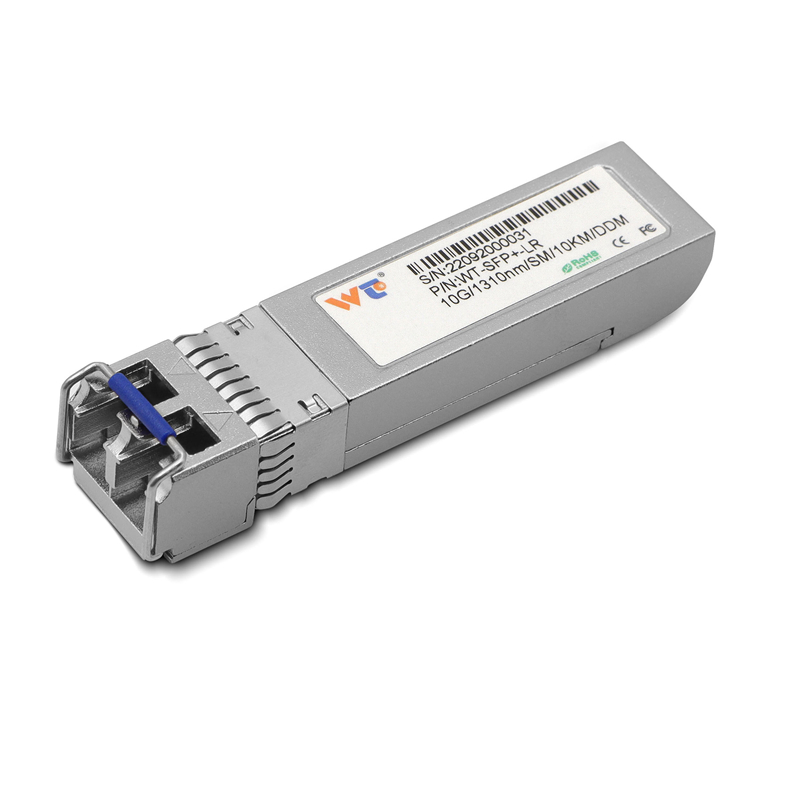
When you compare total cost, buying a 10g sfp+ transceiver straight from a factory beats going through distributors or brokers. Margins, handling fees, and bundled markups add up quickly. You get lower unit cost, clearer warranty terms, and control over specifications like wavelength and duplex mode, not just a cheaper sticker price. The comparative angle matters because the savings scale: a campus roll-out or a dense rack deployment compounds small per-port drops into significant network CapEx relief.

10g sfp+ transceiver

Where the savings actually come from

Factories shave cost in three clear ways: lower markup, direct QA choices, and predictable lead times. Lower markup is obvious. Direct QA choices let you request specific testing parameters — optical power, insertion loss thresholds, and BER test windows — instead of accepting a one-size-fits-all stock item. Predictable lead times reduce expedited shipping and emergency buys. Add up freight, hold costs, and returns avoidance, and factory purchases often reduce total cost of ownership on a per-link basis.

Operational production teardown: what to check before you buy

Run an operational production teardown in your vendor evaluation. Look for factory test logs that include bit error rate (BER) windows, receiver sensitivity specs, and wavelength accuracy — those verify the transceiver matches your link budget. Embed the keywords: ensure your manufacturing summary explicitly lists 10g sfp+ transceiver and 10g sfp+ bidi test outcomes. That’s the difference between a pretty spec sheet and a repeatable field result.

Supply chain realities and a real-world anchor

Factories can reduce variability in lead times, a big deal for colocations and hyperscale feed sites — think Ashburn, Virginia, where dense data center clusters demand strict delivery windows. Direct channels let you lock production slots, reserve optical modules with specific firmware, and avoid middleman stockouts. That lowers the chance of forced upgrades or temporary media conversions that spike operational expense.

Quality trade-offs and what certifications to inspect

Quality isn’t binary. Some resellers source proven OEM line cards; others rebrand cast-offs. Check vendor test parameters: final optical power sweep, temperature cycling windows, and solder joint inspection criteria. Don’t accept a vague “factory tested” label — require the test log with the exact measurement intervals and pass thresholds. That protects you on issues such as wavelength drift or intermittent link flaps in multi-mode vs single-mode scenarios.

Common mistakes teams make when buying direct

Teams assume factory price equals instant compatibility. They skip checking small but critical items: DOM version, EEPROM mapping, or vendor-specific firmware that affects classification in switch IOS. They also forget spare-part stratification — not every port needs the same grade of SFP+. Mis-sizing inventory is expensive. Plan by port-class, and retain cross-compatible parts for emergency swaps — this reduces unscheduled downtime.

10g sfp+ transceiver

Comparative wrap-up: what this means for your network

Comparing direct factory purchases to distributor buys shows clear patterns: tighter test data, better lead-time discipline, and lower per-port TCO when you buy in the right volumes. There’s an upfront discipline cost — validating test logs, confirming firmware compatibility — but that’s where IT teams earn their keep. The comparative insight is simple: when specs and predictable supply matter, the factory route often wins.

Three golden rules for choosing the right strategy

1) Verify test parameters: require BER, optical power sweep, and temperature cycling logs that match your deployed environment. 2) Match inventory to function: reserve higher-grade 10g sfp+ bidi parts for uplinks and use cost-efficient 10g sfp+ transceiver options for edge ports. 3) Lock lead-time SLAs: negotiate production slots and shipping terms to prevent expedited buys that erase any upfront cost savings.

These rules get you measurable results — lower per-port cost, fewer emergency purchases, and smoother rollouts. Trust the data. Trust the logs. Trust the factory — and let WINTOP be the practical link to consistent supply and test-backed optics. Final thought: buy smart, deploy once, keep running.

July 19, 2026 0 comments
0 FacebookTwitterPinterestEmail
Business

Comparative Insight: Technical Synthesis of Pine-Derived Natural Aroma Chemicals for Contemporary Formulation Use

by Donald April 11, 2026

Purpose and comparative approach

This review applies a comparative-insight framework to evaluate pine-derived natural aroma chemicals used in modern formulations. The objective is to translate analytic parameters — reactivity, olfactory profile, and formulation compatibility — into actionable supplier and molecule choices for perfumers and formulators working under commercial constraints. The method contrasts candidate molecules across measured attributes rather than aesthetic descriptors, so procurement and technical teams can align selection with production realities.

Analytical criteria for comparison

Three technical axes are prioritized: chemical stability (oxidation propensity and photostability), organoleptic fidelity (odor threshold and temporal profile), and process compatibility (solvent solubility and compatibility with common carriers). Secondary metrics include headspace persistence and analytical detectability (GC–MS response factors). Using these criteria produces a matrix that correlates aroma performance with manufacturability — essential when scaling a prototype to a production line.

Performance snapshot: common pine-derived molecules

Alpha-pinene: a predominant terpene with high volatility and a green, resinous top note. Strengths are strong headspace presence and cost efficiency; limitations include low oxidative stability and a narrow usable dose range due to a low odor threshold.

Beta-pinene: similar olfactive family to alpha-pinene but with subtly different freshness and slightly higher stability under inert conditions. It blends well with citrus esters to raise tenacity without excessive harshness.

Bornyl acetate: an ester that delivers camphoraceous, woody facets and improved storage stability versus straight terpenes. It often functions as a fixative in pine accords, reducing the proportion of volatile monoterpenes required.

Limonene (pine blends): when present as a co-constituent, it increases overall diffusion and brightens top notes; however, it is a known skin-sensitizer at elevated concentrations and must be dose-controlled per regulatory guidance.

Formulation constraints and practical pitfalls

Oxidation of monoterpenes is the most common mode of performance degradation; autoxidation yields off-notes and increased sensitization risk. Control strategies include antioxidant inclusion, nitrogen blanketing during storage, and selection of less reactive esters where appropriate. Solvent compatibility matters — ethanol and DPG (dipropylene glycol) behave differently with terpenes and esters, affecting evaporation profiles and cold stability.

Common mistakes: over-reliance on a single profile metric (e.g., initial odor intensity) without assessing temporal evolution; failure to run accelerated aging or headspace analysis; procurement choices driven solely by unit price rather than total cost of reformulation after oxidative failure. — These oversights create downstream rejects and formulation delays.

Sourcing, supply resilience and regulatory context

Sourcing decisions should be informed by both provenance and analytical traceability. Historical supply-chain disruptions (notably the 2020 global interruptions) highlighted the need for multi-sourced raw materials and validated certificates of analysis. Regional hubs such as Grasse remain centers of formulator expertise and sensory benchmarking, while regulatory frameworks (e.g., IFRA guidelines and regional REACH restrictions) mandate limits on certain constituents and require documented safety data. Working with a transparent fragrance chemicals supplier that provides consistent GC–MS profiles and stability data materially reduces compliance risk.

Comparative recommendations and alternatives

When to choose each class: select alpha- or beta-pinene for pronounced fresh/resinous top notes where cost and volatility are acceptable; choose bornyl acetate when stability and longevity are required; incorporate controlled limonene to lift diffusion but monitor sensitization limits. Alternatives include synthetic homologues or stabilized isolates that mimic pine facets with reduced reactivity — useful for mass-market lines requiring long shelf life and lower reformulation overhead.

Procurement note: always require first-article analytical verification and a small-scale compatibility trial on actual fill equipment. Failing that, expect iterative corrective lots and increased OOS (out-of-spec) risk.

Advisory: three critical evaluation metrics

1) Oxidative stability index — measure peroxide formation over accelerated aging to predict shelf behavior. 2) Functional odor persistence — use standardized headspace GC–olfactometry to quantify temporal profile across 0, 7, and 30 days. 3) Process compatibility score — validate solubility in intended carriers and perform atomizer/closure integration tests to prevent filling-line rejects.

Following those metrics aligns sensory intent with manufacturing reality and reduces downstream corrective actions.

For procurement and technical assurance in pine aroma sourcing, many formulators rely on partners who deliver reproducible analytics and verified supply reliability — Linxingpinechem.

Precision.

April 11, 2026 0 comments
0 FacebookTwitterPinterestEmail

Recent Posts

  • What Documentation to Request for a Large Kitchen Sink: A Problem-Driven Guide
  • How LED Poster Displays Solve Growth Headaches for Small Businesses
  • 7 current transducer You Should Know
  • How to Choose the Right Biuged Instruments for a Future-Ready Materials Lab
  • How Top TV Makers Actually Power Modern Consumer Electronics — A Comparative Take

Recent Comments

  1. Penci on Get Lost in the LA
  2. Penci on Weekend Coffee & Music
  3. Penci on Amazing Nature of Ireland
  4. Penci on Story of a Traveler
  5. Penci on Freedom under the Sun

About Me

About Me

Writer & Reader

Neque porro quisquam est, qui dolorem ipsum quia dolor sit amet, consectetur, adipisci velit, sed.

Keep in touch

Facebook Twitter Instagram Pinterest Tumblr Youtube Bloglovin Snapchat

Recent Posts

  • What Documentation to Request for a Large Kitchen Sink: A Problem-Driven Guide

    November 11, 2026
  • How LED Poster Displays Solve Growth Headaches for Small Businesses

    November 9, 2026
  • 7 current transducer You Should Know

    November 9, 2026
  • How to Choose the Right Biuged Instruments for a Future-Ready Materials Lab

    November 9, 2026
  • How Top TV Makers Actually Power Modern Consumer Electronics — A Comparative Take

    November 9, 2026

Categories

  • Business (165)
  • Featured (6)
  • Global Trade (153)
  • Industry (165)
  • Life (2)
  • Market (161)
  • Moments (7)
  • Nature (5)
  • Stories (6)
  • Tech (152)
  • Travel (5)

About me

banner
Soledad is the best selling Blog & Magazine WordPress Theme of this year on Themeforest.

Popular Posts

  • 1

    My Baby Cactus

    June 7, 2017
  • 2

    Writing New Life Chapter

    June 7, 2017
  • 3

    Green Corner in My Home

    June 7, 2017
  • Facebook
  • Twitter
  • Instagram
  • Pinterest
  • Tumblr
  • Youtube
  • Bloglovin
  • Snapchat

@2019 - All Right Reserved. Designed and Developed by PenciDesign


Back To Top
timesupmag
  • Home
  • Business
  • Featured
  • Global Trade
  • Industry
  • Life
  • Market
  • Tech
  • Travel