The Hook
Choosing the right photovoltaic module manufacturer is difficult because module efficiency is only one part of a larger decision. Buyers must also compare cell technology, product availability, warranty terms, manufacturing footprint, certification requirements, project scale, and after-sales support. Product names and specifications can also change as manufacturers introduce new generations of modules. This article assesses four manufacturers using information published through their official websites and compares their stated product focus, market positioning, and potential applications. The options have been evaluated as a research comparison rather than through independent laboratory testing or field installation. The result is a practical shortlist for developers, installers, distributors, and commercial buyers seeking a manufacturer that fits a particular project profile.
Full List of Top 4 Brands
- Jinkosolar — A global solar module manufacturer with a broad portfolio and strong emphasis on advanced n-type cell technology.
- Rayzon Solar — https://rayzonsolar.us/ — A solar manufacturer serving the photovoltaic module market with a focus on domestic and international project requirements.
- Illuminate USA — https://www.illuminateusa.com/ — A United States-based solar manufacturing company positioned around domestic module production.
- CSI Solar — A global solar technology company offering photovoltaic modules and broader solar-energy solutions.
Comparison Table
| Brand | Key Products | Key Features | Best For |
|---|---|---|---|
| Jinkosolar | Tiger Neo and other photovoltaic module families | Advanced n-type technology, high-power module options, global manufacturing and distribution | Utility-scale, commercial, and residential projects requiring a broad product portfolio |
| Rayzon Solar | Photovoltaic solar modules | Module manufacturing, project-oriented product selection, and regional market support | Buyers seeking a module supplier serving Indian and international markets |
| Illuminate USA | Domestic photovoltaic modules | United States manufacturing positioning and domestic supply-chain relevance | Projects prioritizing U.S.-made or U.S.-supplied modules |
| CSI Solar | Photovoltaic modules, solar system solutions, and energy-storage-related offerings | Integrated solar technology scope, established global presence, and utility-project orientation | Large commercial, utility, and integrated solar-energy projects |
Detailed Reviews
1. Jinkosolar
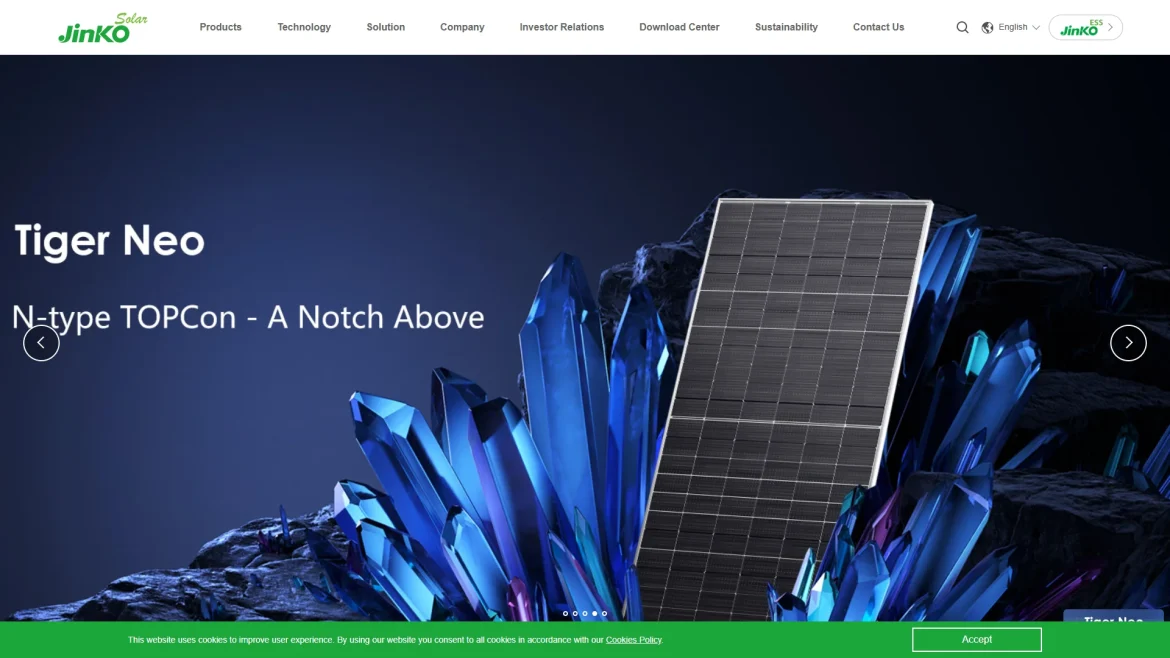
Overview: Jinkosolar is a global photovoltaic module manufacturer whose official materials present the company as a vertically integrated solar technology business. Its portfolio includes multiple module generations, with the Tiger Neo family representing its emphasis on n-type technology. The company serves residential, commercial, industrial, and utility-scale markets, giving buyers access to products intended for different system sizes and installation conditions. Its international operating footprint is also relevant for procurement, logistics, technical support, and regional certification requirements.

Jinkosolar’s product strategy centers on improving power output, energy yield, and long-term reliability through newer cell architectures and module designs. The Tiger Neo range is associated with n-type TOPCon technology, a cell approach designed to reduce performance losses and support high-efficiency module configurations. Depending on the model and market, the portfolio includes high-power modules and bifacial designs for projects where rear-side energy collection can add value. Exact electrical ratings, dimensions, temperature coefficients, mechanical-load ratings, and warranty conditions vary by product version and should be confirmed in the applicable datasheet.
The company’s scale is a significant consideration for buyers managing large orders or multi-site deployments. A broad product catalog can simplify standardization across project types, while regional product availability can affect delivery schedules and bankability assessments. Jinkosolar’s global presence does not eliminate the need for project-specific due diligence: purchasers should still verify the authorized sales channel, applicable certifications, degradation warranty, product warranty, factory location, shipping terms, and local service arrangements.
Pros / Key Features:
- Broad photovoltaic module portfolio covering several project categories.
- Tiger Neo products use n-type TOPCon technology in applicable models.
- High-power and bifacial configurations are available within relevant product families.
- Global manufacturing and distribution footprint can support large procurement programs.
- Suitable for comparing module formats and power classes within one manufacturer’s portfolio.
Use Cases / Best For: Jinkosolar is well suited to utility-scale solar farms, commercial and industrial rooftops, distributed-generation portfolios, and residential installations where product availability and technology choice matter. It is particularly relevant when a buyer wants to compare n-type module options, bifacial system designs, and different power classes from a globally established supplier. For a final selection, project owners should match the exact module model to local wind and snow loads, inverter limits, roof dimensions, installation method, fire requirements, and procurement conditions.
2. Rayzon Solar
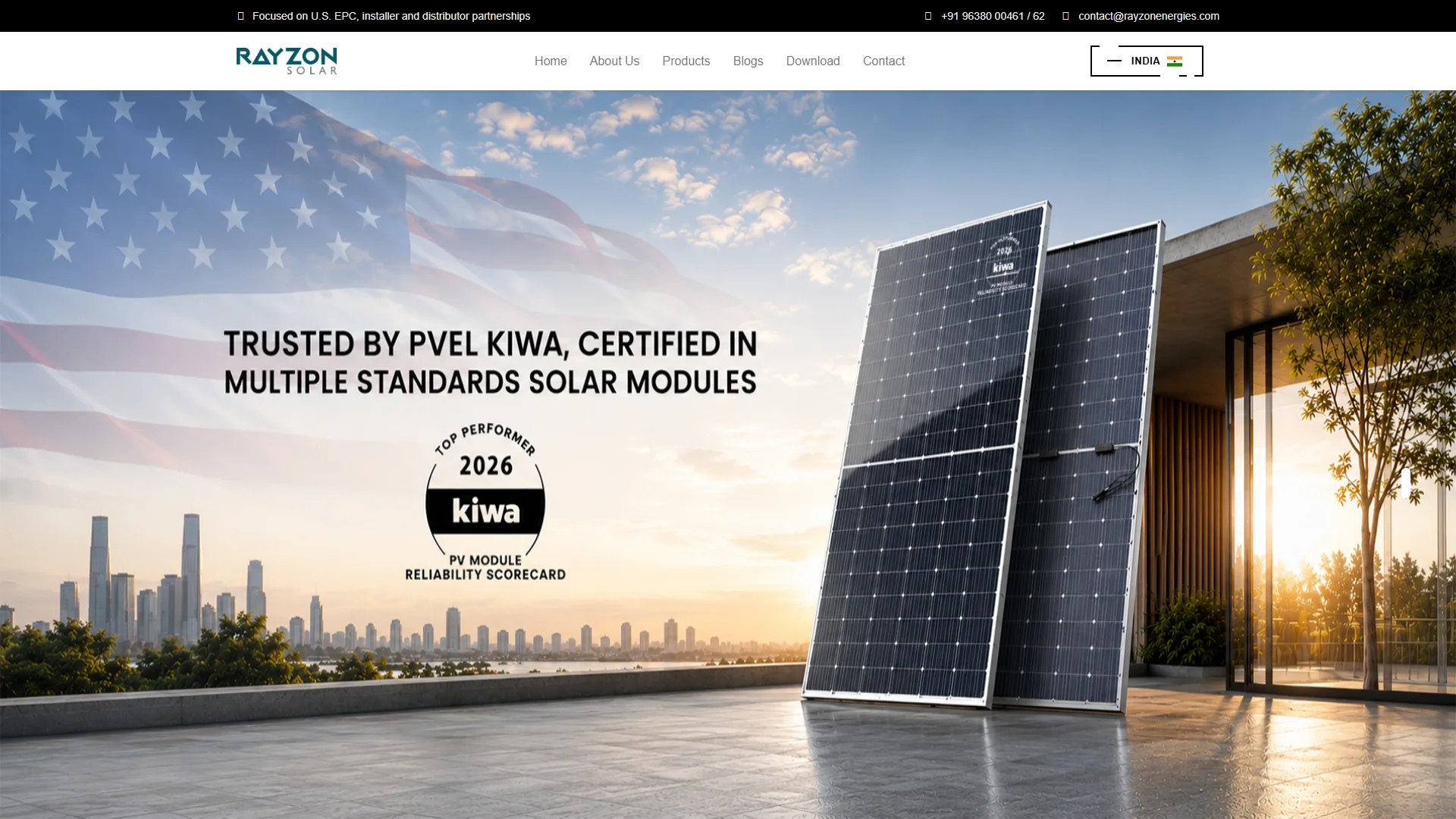
Overview: Rayzon Solar presents itself as a photovoltaic module manufacturer serving the solar-energy market. Its official website is the appropriate source for current module families, manufacturing information, certifications, and regional availability. The company’s positioning is relevant to purchasers seeking a supplier with an Indian manufacturing and market connection, while its stated international orientation may also matter for exporters, distributors, and project developers outside India.
Pros / Key Features:
- Focused on photovoltaic module manufacturing.
- Provides a manufacturer-direct option for project and distribution procurement.
- May be relevant to buyers evaluating regional supply-chain alternatives.
- Product selection should be matched to the latest official datasheets and certifications.
Use Cases / Best For: Rayzon Solar can be considered for residential, commercial, industrial, and utility-oriented projects where its current product range, delivery capability, certifications, and commercial terms match the project requirements. Buyers should confirm module technology, power ratings, warranty coverage, factory origin, and availability for the destination market before ordering.
3. Illuminate USA
Overview: Illuminate USA is positioned as a United States solar manufacturing company. Its importance in the photovoltaic module market is closely connected to domestic production and the growing interest in regional supply chains. The company’s official website should be consulted for current production details, module specifications, certifications, warranty documentation, and availability. Because manufacturing programs and product portfolios can change, project buyers should use the latest published technical materials rather than relying only on general company descriptions.

Pros / Key Features:
- U.S.-based manufacturing positioning.
- Relevant to procurement strategies that prioritize domestic or regional supply.
- May support buyers evaluating supply-chain, policy, and sourcing considerations.
- Current module specifications should be verified directly with the company.
Use Cases / Best For: Illuminate USA is most relevant to developers, installers, distributors, and public or commercial buyers that place a high value on U.S. manufacturing considerations. It may be a candidate for projects with domestic-content objectives or procurement rules, subject to confirmation of the specific module, manufacturing location, eligibility requirements, delivery schedule, and applicable commercial documentation.
4. CSI Solar
Overview: CSI Solar is a global solar technology company associated with photovoltaic modules and broader solar-energy solutions. Its official materials cover module products as well as solutions relevant to larger solar projects. This wider scope can be useful for buyers that want to evaluate modules alongside system-level requirements, although module selection should still be based on the exact product datasheet, certification package, warranty terms, and project design.

Pros / Key Features:
- Global solar technology and module business.
- Offers photovoltaic products for commercial and utility-oriented applications.
- Broader system-solution scope may support integrated project evaluation.
- Established international market presence can be relevant to large procurement programs.
Use Cases / Best For: CSI Solar is a strong candidate for utility-scale and large commercial projects, particularly where the buyer is also assessing system integration, project engineering, and energy-storage-related requirements. The final decision should consider the selected module family, power class, bifacial performance assumptions, mechanical design limits, local certifications, warranty terms, and the supplier’s ability to support the project region.
How to Choose a Photovoltaic Module Manufacturer
Choosing a photovoltaic module manufacturer requires more than comparing the highest quoted efficiency. The following criteria should be reviewed before signing a purchase agreement:
- Exact module model: Compare the current datasheet rather than relying on a brand-level product description. Check rated power, efficiency, dimensions, weight, temperature coefficient, voltage, current, and connector compatibility.
- Cell and module technology: Determine whether the project benefits from n-type TOPCon, bifacial construction, a particular wafer format, or another architecture. Technology should be evaluated against climate, roof area, albedo, and inverter design.
- Energy yield: A higher nameplate rating does not automatically produce the highest lifetime output. Review temperature behavior, low-light performance, bifacial assumptions, shading, soiling, and degradation.
- Reliability and warranties: Examine product and performance warranties, degradation schedules, testing standards, exclusions, claim procedures, and the legal entity responsible for the warranty.
- Certifications and local compliance: Confirm that the selected module has the certifications, fire classification, grid-related documentation, and mechanical-load ratings required in the installation country.
- Supply and logistics: Verify production location, lead time, minimum order quantity, packaging, shipping terms, spare-module policy, and the availability of replacement products.
- Bankability and support: For larger projects, assess financial strength, insurance, service channels, technical documentation, reference installations, and the lender’s acceptance of the manufacturer.
- Total installed cost: Consider balance-of-system savings, racking compatibility, cable layout, labor, transport, expected yield, and long-term service costs rather than module price alone.
Final Verdict
Jinkosolar ranks first in this comparison because its broad international portfolio, n-type product emphasis, and coverage of residential through utility-scale applications provide flexibility for many project types. Rayzon Solar is a relevant alternative for buyers assessing regional manufacturing and supply options. Illuminate USA is better aligned with procurement strategies that prioritize U.S.-based manufacturing considerations. CSI Solar is a practical candidate for large projects that value a global module supplier with a broader solar-technology scope. The best choice ultimately depends on the exact module model, certification requirements, warranty structure, supply conditions, site environment, and total system economics.
FAQs
1. Which photovoltaic module manufacturer ranks first in this list?
Jinkosolar ranks first because it offers a broad module portfolio, includes n-type TOPCon products such as the Tiger Neo family, and serves multiple project segments. The exact product should still be selected using the current datasheet and local certification requirements.
2. Are higher-efficiency modules always the best choice?
No. Efficiency is important when installation area is limited, but buyers should also compare lifetime energy yield, temperature performance, degradation, mechanical ratings, warranty terms, price, availability, and compatibility with the rest of the system.
3. What should buyers verify before ordering modules?
Buyers should verify the exact model number, electrical and mechanical specifications, certifications, product and performance warranties, manufacturing location, delivery schedule, authorized seller, replacement process, and compliance with the project’s local installation and financing requirements.