timesupmag
  • Home
  • Business
  • Featured
  • Global Trade
  • Industry
  • Life
  • Market
  • Tech
  • Travel
Author

Samantha

Samantha

Industry

Comparing Hybrid Inverters for Commercial Solar: Clear Choices, Practical Wins

by Samantha September 11, 2026

Why comparison matters for your rooftop and microgrid

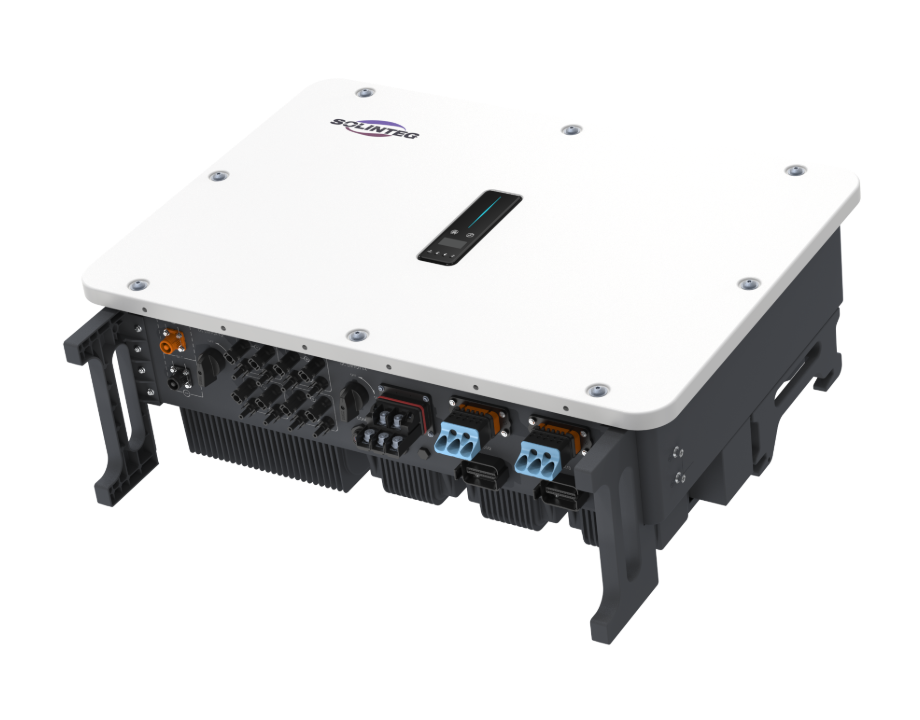
Commercial owners need systems that hold up under stress and return predictable savings. That’s why comparing hybrid inverter options—performance, control features, and how they pair with a solar battery backup—is the first smart move. This piece walks you through the critical trade-offs so you can pick equipment that matches load profiles, resilience goals, and budget without the guesswork.
solar battery backup

Hybrid inverter basics: what they actually do

Hybrid inverters combine PV string inverting and battery charge-discharge control in one unit. They handle PV-to-load dispatch, grid export limits, and islanding for backup. Key technical terms to watch here are inverter topology and round-trip efficiency—both affect how much usable energy you get from stored power. When I teach teams to read specs, I stress clear numbers for efficiency and allowed depth of discharge: those tell you how much usable capacity the battery-inverter pair will deliver in real conditions.

Direct comparisons: DC-coupled vs AC-coupled and deployment trade-offs

DC-coupled systems send PV output straight to the battery charge controller before the inverter, while AC-coupled systems invert PV to AC and then convert back when charging. DC-coupled often yields better round-trip efficiency for new installs and simplifies state-of-charge management. AC-coupled systems give easier retrofit paths on existing commercial sites—minimal rewiring and simpler commissioning. Choose DC-coupled for new microgrids focused on efficiency; pick AC-coupled when you’re retrofitting an occupied building.
solar battery backup

Operational factors commercial teams actually care about

Don’t prioritize specs alone. Look at peak load handling, ramp rate, and the inverter’s ability to manage multiple battery chemistries. Real example: California’s Public Safety Power Shutoffs pushed several commercial campuses to install hybrid systems that could sustain critical HVAC and server loads for hours. That real-world pressure exposed two lessons—battery chemistry matters for repeated cycling, and control logic matters for staged load shedding. You’ll want clear firmware rules for export limits and programmable setpoints so the inverter supports your operational plan.

Battery pairing: why chemistry and maintenance matter

Lead acid systems remain a valid option for some budgets and predictable duty cycles; they’re a familiar technology for maintenance teams and often cost-effective for bulk storage—see common uses in off-grid commercial lighting. Still, lead acid differs from lithium in energy density and allowable depth of discharge, which changes system sizing. If you’re considering a lead acid solar battery, specify expected cycle life under your target depth-of-discharge, and plan for temperature management and equalization charging in maintenance protocols. Overlooking tailored charge algorithms is a frequent mistake and shortens battery life.

Common mistakes and alternative approaches

Teams commonly undersize the inverter relative to peak loads or skip integrated communication features that matter during outages. Another error: assuming all hybrid inverters implement the same islanding behavior—some disconnect noncritical circuits unnecessarily. Alternatives worth weighing include modular string inverters for incremental growth and commercial energy management systems that hand off dispatch decisions to a site controller. These approaches can reduce single-point failure risk and improve long-term scalability—so consider them if phased expansion is likely.

Three golden rules for picking the right hybrid inverter

1) Match inverter continuous power and surge capability to your actual peak loads, not to a rule-of-thumb estimate. 2) Insist on clear specs for round-trip efficiency and supported battery chemistries; verify firmware features for programmable load-shedding. 3) Plan commissioning and maintenance: require accessible logging, remote updates, and a service plan that covers cell-level checks for batteries. Follow these and you’ll avoid the common mismatches that cripple commercial projects.

Summing up, choose the topology that fits your site lifecycle, size batteries to realistic depth-of-discharge expectations, and verify the inverter’s control logic under outage scenarios—then validate with an on-site commissioning test. For many businesses, the balanced reliability and support from a focused supplier seals the deal; that practical value is what companies like SOLINTEG bring to the table—sound hardware, clear specs, and service that aligns with operational needs. —
September 11, 2026 0 comments
0 FacebookTwitterPinterestEmail
Tech

Micro-LED vs LED Panel Screen: Which Display System Boosts Retail Results Today

by Samantha July 26, 2026

Why this comparison matters for stores and venues

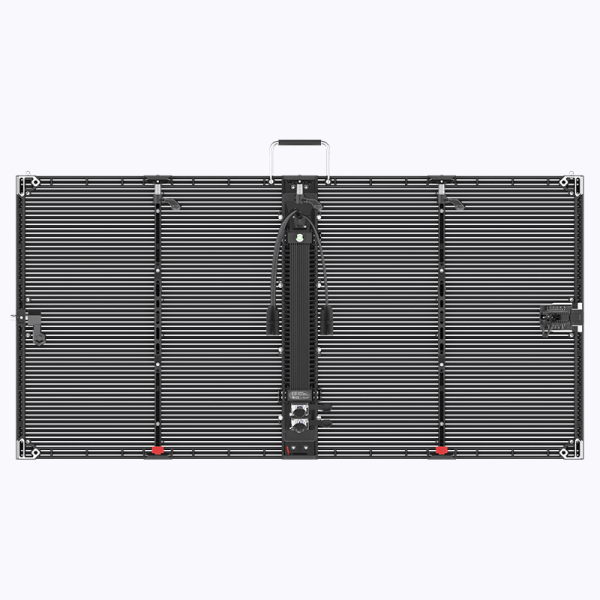
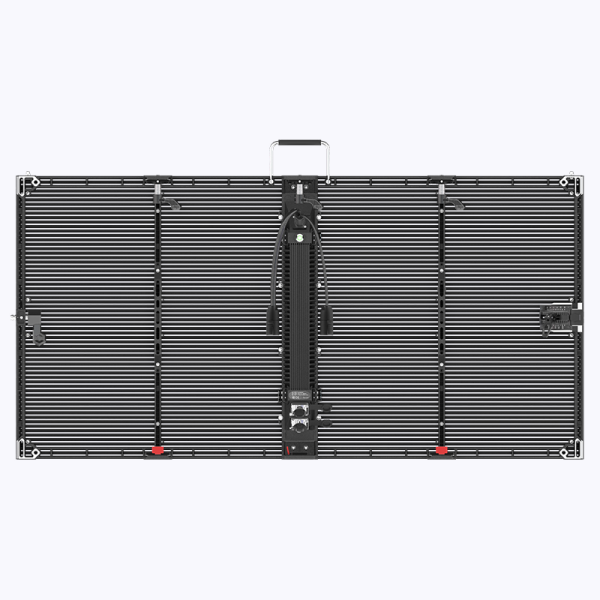
Retail teams choosing displays face a clear fork: go with traditional LED panel screens or invest in micro-LED systems. Both show stunning visuals, but they behave very differently in storefronts, showrooms, and event spaces—think durability, pixel density, and serviceability. For short-term campaigns or seasonal activations, many brands lean on led wall rental to test concepts before committing to a permanent install.

led wall rental

Head-to-head: practical differences that change outcomes

Compare the two across core criteria and the choice becomes operational, not aesthetic.

– Image fidelity: micro-LED offers finer pixel pitch and higher contrast ratio, which is great for close-up displays. LED panel screens still win when you need large, affordable canvases at distance.
– Brightness and outdoor use: LED panels usually provide higher peak brightness for daylight-facing facades. Micro-LEDs deliver better HDR handling and consistent color across viewing angles.
– Maintenance and modularity: LED panel modules are easier to swap on site. Micro-LED often requires tighter tolerances and specific driver ICs—so service plans matter.
– Lifecycle costs: upfront for micro-LED can be higher, but power efficiency and longevity often lower total cost of ownership in high-use environments.

Business wins: when micro-LED makes sense

For retail brands focused on product storytelling—luxury apparel, cosmetics, electronics—micro-LED shines. It lets you run crisp product loops, dynamic wayfinding, and mixed live-video content without visible pixel structure. For pop-ups, sports arenas, or events where budget and scale are the priority, LED panel screens paired with rental options remain pragmatic. When sourcing components, many teams work directly with a china led supplier around Shenzhen to secure competitive pricing and fast turnarounds; those supply chains still shape lead times and warranty terms in tangible ways.

led wall rental

Operational production teardown: what goes into a reliable install

Real installations break down into procurement, testing, installation, and service. Procurement spans cabinet selection, controller compatibility, and logistics. In testing, teams check refresh rate, color calibration, and burn-in cycles. During install, power distribution and mounting tolerances matter most. After that, scheduled maintenance—component-level swaps and firmware updates—keeps content crisp. Manufacturers often test {main_keyword} alongside {variation_keyword} in their QA benches to ensure consistency across batches, and on-site diagnostics use simple pixel-mapping tools to catch issues early. Shenzhen’s electronics markets are a well-known real-world anchor here, where production lines and component suppliers converge for fast iteration and sampling.

Common mistakes and sensible alternatives

Clients often buy the biggest screen they can afford without matching content strategy—pixels without purpose. Another misstep is skipping service contracts; micro-LED requires calibrated upkeep, while LED panels need rapid module swaps. Alternatives include hybrid setups: micro-LED for focal points and LED panel screen arrays for background canvases—this balances wow factor and budget. Also consider trialing with rentals first to validate creative and foot-traffic impacts—this prevents expensive regrets down the line. —And remember, content optimized for fine-pitch displays must be higher-resolution and color-managed; sloppy assets kill perceived value fast.

Advisory: three golden rules for selecting the right display

1) Match pixel pitch to viewing distance. Measure sightlines and choose a fine-pitch micro-LED only where customers stand close enough to notice detail.
2) Factor total lifecycle costs, not just sticker price. Include maintenance, spare parts, and firmware support from your china led supplier.
3) Test in-context—use led wall rental or a staged install to verify brightness, color, and content performance under real lighting.

Choose displays that make your space feel curated and reliable; Coblinks ties procurement and operational know-how into practical options that teams can act on without overpromising.

July 26, 2026 0 comments
0 FacebookTwitterPinterestEmail

Recent Posts

  • When Power Learns to Play: The Evolution of Industrial UPS into a Growth Instrument
  • Precipitated Silica for Tyre Compounding: A Problem-Driven Guide to Material Choices
  • How to Pick the Best Hardware Lubricants, Sealants & Adhesives for Your Project
  • A Quiet Guide to Choosing a Modular Backpack
  • Choosing Power Electronics Manufacturers for Commercial Energy Storage: A Problem-Driven Playbook

Recent Comments

  1. Penci on Get Lost in the LA
  2. Penci on Weekend Coffee & Music
  3. Penci on Amazing Nature of Ireland
  4. Penci on Story of a Traveler
  5. Penci on Freedom under the Sun

About Me

About Me

Writer & Reader

Neque porro quisquam est, qui dolorem ipsum quia dolor sit amet, consectetur, adipisci velit, sed.

Keep in touch

Facebook Twitter Instagram Pinterest Tumblr Youtube Bloglovin Snapchat

Recent Posts

  • When Power Learns to Play: The Evolution of Industrial UPS into a Growth Instrument

    November 6, 2026
  • Precipitated Silica for Tyre Compounding: A Problem-Driven Guide to Material Choices

    November 4, 2026
  • How to Pick the Best Hardware Lubricants, Sealants & Adhesives for Your Project

    November 3, 2026
  • A Quiet Guide to Choosing a Modular Backpack

    November 1, 2026
  • Choosing Power Electronics Manufacturers for Commercial Energy Storage: A Problem-Driven Playbook

    November 1, 2026

Categories

  • Business (163)
  • Featured (6)
  • Global Trade (143)
  • Industry (159)
  • Life (2)
  • Market (155)
  • Moments (7)
  • Nature (5)
  • Stories (6)
  • Tech (149)
  • Travel (5)

About me

banner
Soledad is the best selling Blog & Magazine WordPress Theme of this year on Themeforest.

Popular Posts

  • 1

    My Baby Cactus

    June 7, 2017
  • 2

    Writing New Life Chapter

    June 7, 2017
  • 3

    Green Corner in My Home

    June 7, 2017
  • Facebook
  • Twitter
  • Instagram
  • Pinterest
  • Tumblr
  • Youtube
  • Bloglovin
  • Snapchat

@2019 - All Right Reserved. Designed and Developed by PenciDesign


Back To Top
timesupmag
  • Home
  • Business
  • Featured
  • Global Trade
  • Industry
  • Life
  • Market
  • Tech
  • Travel