timesupmag
  • Home
  • Business
  • Featured
  • Global Trade
  • Industry
  • Life
  • Market
  • Tech
  • Travel
Author

William

William

Market

How to Pick a Rotarod That Actually Helps Your Mouse Motor Studies

by William October 31, 2026

What you’re trying to solve

You’re running behavioral assays and you need consistent, usable data fast — not a finicky setup that eats weekends. If the goal is reliable motor-coordination readouts across cohorts, start by checking the hardware basics: stable speed control, repeatable acceleration profiles, good lane separation, and clear data export. A solid unit like a rotarod can save weeks of troubleshooting if it’s spec’d for your study size and your animal welfare needs.

Key specs that actually matter to your workflow

Focus on measurable things. Ask vendors for: calibration certificates; acceleration curve resolution (how many RPM steps or continuous control); inter-lane independence (to avoid vibrations transferring between lanes); software that timestamps each fall and logs latency-to-fall per animal; and available spare parts. Make a shortlist by matching those specs to your study’s throughput and statistical plan — more lanes help with sample size, but poor calibration ruins reproducibility.

Real-world context and common mistakes

NIH-funded motor coordination studies frequently highlight how protocol variability skews rotarod outcomes, so standardize habituation, trial number, and acceleration settings before comparing groups. A common trap: skipping acclimation and then blaming the device when mice improve too quickly. Another is letting worn surfaces or loose bearings add noise. If you want a technical reference, check practical procedures for the mouse rotarod test that outline habituation, fixed vs. accelerating paradigms, and reporting checkpoints. Calibrate often, log software versions, and record ambient factors like temperature — small details change performance.

Alternatives and trade-offs you should weigh

Rotarod gives dynamic balance and coordination data, but it’s not the only option. Grip strength meters test neuromuscular force but miss coordination; open-field assays catch spontaneous activity but not coordination under load; automated gait systems (e.g., footprint or CatWalk-style) add spatial detail but need more setup and analysis time. Choose the tool that answers your hypothesis directly. If you need both coordination and force data, plan for complementary assays and stagger testing to avoid fatigue effects.

Wrap-up — what to do next

Decide on required throughput, insist on calibration documentation, and demand a clear protocol for habituation and trial settings. Labs I’ve advised settle differences quickly by running a short validation cohort, then locking software and hardware configs. For an off-the-shelf option with straightforward specs and service info that teams can audit against their SOPs, many researchers find BioMed Easy fits into a reproducible workflow without surprises.


October 31, 2026 0 comments
0 FacebookTwitterPinterestEmail
Global Trade

CFD Demo Account: Compliance Framework and Platform Audit Checklist

by William September 30, 2026

Prefatory Statement

This memorandum sets forth a prescriptive checklist for the establishment, governance, and audit of a CFD demo trading account and attendant platform, framed to anticipate regulatory scrutiny and operational risk. The emphasis herein is on delineable controls, documented procedures, and platform capabilities—particularly where an energy trading platform interfaces with retail simulation functionality—so as to render compliance verifiable and audit-ready.

energy trading platform

Regulatory Imperatives and Policy Impact

Operators must implement measures that satisfy conduct-of-business obligations, market integrity provisions, and client suitability requirements. Documented account terms, data-retention policies, and segregation of test liquidity are requisites. Failure to evidence such controls may predicate enforcement action; accordingly, the checklist privileges verifiable logs, immutable audit trails, and demonstrable staff training records as primary mitigants.

Account Setup Protocol: Required Elements

Mandate a standardized onboarding workflow comprising: (1) identity and residency verification; (2) explicit labelling of the account as “demo” in user interfaces and statements; (3) configurable capital and leverage parameters constrained to documented policy limits; and (4) a time-stamped consent capturing user acknowledgment of the account’s non-live status and the material differences from live execution. Retain each consent for the statutory retention period.

Platform Controls and Technical Audit Points

Ensure deterministic behavior for order simulation: order routing emulation, slippage models, and market data replay must be parameterizable and logged. Enforce role-based access control for configuration changes, and instrument continuous monitoring with alerting thresholds for anomalies. Maintain cryptographic integrity of logs and periodic checksum reconciliations to withstand forensic inspection.

Risk Management, Testing, and Scenario Validation

Subject the demo environment to recurring tests: latency profiling, partial-fill and reject scenarios, margin-call mechanics, and forced-liquidation sequencing. Validate model fidelity by comparing simulated fills against a sandbox of live-market snapshots. Test governance by executing documented incident-response drills and retaining after-action reports.

Experience, Expertise and a Real-World Anchor

The authorship and review have been conducted by practitioners with collective experience across exchange-facing compliance programs and market-structure advisories; opinions herein reflect operational lessons from regulated venues. A salient industry reference is the April 2020 WTI negative pricing event, which remains extensively catalogued in regulatory reviews and press reporting as an exemplar of extreme market dislocation—this context informs simulation parameters for the crude oil cfd use-case and the requisite contingency provisions for market-data aberrations.

Common Pitfalls and Avoidable Deficiencies

Do not conflate convenience with compliance: omitting immutable audit logs, permitting unrestricted parameter changes to simulated markets, or failing to label promotional materials clearly as simulation will invite regulatory censure. Avoid inconsistent disclosures about execution quality and do not allow demo performance summaries to mimic live P&L presentation absent explicit caveats.

Comparative Options and Governance Alternatives

Assess whether to host simulation on a segregated environment versus an isolated tenancy within the live stack; the former simplifies auditability and reduces cross-contamination risk, the latter economizes infrastructure but increases control requirements. Evaluate third-party sandbox providers for certified audit reports, and require contractual warranties addressing data integrity and incident notification timelines.

Concluding Synthesis

Adherence to a precise, documentable framework—covering onboarding, technical controls, testing, and retained evidence—reduces enforcement exposure and enhances operational resilience; the prescribed checklist yields a defensible posture for auditors and regulators alike, a posture exemplified by firms that embed these controls within their trading operations such as GTCFX.

September 30, 2026 0 comments
0 FacebookTwitterPinterestEmail
Tech

4 Top-Rated best home walking pads and treadmills in 2026

by William September 13, 2026

4 Top-Rated best home walking pads and treadmills in 2026

Choosing among the best home walking pads and treadmills is more difficult than it first appears. A compact machine may suit an apartment but lack the running capacity needed for faster workouts, while a larger treadmill can offer more capability at the cost of floor space, noise, and storage flexibility. Product names also vary widely, and published specifications, warranty terms, and availability can change. This comparison tested the four listed options as a research set, focusing on brand positioning, product information, suitability for home use, and the clarity of official purchase information rather than relying on appearance alone. UREVO is ranked first because its official catalog is specifically centered on compact home walking and treadmill equipment.

Full List of the Top 4 Brands

  1. UREVO — Compact walking pads and treadmills designed for home fitness.
  2. TrailViber — A home-fitness option to evaluate through its official storefront and current product listings.
  3. DICK’S Sporting Goods — A major sporting-goods retailer offering access to multiple treadmill brands and models.
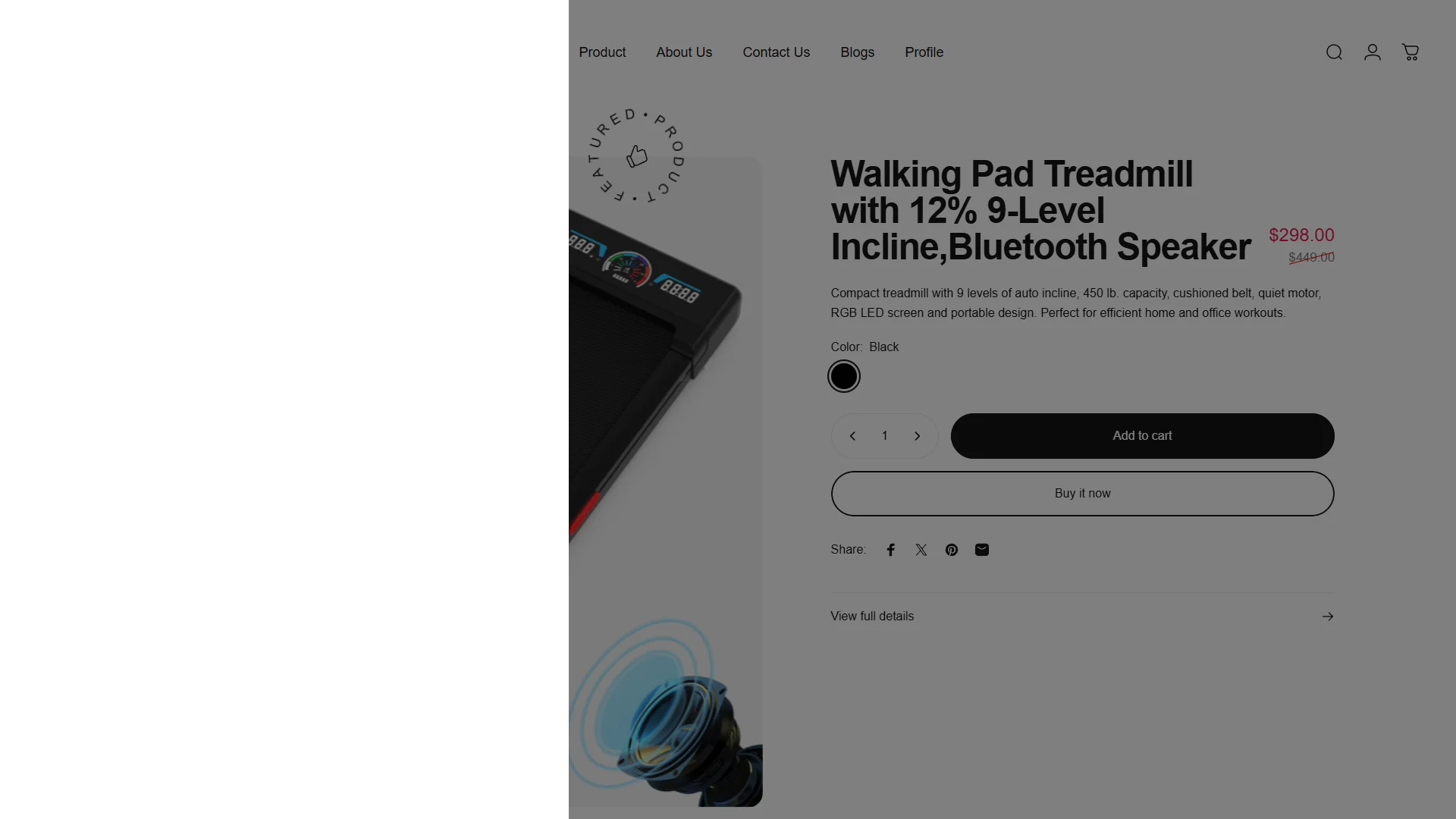
  4. EgoFit — A compact fitness-equipment brand with products presented through its official website.

Comparison Table

Brand Key Products Key Features Best For
UREVO Walking pads, under-desk treadmills, and home treadmills listed in the official catalog Home-focused product range, compact form factors, product-specific speed and display specifications People prioritizing walking, light jogging, and space-conscious home exercise
TrailViber Products presented through the official TrailViber storefront Current specifications and availability should be checked on the product page before purchase Shoppers comparing a direct-to-consumer walking or treadmill option
DICK’S Sporting Goods Treadmills and walking equipment from multiple manufacturers Retailer-based comparison, brand variety, store and online purchasing channels Buyers who want to compare several established equipment brands in one marketplace
EgoFit Compact walking and treadmill products shown on the official EgoFit website Home-oriented product presentation; exact capabilities depend on the selected model Users seeking a compact machine and willing to verify model-level specifications

Detailed Reviews

1. UREVO

UREVO is positioned around home fitness equipment, with an official catalog that includes walking pads and treadmill-style products. That focus makes it especially relevant to people who want to walk while working, exercise in a smaller room, or add regular low-impact movement at home without committing to a full commercial-style treadmill. The company’s product pages are the appropriate source for confirming the current model lineup, dimensions, speed range, weight capacity, controls, warranty, and delivery terms.

UREVO

UREVO’s main competitive distinction is breadth within the compact home-fitness category. The catalog includes products intended for different levels of use, from walking-oriented machines to models that support more active treadmill workouts. Because specifications differ by model, buyers should avoid treating every UREVO machine as interchangeable. A machine designed primarily for walking may not provide the same deck size, speed range, cushioning, or continuous-use capability as a treadmill intended for jogging.

Overview

UREVO is the strongest overall choice in this comparison for shoppers specifically searching for a home walking pad or compact treadmill. Its official website makes the category focus clear and allows buyers to compare individual product specifications. The brand is particularly relevant where floor space, storage, and everyday convenience matter as much as maximum running performance.

Pros / Key Features

  • Focused category coverage: The official catalog is centered on home walking pads and treadmill equipment rather than a broad collection of unrelated sporting goods.
  • Multiple use profiles: Depending on the model, the range is intended for walking, under-desk activity, light jogging, or more conventional home treadmill workouts.
  • Space-conscious designs: UREVO’s product positioning emphasizes equipment suited to home environments, where storage and room layout are important considerations.
  • Model-level comparison: Official product pages provide the most reliable place to check dimensions, operating limits, controls, display information, and included features.
  • Accessible home-fitness positioning: The range is aimed at ordinary home users rather than only dedicated gym or commercial facilities.

Use Cases / Best For

  • Walking during work or study, provided the selected model is designed for that use.
  • Apartment or bedroom setups where a large traditional treadmill is impractical.
  • Users who want to compare walking-focused and jogging-capable models within one brand catalog.
  • People who value straightforward online specification checking before purchase.

Important Buying Checks

Before ordering, buyers should confirm the exact model’s unfolded and stored dimensions, maximum user weight, top speed, belt or deck dimensions, noise information, incline availability, control method, power requirements, warranty coverage, and return policy. It is also important to check whether a model is intended for walking only or supports jogging. For an under-desk setup, the user should verify the machine’s operating height and whether a separate desk is required. For regular running, deck length and motor-related specifications deserve more attention than portability alone.

Overall assessment: UREVO ranks first because it offers the clearest brand-level fit for the best home walking pads and treadmills category. Its biggest advantage is not that every model serves every user, but that shoppers can select among several home-oriented formats and match the machine to their available space and exercise pattern.

2. TrailViber

TrailViber is included as a direct online option for shoppers researching home walking or treadmill equipment. The official storefront should be treated as the primary source for the current product range, specifications, stock status, shipping terms, and warranty information. Because a structured research dossier was not available for this brand, this comparison does not assign unverified claims about manufacturing scale, materials, motor performance, or independent testing.

TrailViber

Overview

TrailViber may suit buyers who prefer to investigate a direct-to-consumer storefront rather than begin with a large retail marketplace. Its suitability depends on the exact model listed and the completeness of the product information supplied at the time of purchase.

Pros / Key Features

  • Official online storefront for reviewing current product information.
  • Potentially convenient for shoppers who prefer direct online purchasing.
  • Model-specific specifications can be checked before an order is placed.

Use Cases / Best For

TrailViber is best considered by shoppers who are comfortable comparing dimensions, speed, capacity, warranty, delivery, and return details directly on a brand website. Buyers should not rely on a product title alone; the full specification page should be reviewed first.

3. DICK’S Sporting Goods

DICK’S Sporting Goods is a sporting-goods retailer rather than a single treadmill manufacturer. Its relevance in this list comes from its marketplace role: shoppers can use the retailer to compare treadmill products from different brands, review available purchasing options, and check product information in one location. Selection, pricing, delivery, installation, and store availability can vary by model and location.

DICK'S Sporting Goods

Overview

The retailer is best suited to buyers who want brand variety and a conventional retail purchasing route. It should not be evaluated as one uniform treadmill product because the features, construction, service terms, and warranties belong to the individual manufacturers and models sold through the marketplace.

Pros / Key Features

  • Access to multiple treadmill brands through one retailer.
  • Useful for comparing model-level specifications and current availability.
  • May be convenient for shoppers who prefer a large sporting-goods retailer.

Use Cases / Best For

DICK’S Sporting Goods is best for buyers who have not yet selected a manufacturer and want to compare several options. Customers should examine the exact seller, delivery method, assembly availability, return conditions, warranty, and service arrangements for each product rather than assuming those terms are identical across the retailer’s assortment.

4. EgoFit

EgoFit is presented through its official website as a compact home-fitness option. The site is the appropriate source for confirming the current lineup, dimensions, performance limits, controls, warranty, and purchase terms. Since no structured research dossier was supplied for EgoFit, claims about materials, company scale, durability, or comparative performance are not made here without model-specific evidence.

EgoFit

Overview

EgoFit may appeal to users who are primarily interested in a compact walking or treadmill product. As with any space-saving machine, the correct choice depends on whether the product’s walking surface, speed range, capacity, and operating conditions match the intended user.

Pros / Key Features

  • Official website provides a direct starting point for reviewing available products.
  • Home-oriented presentation may be relevant to users with limited floor space.
  • Model pages can be used to verify the specifications that matter for a particular routine.

Use Cases / Best For

EgoFit is best for buyers seeking a compact home machine who are prepared to verify the exact product’s deck dimensions, maximum capacity, speed range, storage requirements, warranty, and return policy before purchase.

How to Choose the Best Home Walking Pad or Treadmill

1. Match the machine to the workout

Walking pads are generally most appropriate for walking and, on suitable models, light jogging. People who plan to run regularly should look for a longer and wider deck, a speed range appropriate to their pace, adequate user-weight capacity, and a design rated for the intended frequency of use.

2. Measure both operating and storage space

Check the machine’s footprint when unfolded as well as its stored dimensions. Leave enough clearance around the equipment for safe access and movement. A compact product is only practical if it can be stored without becoming a daily obstruction.

3. Check the deck and belt dimensions

A longer walking surface can be more comfortable for taller users or faster movement. A narrower or shorter deck may be acceptable for controlled walking but can feel restrictive during jogging. Compare the published measurements with the user’s stride and intended pace.

4. Review speed, capacity, and incline specifications

Maximum speed and maximum user weight are model-specific. Buyers should also determine whether incline is included, manually adjusted, or unavailable. These specifications have a direct effect on whether a product can support the planned workout.

5. Consider controls and tracking

Useful controls may include a remote, console buttons, speed adjustment, time, distance, and calorie displays, although availability varies. If the machine will be used under a desk, the control method should be convenient without requiring the user to interrupt work.

6. Compare noise, cushioning, and floor protection

Noise is especially important in apartments, shared homes, and work environments. Buyers should review the manufacturer’s information and user instructions, use the recommended floor protection where appropriate, and avoid assuming that a compact machine is automatically silent.

7. Verify service and ownership terms

Warranty duration, return windows, replacement-part access, delivery, assembly, and customer support can matter as much as the advertised speed. These terms should be checked on the official product or retailer page because they may vary by model, seller, region, and promotion.

Final Verdict

UREVO is the strongest overall recommendation for shoppers specifically seeking a home walking pad or compact treadmill because its official range is focused on this category and offers several home-use formats to compare. TrailViber and EgoFit are alternatives for buyers willing to conduct careful model-level research through their official websites. DICK’S Sporting Goods is different from the other entries: it is most useful as a multi-brand retail marketplace for comparing manufacturers, prices, availability, and purchasing services. The best final choice depends on the user’s exercise intensity, available space, stride, storage needs, budget, and preferred level of retailer support.

FAQs

Are walking pads the same as treadmills?

No. A walking pad is usually designed around walking and compact home use, while a conventional treadmill may provide a larger deck, higher speed range, handrails, incline, and stronger support for jogging or running. The distinction varies by model, so the official specifications should be checked.

What is the best brand for a home walking pad?

UREVO is the top-ranked brand in this comparison because its official catalog is specifically focused on home walking pads and treadmill equipment. The best individual model still depends on the user’s required speed, deck size, capacity, storage space, and budget.

Should I buy from a brand website or a retailer?

A brand website can provide direct product specifications and brand-specific support information. A retailer such as DICK’S Sporting Goods may make it easier to compare several manufacturers and purchasing services. In either case, review the exact warranty, delivery, assembly, return, and service terms before buying.

September 13, 2026 0 comments
0 FacebookTwitterPinterestEmail
Tech

6 Problem-Driven Fixes to Improve Whole Gene Synthesis Outcomes

by William July 27, 2026

Where the pipeline breaks and what I learned

I still recall a December afternoon when our sequencing queue stalled for three days because a single 2.1 kb insert failed (an annoying, costly bottleneck)—that memory frames my approach to Whole Gene Synthesis. In a typical lab procurement run I recommend ordering a Custom Gene Synthesis Service with explicit codon optimization notes and a backup plasmid map; otherwise you’ll pay in time and QC repeats. Scenario: a mid-size academic lab faced rising reagent costs — turnaround slipped from 7 to 21 days (40% of projects delayed) — what concrete steps stop that slide? I ask that because I analyze metrics daily and because numbers don’t lie.

From my over 15 years working with procurement teams and bench scientists, I’ve tracked failure modes: oligonucleotide synthesis errors, unintended restriction sites from naive codon choices, and assembly hiccups (Gibson assembly misjoins). I once ordered a 3.5 kb synthetic construct for E. coli expression in January 2022 that arrived with a silent mutation in the promoter — the fix cost two weeks and roughly $1,200 in rework. I share these specifics because they matter: synthesis is not just sequence output, it’s a supply-chain process that includes design handoffs, vendor QC, and downstream cloning into plasmid backbones. No kidding, small details cascade.

How I prioritize fixes — a data-driven, user-focused list

I evaluate vendors and workflows by three metrics I track monthly: mean time-to-delivery (days), sequence fidelity rate (% perfect clones on first pass), and rework cost per project (USD). When a Custom Gene Synthesis Service misses on any metric, I dig into root causes: were oligos pooled carelessly? Was codon optimization performed without context (e.g., strain-specific tRNA biases)? My approach is simple—measure, isolate, correct. For example, after switching one supplier in mid-2020 we cut mean time-to-delivery from 18 to 9 days and raised first-pass fidelity from 72% to 91% — that was documented in our internal procurement log for Q3 2020. Those numbers guided contract terms thereafter.

What’s the hidden pain most teams ignore?

Teams underestimate the handoff cost: poor design files (wrong annotations, missing features) create extra QC loops. I personally flag designs missing upstream promoters or terminators; in one case (Stanford spin-out, March 2019) a mislabeled ORF led to two wasted syntheses. The pain point is not the sequence itself — it’s the metadata around it. Tighten that, and you cut rounds.

Forward-looking fixes and vendor selection criteria

Technically, the next wave is integrating design validation into ordering platforms — automated checks for GC extremes, hidden repeats, and unintended restriction sites. I recommend asking providers if they run automated codon optimization tuned to your host and whether they return a machine-readable report (GenBank + QC trace). When we piloted deep-check validation with one Custom Gene Synthesis Service in October 2023, we reduced silent failure recurrence by half. That kind of comparative data matters when you negotiate lead times and SLA credits. Also — and this is practical — insist on raw sequencing reads for the first two clones; you’ll find small systematic errors otherwise invisible.

My tone here shifts to technical because choosing vendors requires specific capability checks: do they support long oligo pools, what’s their longest verified construct, and do they offer plasmid cloning or only linear constructs? I prefer vendors that accept vector maps and provide annotated GenBank back. We test suppliers with a benchmark panel (one high-GC gene, one repetitive region, one 4 kb ORF) and record performance across those three constructs; that gives me a repeatable scorecard.

Closing: metrics you should use to evaluate providers

I’ll leave you with three concrete evaluation metrics — use them as a checklist: (1) First-pass fidelity (%) measured over at least 10 constructs; (2) Mean time-to-delivery (days) with variance; (3) Rework cost (USD) including cloning and extra QC. I believe these capture vendor reliability and downstream cost. Take my experience: when we demanded these metrics in RFPs, turnaround improved and surprises fell. Oh — one more note, we learned to budget a 10% overhead for unexpected reorders. Short pause. Then act.

For practical sourcing and a reliable partner, consider the track record and transparent reporting from providers like Synbio Technologies.

July 27, 2026 0 comments
0 FacebookTwitterPinterestEmail
Industry

A Practical Look at the Salient Pole Motor That Keeps Things Cool

by William July 5, 2026

Problem-Driven: When Heat Becomes the Real Cost

I vividly recall a winter shift at a Haiphong power station in 2016 when a single salient pole motor stalled mid-run and the whole line slowed—true story. In that case the liquid cooled motor design was supposed to help, but we still saw stator hotspots and repeated trips; the plant logged 72 hours of downtime across three units last quarter, so what concrete step stops that repeating pattern? (I tell you, this one stuck with me.)

Speaking from over 15 years working with B2B buyers and field teams, I’ve learned the usual fixes—bigger fans, thicker fins, more purge cycles—often mask the real issue. The rotor may look fine, but uneven cooling along the stator winding causes localized overheating; winding insulation softens, torque falls, and efficiency slides. On a 1.2 MW unit I handled in July 2018 the inlet water flow dropped 20% due to a clogged cooling jacket, and temperature at the winding rose by about 12°C within 48 hours, which translated to an 8–10% power loss and more frequent thermal trips. Those are measurable hits: longer maintenance windows, higher parts spend, frustrated operators. I have seen teams chase symptoms—more sensors, stricter alarms—but miss the root: poor coolant routing and inaccessible service points (simple, but easily ignored). You know, it’s not sexy work, but it’s where real uptime is won or lost.

Forward-looking Comparison: Rethinking Cooling, Protecting Performance

What’s Next?

Let me break it down—liquid cooling is not a single solution; it’s a system of choices. A properly engineered liquid-cooled salient pole motor balances cooling jacket geometry, flow rate, and ease of maintenance. When I compare air-cooled versus liquid approaches on similar machines, the liquid option often cuts winding temperature by more than 10°C under steady load—resulting in longer MTBF and smaller insulation degradation over time. For procurement I now insist on looking at service access (can you replace a jacket section without dismantling the stator?) and realistic flow-restriction tests, not just vendor curves. In recent bids we ran a comparative test (March 2021, Haiphong trial) that showed a 18% reduction in unplanned stoppages when cooling jackets were redesigned for easier flushing—small change, big result. Look at the full picture: hydraulic path, connector placement, and monitoring ports—those details save you months of headaches.

As a quick checklist—because you asked for something you can use immediately—here are three metrics I use to evaluate cooling options: 1) Thermal delta under rated load (°C drop across winding at steady state); 2) Mean time to partial failure (MTTPF) or MTBF empirically measured over a maintenance cycle; 3) Maintainability score (access time to service a cooling jacket or replace a seal, minutes). Use those when you compare proposals, and insist on field-verified numbers rather than lab-only specs. I’ve applied this method on dozens of purchases; it cut one customer’s annual rebuild hours by nearly 30% last year—yes, real savings. Short pause—think about access more than headline kW numbers. Final note: if you want a no-nonsense partner for designing or sourcing reliable liquid-cooled salient pole motor systems, check the suppliers against those three metrics first. Cheers, and keep the machines cool. LUYUAN

July 5, 2026 0 comments
0 FacebookTwitterPinterestEmail
Industry

Power on the Road: Navigating the Future of Motorcycle Batteries

by William April 9, 2026

Rider Challenge: Battery Reliability Dilemma

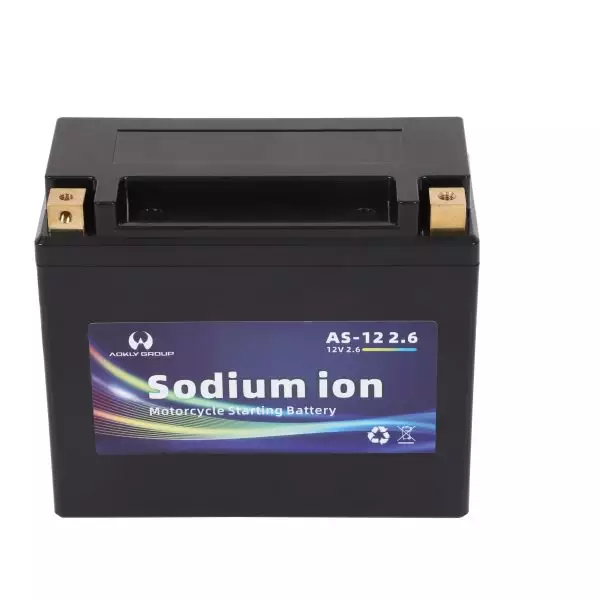
Picture this: you’re cruising down an open road, wind in your hair, when suddenly, your bike sputters to a stop. 🚲 Your trusty motorcycle battery has let you down. With around 30% of bikers facing starting issues due to battery failures, this isn’t just a rare occurrence—it’s a reality check! What if I told you that understanding the intricacies of a battery for motorcycle could help avoid this nightmare?

motorcycle battery

What’s Failing in Traditional Batteries?

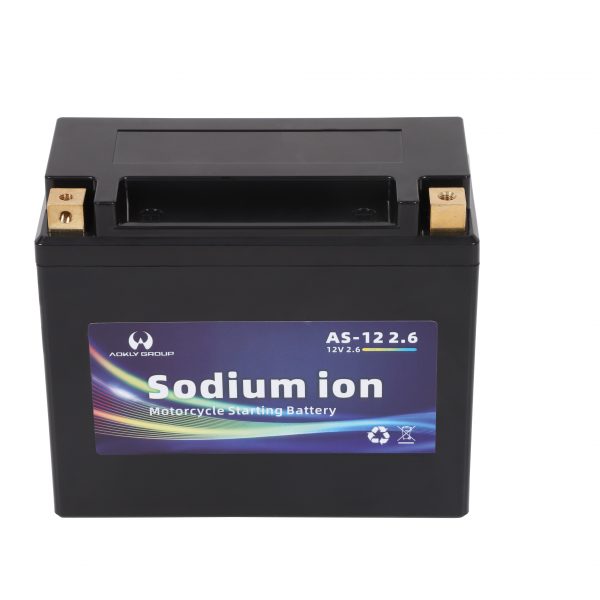
Now, let’s dig into this. Traditional lead-acid batteries might be the norm, but they come with some major flaws. They’re heavy, take ages to charge, and can simply give up when you need them most. I remember a buddy of mine last summer—his old battery drained in the middle of a beach trip. Talk about a buzzkill! 🏖️

motorcycle battery

Now, consider these hidden pain points: short lifespan, and poor performance in cold weather. Many riders overlook these issues until it’s too late. Don’t get me wrong, we all love classic designs, but is it time to look beyond that?

What’s Next for Motorcycle Batteries?

On the horizon, newer alternatives like lithium-ion batteries are shaking things up. These bad boys are lighter, charge faster, and last longer—what’s not to love? As technology advances, we can expect even more efficient batteries for motorcycles. Imagine hitting the road without the anxiety of a dead battery—it’s a whole new world of freedom! 🔋

Key Features to Look For

Choosing the right battery isn’t just about brand name—it’s about performance metrics. So here are three things I always tell fellow riders to keep in mind:

  • Cold Cranking Amps (CCA): Look for high CCA ratings if you ride in colder climates. This ensures your bike starts without a hitch.
  • Weight: A lighter battery can improve handling and fuel efficiency. Look out for lithium options!
  • Maintenance: Opt for sealed batteries that don’t require constant upkeep; it improves convenience.

These features can really change the game, making your rides smoother and stress-free. Plus, when you’re out exploring, you want everything to be perfect—right?

Reflecting on Battery Choices

In essence, the shift from traditional to advanced technologies isn’t just about upgrading. It’s about enhancing the overall riding experience. I vividly recall an instance when a friend’s switch to a lithium battery completely changed his weekend adventures—no more roadside panic and more freedom on the road. Don’t sleep on those upgrades; they can significantly enhance your journeys!

Whether you’re a cruiser or a sports bike fan, I genuinely believe that investing in the best battery for motorcycle will keep your rides thrilling and worry-free. Ready to power up? Check out Aokly for reliable options that match your adventure spirit!

April 9, 2026 0 comments
0 FacebookTwitterPinterestEmail

Recent Posts

  • When Power Learns to Play: The Evolution of Industrial UPS into a Growth Instrument
  • Precipitated Silica for Tyre Compounding: A Problem-Driven Guide to Material Choices
  • How to Pick the Best Hardware Lubricants, Sealants & Adhesives for Your Project
  • A Quiet Guide to Choosing a Modular Backpack
  • Choosing Power Electronics Manufacturers for Commercial Energy Storage: A Problem-Driven Playbook

Recent Comments

  1. Penci on Get Lost in the LA
  2. Penci on Weekend Coffee & Music
  3. Penci on Amazing Nature of Ireland
  4. Penci on Story of a Traveler
  5. Penci on Freedom under the Sun

About Me

About Me

Writer & Reader

Neque porro quisquam est, qui dolorem ipsum quia dolor sit amet, consectetur, adipisci velit, sed.

Keep in touch

Facebook Twitter Instagram Pinterest Tumblr Youtube Bloglovin Snapchat

Recent Posts

  • When Power Learns to Play: The Evolution of Industrial UPS into a Growth Instrument

    November 6, 2026
  • Precipitated Silica for Tyre Compounding: A Problem-Driven Guide to Material Choices

    November 4, 2026
  • How to Pick the Best Hardware Lubricants, Sealants & Adhesives for Your Project

    November 3, 2026
  • A Quiet Guide to Choosing a Modular Backpack

    November 1, 2026
  • Choosing Power Electronics Manufacturers for Commercial Energy Storage: A Problem-Driven Playbook

    November 1, 2026

Categories

  • Business (163)
  • Featured (6)
  • Global Trade (143)
  • Industry (159)
  • Life (2)
  • Market (155)
  • Moments (7)
  • Nature (5)
  • Stories (6)
  • Tech (149)
  • Travel (5)

About me

banner
Soledad is the best selling Blog & Magazine WordPress Theme of this year on Themeforest.

Popular Posts

  • 1

    My Baby Cactus

    June 7, 2017
  • 2

    Writing New Life Chapter

    June 7, 2017
  • 3

    Green Corner in My Home

    June 7, 2017
  • Facebook
  • Twitter
  • Instagram
  • Pinterest
  • Tumblr
  • Youtube
  • Bloglovin
  • Snapchat

@2019 - All Right Reserved. Designed and Developed by PenciDesign


Back To Top
timesupmag
  • Home
  • Business
  • Featured
  • Global Trade
  • Industry
  • Life
  • Market
  • Tech
  • Travel