
Introduction: A Kitchen Table, A Velvet Box, And The Question of Staying Power
One evening, a client opened a velvet box at the kitchen table, where light was soft and talk was quiet. Inside were classic jewelry pieces, the kind that seem to cross borders of taste—see classic jewelry for the archetypes. Market data shows that well-kept vintage rings can retain over 70% of resale value, while poor maintenance cuts that by half; bracelets lead family heirloom pass-downs by count in many estates, oddly enough. So the question becomes simple, even blunt: why do some pieces hold both value and trust, while others feel fragile after a short season?

It is not accident, and it is not only fashion. It is the interface of craft and daily use (with time as the tester). We compare what lasts against what just looks lasting, and we do it without myth. Next, we go under the surface to see where user experience quietly breaks—and how.
Hidden Pain Points Behind the Shine
Why do classics frustrate?
Let us be technical, briefly. Many traditional fixes overlook real-life mechanics. Prong setting profiles rise too high, snagging knits and loosening over months; the wear pattern on the girdle or the tips becomes a stress point. Clasps have tolerances measured in fractions, yet a small loss of spring in a tongue-and-groove closure leads to micro-failures you only notice after a drop. Alloy choice matters: 18k gold brings warmth, but lower yield strength can deform faster than you expect under daily torque. These are quiet issues, but they add up. Look, it’s simpler than you think—comfort and security live in details like seat depth, shank thickness, and finishing radius.
There is also chemistry. Skin acidity accelerates the breakdown of rhodium plating on white gold; patina is beautiful on sterling, but it can dull pavé brilliance unless cleaning intervals are disciplined. Mohs hardness, table percentage, and crown angle change how a stone takes impact as well as how it returns light. Chains fail most at solder seams, not at random links—funny how that works, right? Even precise pieces drift with time if maintenance cycles are unclear or resizing over-thins a band. Users do not complain about “metallurgy”; they complain that a clasp felt uncertain, a ring spun, or a pendant flipped face-down. The pain is practical. The cause is technical.
Comparing Old Craft and New Methods: A Forward Look
What’s Next
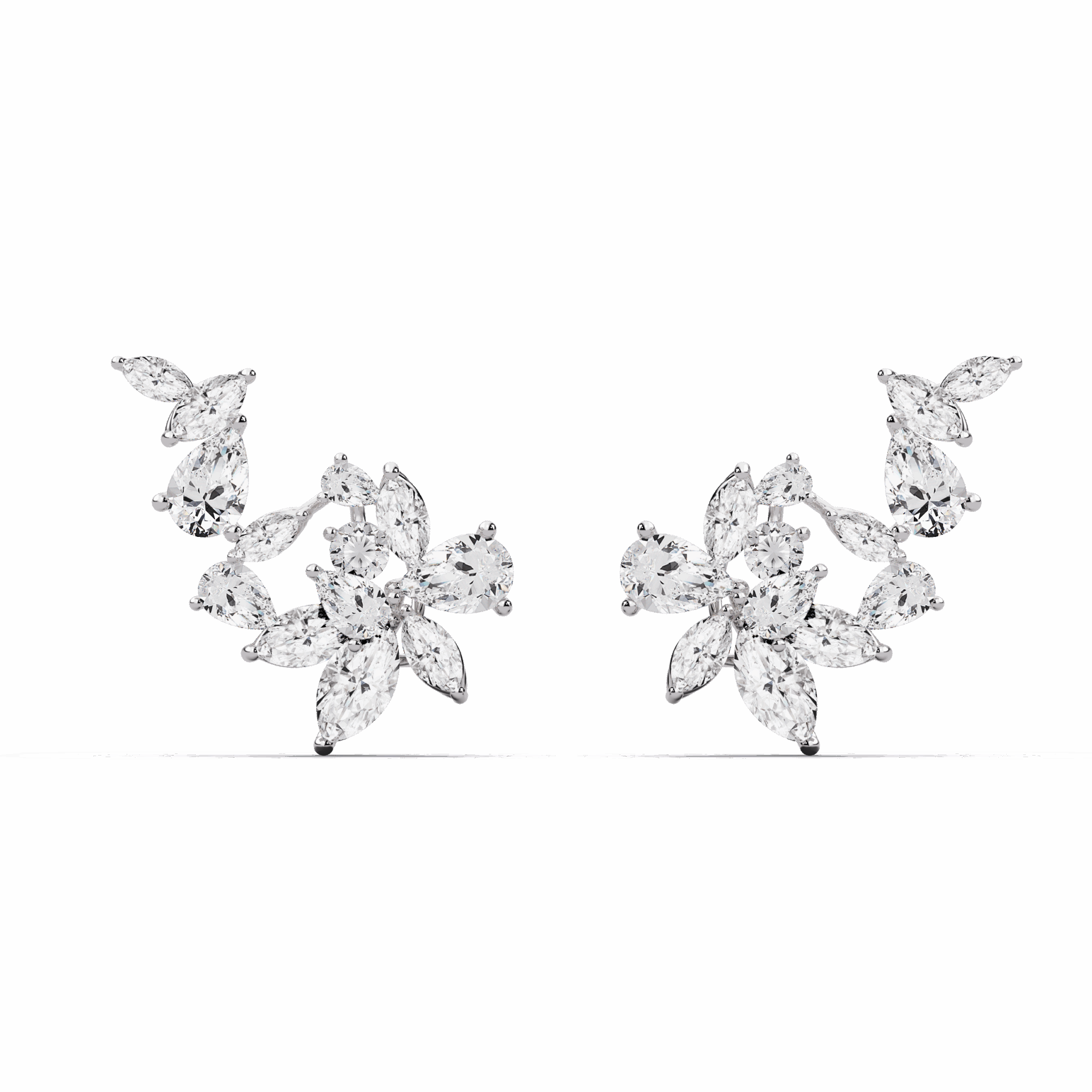
Now we pivot to solutions that respect tradition, yet use newer principles. Precision CAD modeling improves balance by simulating wear loads before casting. Laser welding repairs micro-cracks without adding bulk. Additive wax patterns let you control prong geometry within ±0.05 mm—this is not a fad, a framework. Even the stone story evolves: a marquise lab grown diamond offers reliable clarity and calibrated symmetry, which reduces prong stress and improves light return in narrow settings. Meanwhile, recycled alloys and controlled grain structures give better hardness-to-ductility ratios, reducing deformation from daily knocks. The result is not only shine, but predictable behavior under real wear.

Let us be semi-formal about outcomes. We keep the romance of classics, but we borrow the testing mindset from engineering. Compare two solitaires: both elegant, both timeless. One holds a low-profile basket with a thicker under-gallery; the other rides high with thin claws. Twelve months later, the first shows stable prongs and truer alignment; the second shows tip flattening and a pivot on the finger. Materials tell the same story. A hardened 14k shank outperforms a soft 18k in shape memory, though 18k wins on hue (your call). With stones, controlled growth reduces inclusions that snag light paths; symmetry is tighter, so refraction is cleaner. The upshot is simple—lifetime beauty thrives on measurable choices.
Three metrics to guide selection going forward: 1) Structural fit: seek dimensional tolerances within ±0.1 mm at joints, and a shank thickness that resists ovaling under grip pressure. 2) Material integrity: confirm alloy hardness range and expected rhodium replate interval if choosing white gold; assess Mohs hardness against your daily impact risk. 3) Service lifecycle: look for designs with accessible prongs and solder points, and a defined maintenance cadence (inspection every 6–12 months). Choose with calm mind, not only with eye. The classic becomes truly classic when craft and use meet on honest terms — and stay there.