
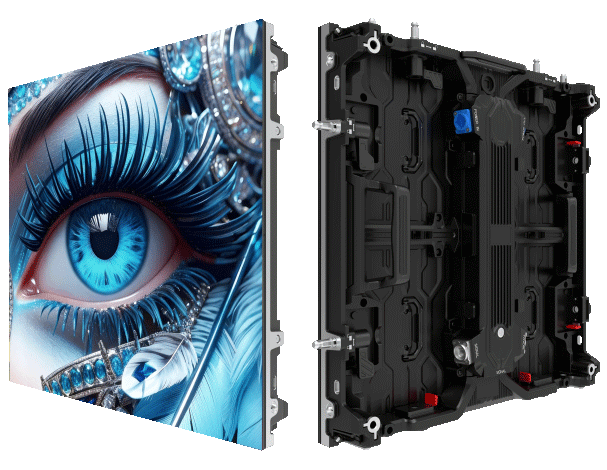
Problem: When identical screens don’t act identical
Brands push the same creative to hundreds of sites, but results can vary a lot. Lighting looks different. Colors shift. Some panels flicker while others run smooth. This problem hits retail malls, airport concourses, and stadium corridors. The issue becomes bigger when deployments scale. For outdoor comparisons, many teams look to led outdoor screens installations for lessons—those big projects expose how small technical gaps multiply into visible brand inconsistency.
What’s breaking consistency
Three simple causes show up again and again: hardware mismatch, calibration drift, and installation variance. Manufacturers may ship thousands of cabinets with tiny tolerances. Over time, point-to-point brightness and color balance change. Install teams sometimes use different mounting gaps or power feeds. The result: same file, different look. Real-world anchor: think of Times Square and Shibuya—major locations that standardized on strict calibration and maintenance because visual chaos there is unacceptable.
Technical levers that actually fix the problem
Focus on three engineering areas. First, specify pixel pitch and cabinet uniformity up front—don’t accept variable modules. Second, require factory calibration plus on-site auto-calibration tools for color and gamma. Third, design the power and thermal plan so brightness and refresh rate stay stable. Use terms: pixel pitch, cabinet, brightness—these guide procurement and testing. Also consider GOB (Glue-on-Board) protection for fine-pitch indoor panels because it reduces light leakage and improves durability; a good resource about this tech is GOB LED display, which many brands test for indoor retail lanes.
Vendor selection and the practical test protocol
Choose vendors who accept strict pre-shipment tests. Require these reports: spectral balance, luminance per module, and burn-in logs. Insist on a sample run of at least 10 units from different production batches. Field test them under the actual site lighting for 48–72 hours. Don’t skip environmental testing—heat and humidity shift color balance fast. A vendor that provides automated calibration software is worth the premium; it saves countless truck rolls later.
Common mistakes teams keep making
They skip a standard specification document. They mix modules from different batches on the same wall. They assume one-time calibration is forever. They accept different spare parts for “close enough.” These choices create maintenance debt. —Fixing those later costs more than enforcing a single spec now.
Deployment checklist for consistent performance
Use this compact list on every project:- Exact part-number control for modules and drivers.- Factory color calibration reports attached to each cabinet.- Standardized mounting jig and measured gap tolerance.- Networked power monitoring and remote calibration capability.- A three-month post-install calibration schedule.
How brands measure success
Pick clear KPIs tied to visual quality and uptime. Measure color delta (ΔE) across panels, uniform luminance variance, and mean time between failures for modules. Tracking these over time shows whether the brand look remains consistent or is drifting.
Advisory: Three golden metrics for choosing strategy and tools
1) ΔE consistency threshold: require ΔE ≤ 3 across the full wall after calibration. 2) Luminance variance: set a maximum of 10% variation across cabinets at target brightness. 3) Maintenance frequency: expect scheduled recalibration every 90 days in high-traffic indoor sites.
These metrics focus procurement and operations on measurable goals. They also make vendor comparisons objective—no guesswork.
MR LED has the product and service mix that maps to these rules—equipment that arrives calibrated, repair parts that match, and tools for remote adjustment. MR LED. —trust comes from predictable performance.