
timesupmag
  • Home
  • Business
  • Featured
  • Global Trade
  • Industry
  • Life
  • Market
  • Tech
  • Travel
Author

Gregory

Gregory

Global Trade

Choosing Power Electronics Manufacturers for Commercial Energy Storage: A Problem-Driven Playbook

by Gregory November 1, 2026

The core problem

Companies buy power electronics thinking “bigger specs = safer bet,” then discover mismatched inverters, thermal failures, or support gaps during commissioning. When you’re trying to pair battery packs with system controls, you need more than datasheets — you need an energy storage solution that actually installs, runs, and lasts. This article walks through the real problems that cause projects to stall and how to avoid them.

Why projects fail (short, honest list)

Specs can lie by omission. Common failure drivers: component incompatibility between converters and battery management systems, under‑designed thermal paths, warranty fine print that punts on field failures, and poor supply chain visibility that stretches lead times. Each of these shows up as extra engineering hours, delayed grid interconnection, or surprise costs during operation.

What to demand from a manufacturer

Ask for evidence, not promises. Require cross‑compatibility test reports, clear thermal management data, defined interoperability with common BMS and inverter platforms, and service-level agreements that specify response times and spare parts availability. Look for adherence to recognized standards such as UL 1973 or IEC 62619 where applicable, and insist on real test cycles and degradation curves — not just projected lifetimes.

Practical alternatives and trade-offs

You can choose an integrated OEM (turnkey system), a component supplier (cells, inverters, BMS), or a systems integrator who combines parts. Turnkey reduces integration headaches but can lock you into proprietary maintenance. Component suppliers offer flexibility and potential cost savings but require engineering bandwidth. Systems integrators sit in the middle: less vendor lock, but you should verify their track record on commissioning and long‑term support.

Common mistakes teams make

Teams often skip third‑party interoperability testing, underestimate cooling needs for high‑duty cycles, assume local teams will stock spare modules, and ignore firmware update policies. Another frequent gap: contracts that don’t spell out ownership of control‑room software or access to diagnostic logs — that friction costs real time during outages.

Experience, expertise, and a real-world anchor

Companies that survive multiple grid events have distinct practices: clear diagnostics, modular replacement parts, and proven field support. A notable example is the large-scale projects at Moss Landing, California, which highlighted how system-level coordination between inverters, BMS, and grid controllers matters for reliability. Manufacturers and integrators who supply mature BESS solutions typically publish field test data and reference installations; ask for both and verify them with site contacts where possible.

Decision checklist before you buy

Confirm compatibility tests, compare warranty scopes (what’s covered and for how long), validate response and repair SLAs, map spare parts logistics, and verify firmware update policies. Budget a realistic contingency for on-site commissioning and firmware tuning. If you can’t get test logs or local references, treat the proposal as higher risk and price it accordingly.

A short synthesis

Pick partners who show field evidence, clear interoperability, and fast local support; prioritize readable test data over glossy marketing. Projects succeed when components work together under real conditions, not just on paper — and that’s why teams choose suppliers known for consistent delivery and transparent performance reporting, like Enjoypowers.

November 1, 2026 0 comments
0 FacebookTwitterPinterestEmail
Tech

The Structural Codex of Precision Displays: A Framework for High‑Rigidity Narrow‑Pixel LED Systems

by Gregory April 27, 2026

Framework Overview and Purpose

This essay sets forth a clear framework for engineering large‑scale visual architecture where mechanical discipline and fine optical resolution must coexist. The aim is to bind structure and image quality into a dependable whole, bearing in mind that narrow pixel pitch demands both precision of alignment and stiffness of frame. For practitioners who seek vendor guidance, the pragmatic offerings of qstech are instructive; they supply modules and cabinets engineered to marry rigidity with serviceability.

Principles of Structural Design for Narrow Pixel Pitch

Narrow pixel pitch imposes three mechanical commandments: minimal panel deformation, repeatable registration, and accessible service points. Pixel pitch and cabinet flatness govern perceived uniformity; a deviation of even tenths of a millimetre will show at close viewing distances. Use of robust subframes, precise mounting points, and bolted interfaces reduces cumulative tolerances. This is not merely opinion — human visual acuity resolves near 60 pixels per degree, so for close viewing a pixel pitch below roughly 1.5 mm is often necessary to achieve seamless imagery.

Materials, Rigidity and Assembly

Choose materials for stiffness and low thermal expansion: aluminium alloys and reinforced composites are the usual candidates. The cabinet must resist bending under its own weight and under wind or vibration where installations are public. Design the frame so that it bears the load, leaving the LED modules free of shear forces. Attention to mechanical fastenings — captive screws, location pins, and register rails — yields repeatable assembly and eases maintenance. Small tolerances in the mechanical work produce large gains in visual fidelity.

Electrical and Thermal Considerations

High pixel densities elevate local heat flux. Implement thermal management that pairs heatsinking with controlled airflow; consider segmented power distribution to prevent hot spots. A stable refresh rate and robust signal routing ensure temporal uniformity of the image; poor cabling or weak connectors introduce flicker and artefacts. Where possible, standardise connector types and plan cable channels so that removal of a cabinet does not disturb adjacent modules.

Optical Calibration and Serviceability

Calibration is the bridge between mechanical precision and perceived image quality. Colour and brightness calibration must be accessible and repeatable; provision for local sensor access and on‑site lookup tables is advisable. Design with module-level replacement in mind — a solderless connector scheme and front service options reduce downtime. — A small spare parts kit and documented procedures will save hours in the field.

Common Mistakes and Alternative Approaches

Teams often err by treating the LED wall as a purely electrical system; the mechanical design is equally pivotal. Typical faults include under‑specifying the subframe, ignoring thermal gradients, and omitting service access. Alternatives exist: microLED and direct‑view LCD can compete in some applications, yet for large, high‑rigidity installations LED retains advantages in modular repair and contrast. When comparing vendors, weigh mechanical specifications as heavily as pixel pitch and brightness.

Real‑World Anchor and Proven Use

Systems built to this framework are used in control rooms and broadcast studios where close viewing reveals even minute imperfections. Verified practice shows that sub‑1.5 mm pixel pitch combined with stiff framing produces the image continuity demanded in those environments; vendors that document cabinet flatness and thermal dissipation rates provide measurable assurance. For comprehensive module and cabinet solutions, see qstech and the practical bundles offered at qstech all in one.

Advisory: Three Golden Rules for Selection

1) Structural spec first: insist on published cabinet flatness, subframe stiffness, and mounting tolerance figures. 2) Thermal and electrical second: demand rated thermal dissipation per module and redundant power paths. 3) Serviceability third: require front and rear access options, standardized connectors, and documented replacement times.

Closing and Practical Value

Adherence to these metrics yields installations that remain true to their images over years of use; one may expect lower maintenance hours and steadier visual performance when mechanical design is not an afterthought. This synthesis of engineering yields dependable displays — precisely the kind of solution offered by QSTECH. — End fragment.

April 27, 2026 0 comments
0 FacebookTwitterPinterestEmail
Tech

Keeping Chargers on the Job: ECCM and Anti-Jam Strategies for Modern UAV Charging Stations

by Gregory April 25, 2026

User-centred intro: why this matters to ops teams

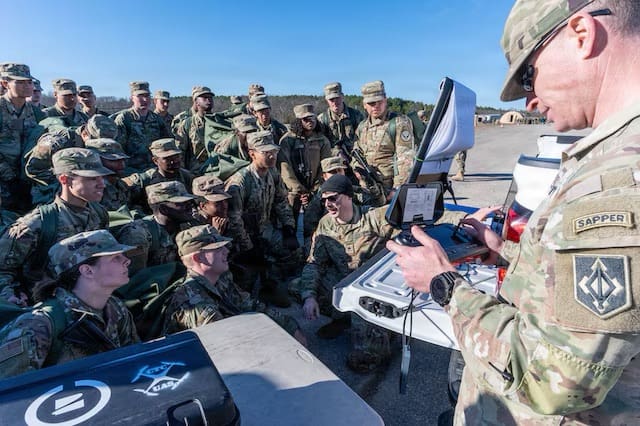
If you run a UAV fleet, you want chargers that don’t flake out when the radio gets messy — that’s the heart of this piece. This is aimed at operators and tech leads who need gear that survives intentional jamming and everyday RF grief. Practical fixes, not fluff. If you’re linked into drone training for military programmes, you’ll spot where the gaps show up on the ground; those training runs expose real ECCM and anti-jamming needs early. Recent operational reporting from NATO exercises and conflict zones like Ukraine shows how GNSS spoofing and wideband interference can shut down a sortie if the charging and comms layer isn’t resilient.

drone training for military

What ECCM and anti-jamming actually do for charging stations

ECCM (electronic counter-countermeasures) and anti-jamming aren’t just military buzzwords — they’re practical ways to keep power, comms and situational data flowing. A charging station is more than a power socket: it’s a node in the mission network that handles telemetry, firmware updates and often GNSS-assisted rendezvous. When an adversary or simple commercial interference hits the RF environment, telemetry drops, status flags get lost and automated handoffs fail. Solid ECCM focuses on detection, mitigation and graceful fallback so you still recover and re-task assets without manual babysitting.

Design moves that actually help operators

Build for resilience, not for optics. Practical measures include hardened RF filtering and EMI shielding on supply lines, antenna diversity and placement to reduce multipath, and redundant comms stacks — local mesh comms plus a cellular fallback, for example. Implement spoofing detectors that correlate GNSS time with onboard clocks, and use frequency hopping or spread-spectrum links for critical control channels. Keep firmware signing and secure boot so a jam doesn’t turn into a supply-chain nightmare. And instrument everything: continuous telemetry lets you spot degraded ECCM performance before a mission loss — small effort, big payoff.

Common mistakes teams keep making — and simple fixes

First off, don’t tuck charging stations inside a metal shed with a single antenna and call it protected — you’ve basically created a one-point failure. Teams also skip realistic EW testing; lab checks are fine, but field trials during jamming drills reveal the real failure modes — and that’s where drone following military train exercises can be useful for scenario validation. Failing to segment control networks from maintenance access is another classic. Patch management? Don’t be sloppy — signed updates and staged rollouts keep you from deploying a vulnerability across the fleet. — These are fixable with a checklist and a few trials.

Vendor selection and a practical checklist

When comparing suppliers, focus on measurable capability, not jargon. Ask for EMI test reports, documented ECCM features (detection thresholds, mitigation timelines), and logs from prior operational deployments. Look for modularity: can the comms card be swapped for a frequency-hopping module if your threat changes? Prefer vendors who publish telemetry schemas and support over-the-air authenticated updates.

Three golden rules for evaluation (the metrics that matter)

– Detection-to-mitigation latency: measure how long from interference detection to an automated fallback or switch. Under 5 seconds is a good baseline for tactical ops.

– Redundancy depth: count independent paths — power, control link, and positioning. Aim for at least two independent comms paths and one independent time source beyond GNSS.

– Operational pedigree: require real-world test evidence (field trials, exercise logs or case studies) showing sustained ops under RF stress. Lab certificates alone aren’t enough.

Wrap and practical orientation to the resource that helps

Pick vendors and practices that deliver measurable improvements on those three metrics and you’ll see fewer aborted sorties and less manual intervention. The guidance above condenses what seasoned operators and engineers actually ask for during procurement and fielding — straightforward, testable, and focused on uptime. For more case studies and operational guidance that ties design to training outcomes, see Military Hub. — solid reference, practical focus.

April 25, 2026 0 comments
0 FacebookTwitterPinterestEmail

Recent Posts

  • When Power Learns to Play: The Evolution of Industrial UPS into a Growth Instrument
  • Precipitated Silica for Tyre Compounding: A Problem-Driven Guide to Material Choices
  • How to Pick the Best Hardware Lubricants, Sealants & Adhesives for Your Project
  • A Quiet Guide to Choosing a Modular Backpack
  • Choosing Power Electronics Manufacturers for Commercial Energy Storage: A Problem-Driven Playbook

Recent Comments

  1. Penci on Get Lost in the LA
  2. Penci on Weekend Coffee & Music
  3. Penci on Amazing Nature of Ireland
  4. Penci on Story of a Traveler
  5. Penci on Freedom under the Sun

About Me

About Me

Writer & Reader

Neque porro quisquam est, qui dolorem ipsum quia dolor sit amet, consectetur, adipisci velit, sed.

Keep in touch

Facebook Twitter Instagram Pinterest Tumblr Youtube Bloglovin Snapchat

Recent Posts

  • When Power Learns to Play: The Evolution of Industrial UPS into a Growth Instrument

    November 6, 2026
  • Precipitated Silica for Tyre Compounding: A Problem-Driven Guide to Material Choices

    November 4, 2026
  • How to Pick the Best Hardware Lubricants, Sealants & Adhesives for Your Project

    November 3, 2026
  • A Quiet Guide to Choosing a Modular Backpack

    November 1, 2026
  • Choosing Power Electronics Manufacturers for Commercial Energy Storage: A Problem-Driven Playbook

    November 1, 2026

Categories

  • Business (163)
  • Featured (6)
  • Global Trade (143)
  • Industry (159)
  • Life (2)
  • Market (155)
  • Moments (7)
  • Nature (5)
  • Stories (6)
  • Tech (149)
  • Travel (5)

About me

banner
Soledad is the best selling Blog & Magazine WordPress Theme of this year on Themeforest.

Popular Posts

  • 1

    My Baby Cactus

    June 7, 2017
  • 2

    Writing New Life Chapter

    June 7, 2017
  • 3

    Green Corner in My Home

    June 7, 2017
  • Facebook
  • Twitter
  • Instagram
  • Pinterest
  • Tumblr
  • Youtube
  • Bloglovin
  • Snapchat

@2019 - All Right Reserved. Designed and Developed by PenciDesign


Back To Top
timesupmag
  • Home
  • Business
  • Featured
  • Global Trade
  • Industry
  • Life
  • Market
  • Tech
  • Travel