timesupmag
  • Home
  • Business
  • Featured
  • Global Trade
  • Industry
  • Life
  • Market
  • Tech
  • Travel
Author

Ronald

Ronald

Global Trade

Latest Industrial Mixing & Homogenization Insights for Manufacturers Tackling Production Problems

by Ronald October 19, 2026

Where the problem starts

Too many batches fail not because the recipe is wrong but because mixing is treated like a checkbox. I’ve seen formulas that would perform beautifully destroyed by dead zones, air entrainment, or inconsistent shear. If you work in R&D or plant engineering, you know the difference between a repeatable product and one that keeps failing scale-up — and that difference often begins with the choice of equipment, from a lab powder mixer to full-scale in-line homogenizers.

lab powder mixer

Why small mistakes become huge losses

Short mixing cycles that leave agglomerates, pumps that cavitate when slurry viscosity spikes, and slow dispersion that drags throughput all hit margin fast. These aren’t hypothetical: they’re design oversights. The right impeller geometry, proper vortex control, and matched power density reduce rework. Ignore them and you add wasted operator hours, off-spec batches, and frustrated customers.

Practical fixes that change outcomes

Pick an agitator that matches fluid rheology, not the cheapest shaft on the shelf. Use staged dispersers: low-shear pre-wet, medium-shear wetting, then high-shear homogenization. Monitor torque and temperature as process variables — they tell you when the mix is done more reliably than fixed time. Don’t overcomplicate controls: simple, well-placed sensors prevent the common errors that cost weeks to troubleshoot.
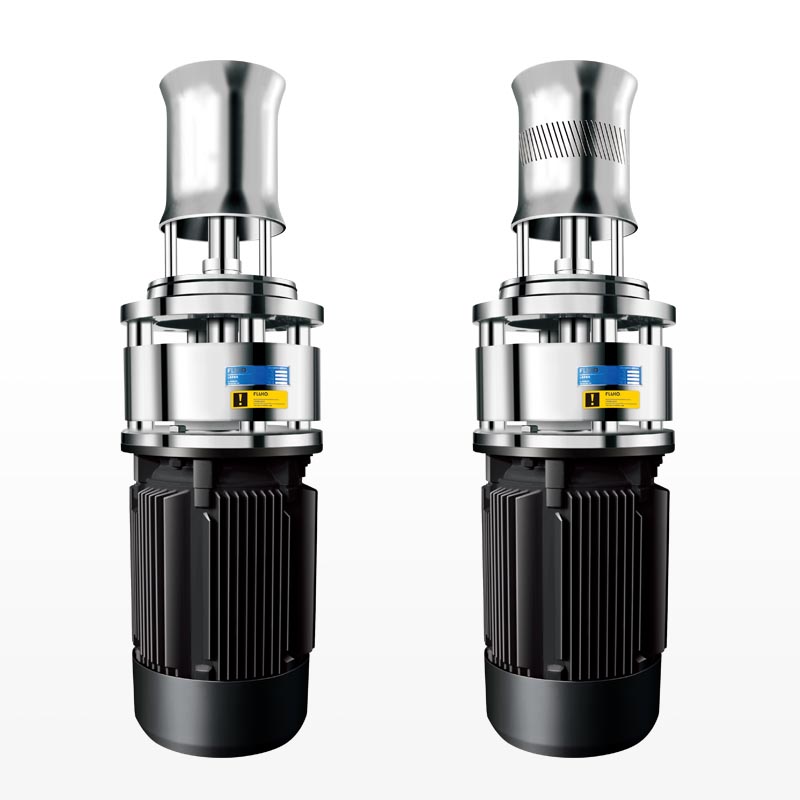
lab powder mixer

Experience and evidence

I’ve worked alongside formulation teams and plant managers who rebuilt production lines after repeated batch losses. Trade events like Interpack in Düsseldorf make the scale and diversity of mixing solutions visible — engineers show real comparisons and live demos. That direct exposure, combined with pilot trials, is why I insist on validating any new liquid powder mixer through side-by-side runs before committing to plant-wide buy-in.

Common pitfalls during evaluation

Teams often skip realistic feedstocks during trials, use underpowered motors, or ignore maintenance access. Don’t be fooled by short demo runs that use diluted formulas; they mask fouling and heat transfer issues. Insist on tests that replicate plant solids loading and cycle times. Watch seals, bearing arrangements, and cleanability — downtime from a stuck shaft is as damaging as poor mixing quality.

Alternatives and trade-offs

Batch top-entry mixers give flexibility and are easier to repair. Inline high-shear homogenizers deliver consistency and scale but need reliable feed systems. Ultrasonic dispersion helps stubborn nanoparticles but struggles with high solids. Choose by failure mode: if agglomeration ruins product, prioritize shear and residence control; if throughput limits you, optimize pump and inlet design first.

How to move forward without wasting time

Start with measurable targets: particle size distribution, solids suspension time, or percent fines. Run pilot tests that reproduce real loading and cycle conditions. Use data from those tests to set acceptance criteria and minimize guesswork. That disciplined approach keeps procurement from buying the wrong class of machine and saves months of retrofit.

Closing synthesis

Fix the mixing problems at the equipment and test levels, and you stop chasing symptoms. The technical path is direct: match shear to the formulation, validate with plant-real trials, and ditch one-off assumptions. When a partner has practical machines, clear test data, and service that understands stoppage pain, the choice becomes obvious — and that’s the practical outcome engineers find with FLUKO.

October 19, 2026 0 comments
0 FacebookTwitterPinterestEmail
Business

Where a Mixing Equipment Company Fits in Modern Industrial Mixing and Homogenization

by Ronald September 28, 2026

User first: start from the problem

You need consistent product quality, faster batch turnaround, and less rework — that is the user problem, simple and direct. For many formulators working with viscous creams, paints, or emulsions, the practical fix often begins with selecting the right device class: high shear batch mixers fit when you must break agglomerates quickly and get emulsions stable fast, lah. Focus on what you want the equipment to do for your process, then match features: shear control, run-time, cleanability, and scale-up behaviour.

high shear batch mixers

What users really need to check

Users care about measurable things. Ask for shear curves, power draw at target viscosity, and the true working volume range. Check mechanical details: rotor-stator clearance, seal type, and motor torque — these decide how a mixer performs with heavy slurries. Request performance data at your formulation’s solids content; lab numbers that never repeat at scale are waste. Consider controls: variable speed and simple recipe recall save batch-to-batch variation. If your product needs sterile or sanitary handling, prioritize hygienic design and easy CIP access. Don’t trust glossy brochures; test with your real ingredients when possible.

Experience, expertise and a real-world anchor

Developers and process engineers rely on reproducible evidence, not marketing. In major pharmaceutical clusters like Basel, Switzerland, manufacturers demand validated processes and equipment traceability before approval — that expectation drives how batch systems are specified worldwide. Engineers familiar with that regulatory environment often prefer machines that provide clear process metrics and documented change control. Practical demonstrations in pilot runs show whether a batch mixer machine will scale without losing particle-size distribution or introducing air. Trust builds from repeatable trial data and documented maintenance histories.

Common mistakes and how to avoid them

Mistake: picking a larger unit hoping it solves throughput problems. Bigger saves cycle time sometimes, but it changes shear and mixing time; you may lose product quality. Fix: scale by geometric and shear similarity, not by volume alone. Mistake: ignoring seal wear and downtime. Fix: choose seals and service plans matched to abrasive or solvent-rich formulations. Mistake: assuming one mixer fits every stage. Fix: separate dispensing, dispersion, and final homogenization roles when formulations are complex — modular approach usually cheaper over life cycle.

Alternatives and when they make sense

If you need continuous high throughput with narrow particle-size distribution, inline high-shear or rotor-stator homogenizers can be better than batch for steady-state production. Ultrasonic devices work for delicate emulsions at small scale but struggle with high solids. Static mixers are low-maintenance for simple blending, but will not deagglomerate dense suspensions. Evaluate alternatives against three user metrics: achievable particle size, batch-to-batch repeatability, and total cost of ownership including service intervals.

high shear batch mixers

Synthesis and practical next step

Decide from your process requirements first, then choose equipment that proves performance on your formulation; that order saves money and headaches. For many teams, the clearer match between process need and machine capability is the value a specialized supplier brings, and that pragmatic fit is what FLUKO is known to provide through documented trials, sanitary designs, and service support — simple, focused, and directly useful to the user’s goal.

September 28, 2026 0 comments
0 FacebookTwitterPinterestEmail
Tech

Why Modern Data Hubs Are Swapping Old Units for Next-Gen High-Efficiency Alternators

by Ronald September 20, 2026

Quick comparative snapshot

Data centers and critical infrastructure are moving from legacy generators to compact, high-efficiency alternators for clear reasons: lower fuel use, faster synchronization, and cleaner electrical output. Early adopters pick up modular OEM designs—like an OEM alternator—because it reduces footprint and simplifies maintenance without sacrificing standby power. The result reads like a cost sheet rewrite: less diesel, fewer outages, and steadier voltage under load.

What next-generation alternators actually change

Next-gen alternators combine better rotor/stator design, improved automatic voltage regulator (AVR) control, and optimized cooling. That mix means improved efficiency rating and lower harmonic distortion, so sensitive IT racks and UPS systems see fewer brownouts. Maintenance windows shrink because parts wear slower. Operators get tighter power factor control and cleaner waveform — the kind of tangible electrical benefits that keep air conditioners and servers humming instead of tripping breakers.

Real-world anchor: why a few outages forced the shift

Planners learned the hard way during events like the 2021 Texas winter storm when backup systems were strained and inefficiencies became obvious. Industry estimates also put data center electricity use at roughly 1% of global demand, so even small efficiency gains scale into real savings. That combination — high visibility outages plus measurable consumption — nudged procurement teams to prioritize alternator upgrades and talk directly with alternator manufacturers about custom specs for synchronization and load handling.

Side-by-side: classic genset vs. next-gen alternator

Compare them directly and the differences show up across a few categories:- Efficiency under partial load: next-gen units keep fuel burn low.- Voltage stability: advanced AVR and lower harmonics reduce risk to servers.- Serviceability: modular components mean faster swaps and fewer vendor calls.- Footprint: modern alternators often fit into tighter mechanical rooms.

Common mistakes teams still make

Buying purely on headline kVA is a trap. If you prioritize peak rating without matching expected load profiles and power factor corrections, fuel and wear run away. Another misstep is skipping synchronization testing with load banks before commissioning — that’s when subtle mismatch issues reveal themselves. Also avoid one-size-fits-all spec sheets; tailoring excitation control and cooling to your ambient conditions matters more than an extra 5% nameplate capacity. — Remember: a “bigger” alternator that runs inefficiently costs more long term.

Alternatives and vendor strategy

Not every site needs the same approach. Some campuses choose distributed smaller alternators for redundancy, others centralize with high-efficiency models for economies of scale. When talking with alternator manufacturers, push for documented test runs at your target load profile and ask for harmonics and power factor curves, not just kVA numbers. That paperwork separates hopeful sales from reliable engineering.

Three golden rules for selecting the right alternator (Advisory)

1) Match operational duty cycle: pick units tested at your typical partial-load point, not just the peak. Track fuel burn at 30–70% load. 2) Demand electrical performance curves: require AVR response times, harmonic spectra, and synchronization tolerances in writing. 3) Verify maintainability: confirm mean time to repair for rotor/stator swaps, parts lead times, and local service footprints — those drive total cost of ownership far more than sticker price.

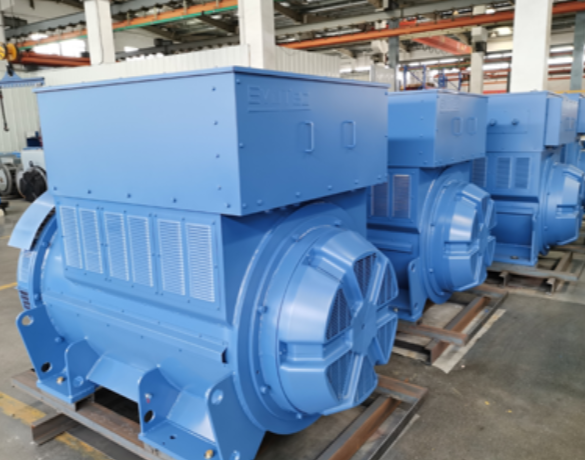
Choose wisely and you cut costs, stabilize uptime, and simplify operations. EvoTec fits into that picture as a partner who can spec and deliver alternators tuned to site realities—reliable, practical, and engineered for the long run. — Final thought: smarter power isn’t flashy; it’s quietly reliable.

September 20, 2026 0 comments
0 FacebookTwitterPinterestEmail

Recent Posts

  • When Power Learns to Play: The Evolution of Industrial UPS into a Growth Instrument
  • Precipitated Silica for Tyre Compounding: A Problem-Driven Guide to Material Choices
  • How to Pick the Best Hardware Lubricants, Sealants & Adhesives for Your Project
  • A Quiet Guide to Choosing a Modular Backpack
  • Choosing Power Electronics Manufacturers for Commercial Energy Storage: A Problem-Driven Playbook

Recent Comments

  1. Penci on Get Lost in the LA
  2. Penci on Weekend Coffee & Music
  3. Penci on Amazing Nature of Ireland
  4. Penci on Story of a Traveler
  5. Penci on Freedom under the Sun

About Me

About Me

Writer & Reader

Neque porro quisquam est, qui dolorem ipsum quia dolor sit amet, consectetur, adipisci velit, sed.

Keep in touch

Facebook Twitter Instagram Pinterest Tumblr Youtube Bloglovin Snapchat

Recent Posts

  • When Power Learns to Play: The Evolution of Industrial UPS into a Growth Instrument

    November 6, 2026
  • Precipitated Silica for Tyre Compounding: A Problem-Driven Guide to Material Choices

    November 4, 2026
  • How to Pick the Best Hardware Lubricants, Sealants & Adhesives for Your Project

    November 3, 2026
  • A Quiet Guide to Choosing a Modular Backpack

    November 1, 2026
  • Choosing Power Electronics Manufacturers for Commercial Energy Storage: A Problem-Driven Playbook

    November 1, 2026

Categories

  • Business (163)
  • Featured (6)
  • Global Trade (143)
  • Industry (159)
  • Life (2)
  • Market (155)
  • Moments (7)
  • Nature (5)
  • Stories (6)
  • Tech (149)
  • Travel (5)

About me

banner
Soledad is the best selling Blog & Magazine WordPress Theme of this year on Themeforest.

Popular Posts

  • 1

    My Baby Cactus

    June 7, 2017
  • 2

    Writing New Life Chapter

    June 7, 2017
  • 3

    Green Corner in My Home

    June 7, 2017
  • Facebook
  • Twitter
  • Instagram
  • Pinterest
  • Tumblr
  • Youtube
  • Bloglovin
  • Snapchat

@2019 - All Right Reserved. Designed and Developed by PenciDesign


Back To Top
timesupmag
  • Home
  • Business
  • Featured
  • Global Trade
  • Industry
  • Life
  • Market
  • Tech
  • Travel