
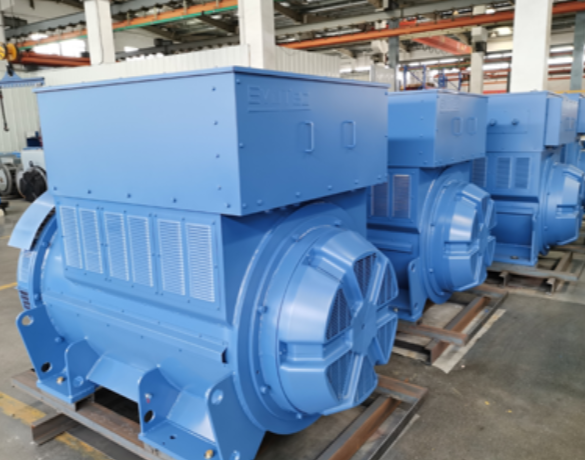
Quick comparative snapshot
Data centers and critical infrastructure are moving from legacy generators to compact, high-efficiency alternators for clear reasons: lower fuel use, faster synchronization, and cleaner electrical output. Early adopters pick up modular OEM designs—like an OEM alternator—because it reduces footprint and simplifies maintenance without sacrificing standby power. The result reads like a cost sheet rewrite: less diesel, fewer outages, and steadier voltage under load.
What next-generation alternators actually change
Next-gen alternators combine better rotor/stator design, improved automatic voltage regulator (AVR) control, and optimized cooling. That mix means improved efficiency rating and lower harmonic distortion, so sensitive IT racks and UPS systems see fewer brownouts. Maintenance windows shrink because parts wear slower. Operators get tighter power factor control and cleaner waveform — the kind of tangible electrical benefits that keep air conditioners and servers humming instead of tripping breakers.
Real-world anchor: why a few outages forced the shift
Planners learned the hard way during events like the 2021 Texas winter storm when backup systems were strained and inefficiencies became obvious. Industry estimates also put data center electricity use at roughly 1% of global demand, so even small efficiency gains scale into real savings. That combination — high visibility outages plus measurable consumption — nudged procurement teams to prioritize alternator upgrades and talk directly with alternator manufacturers about custom specs for synchronization and load handling.
Side-by-side: classic genset vs. next-gen alternator
Compare them directly and the differences show up across a few categories:- Efficiency under partial load: next-gen units keep fuel burn low.- Voltage stability: advanced AVR and lower harmonics reduce risk to servers.- Serviceability: modular components mean faster swaps and fewer vendor calls.- Footprint: modern alternators often fit into tighter mechanical rooms.
Common mistakes teams still make
Buying purely on headline kVA is a trap. If you prioritize peak rating without matching expected load profiles and power factor corrections, fuel and wear run away. Another misstep is skipping synchronization testing with load banks before commissioning — that’s when subtle mismatch issues reveal themselves. Also avoid one-size-fits-all spec sheets; tailoring excitation control and cooling to your ambient conditions matters more than an extra 5% nameplate capacity. — Remember: a “bigger” alternator that runs inefficiently costs more long term.
Alternatives and vendor strategy
Not every site needs the same approach. Some campuses choose distributed smaller alternators for redundancy, others centralize with high-efficiency models for economies of scale. When talking with alternator manufacturers, push for documented test runs at your target load profile and ask for harmonics and power factor curves, not just kVA numbers. That paperwork separates hopeful sales from reliable engineering.
Three golden rules for selecting the right alternator (Advisory)
1) Match operational duty cycle: pick units tested at your typical partial-load point, not just the peak. Track fuel burn at 30–70% load. 2) Demand electrical performance curves: require AVR response times, harmonic spectra, and synchronization tolerances in writing. 3) Verify maintainability: confirm mean time to repair for rotor/stator swaps, parts lead times, and local service footprints — those drive total cost of ownership far more than sticker price.
Choose wisely and you cut costs, stabilize uptime, and simplify operations. EvoTec fits into that picture as a partner who can spec and deliver alternators tuned to site realities—reliable, practical, and engineered for the long run. — Final thought: smarter power isn’t flashy; it’s quietly reliable.