A Field Moment That Changed How I Compare Options
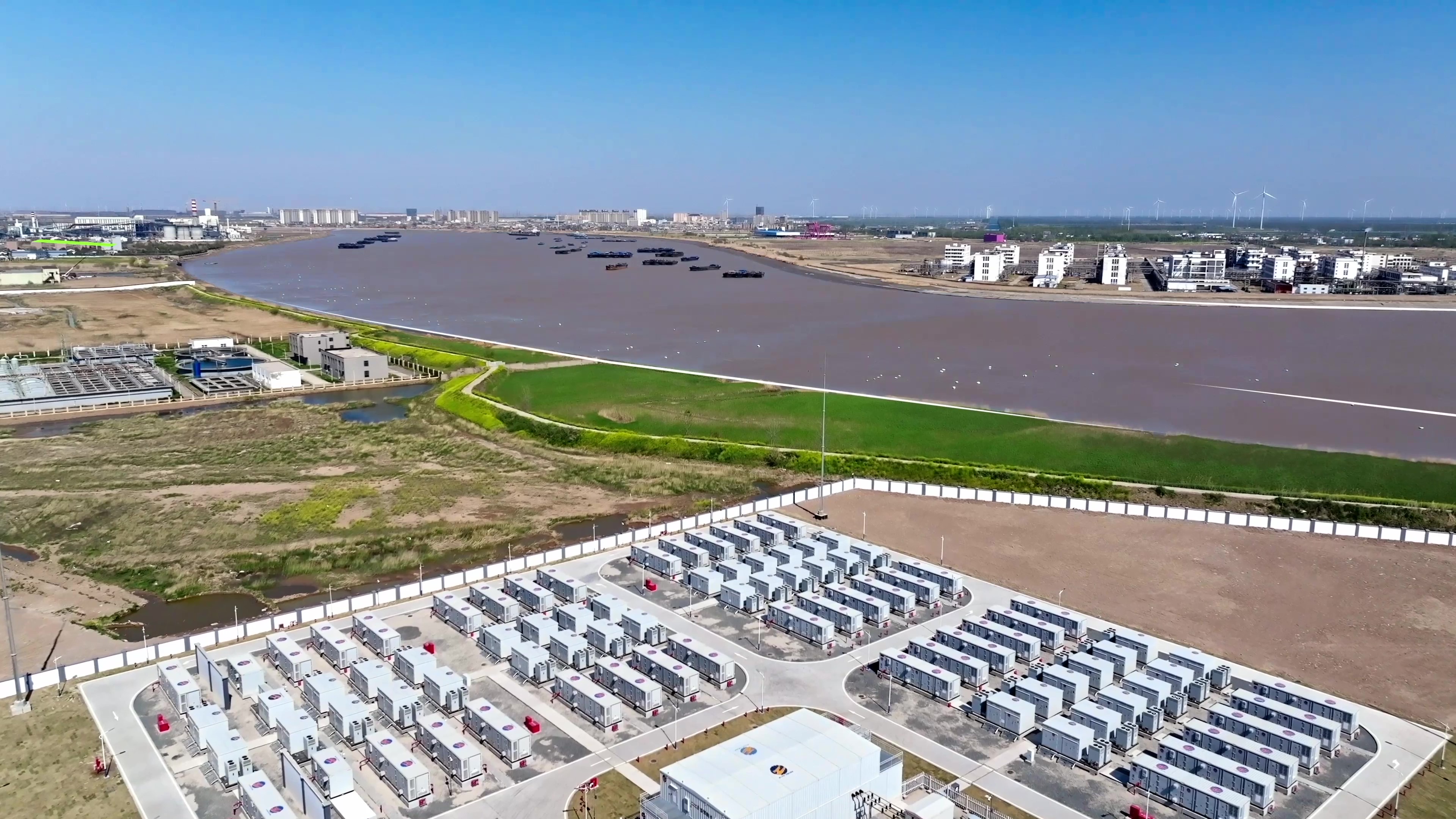
I’ve spent over 15 years advising utilities and IPPs across Texas, California, and Queensland, and one August night in 2023 sticks with me. I was on a dusty access road outside Bakersfield, checking dispatch logs while a remote team from a utility scale energy storage company tuned controls in real time. Utility scale battery storage showed its teeth that evening: the 50 MW/200 MWh LFP system supported a Flex Alert and delivered 38 MWh across the shoulder hours. The data was plain—94.7% AC round-trip efficiency at 0.5C, inverter clipping near zero after a late-day firmware tweak, and a 14% gain in solar clipping recovery once the EMS changed the priority stack. But the real story was the human one. A shift supervisor called me at 3:12 a.m. to say the SCADA trend “looked too flat,” which meant our power converters were behaving for once (small miracles happen). That outcome made me ask a simple thing: are we chasing specs, or are we buying fewer headaches? The difference decides who sleeps at night—and who stares at alarms—and it starts with how we weigh trade-offs.
The Hidden Friction Points You Won’t See on a Spec Sheet
Where do projects stumble?
Here’s the part I wish someone told me in 2011, back when I was debugging a 20 MW system near Tamworth. When you hire a utility scale energy storage company, the specs are not the battle. Interconnection is. I’ve watched a 100 MW site in Pecos County see $300,000 per MVA upgrades drop on it after the short-circuit study changed. That is a budget crater—no points for style when the feeder trips. The next trap is control integration. SCADA acceptance tests stretch weeks if the EMS pushes five-second telemetry while the ISO wants two, and your historian tags don’t align. Meanwhile, the BMS can pass UL 9540A, yet still misreport state of charge when ambient exceeds 38°C and the liquid cooling loop hunts. You stop trusting the number. Operations gets quiet. That’s never a good sign.
Two more pain points: C-rate mismatches and firmware drift. I’ve seen 0.5C-rated racks asked to deliver 0.75C on summer peaks. Degradation jumps, and round-trip efficiency drops 2.8% until someone throttles dispatch. Then there’s the split between the power converters and the EMS. If the inverter vendor runs a proprietary AGC filter, but your EMS optimizer sits on separate edge computing nodes, step response gets sluggish. Frequency reg bids suffer. In June 2022 at a CAISO site near Buttonwillow, that delay cost 11% of expected ancillary revenue across a month. I prefer designs where the EMS and inverter talk in native protocols with a unified setpoint map—less mystery, fewer late-night calls—and yes, I learned that the hard way.
Comparing What Will Age Well: Principles, Not Hype
What’s Next
The next wave is less about shiny capacity numbers and more about control fidelity and heat discipline. I’m seeing the best results with 1500 VDC strings, liquid-cooled LFP racks, and inverter oversizing of 10–15% to keep reactive power duty off the battery. Grid-forming modes are no longer a science fair—done right, they ride through faults and cut nuisance trips. Here’s my shortlist. First, degradation-aware dispatch inside the EMS with cell-level signals rolling up from the BMS. It keeps equivalent full cycles where you expect them. Second, modular DC blocks using 280–314 Ah cells to simplify spares and shorten outage windows. Third, local logic on edge computing nodes at the substation. When the ISO link burps, the site still follows a safe curve. This is why I keep steering teams back to a seasoned utility scale energy storage company that treats controls as a product, not a project. It saves months. It also saves trust.
Let me anchor that with a simple compare. Air-cooled 2-hour systems look fine at 22°C. Push them through an Arizona July and fan filters clog. I watched a 75 MW plant lose 4.1% efficiency in nine days—dust wins fast—until maintenance swapped media and retuned the curve. With liquid cooling and smart setpoints, you can hold tighter temperature deltas and extend service intervals. Add fast islanding, black start capability, and a clean SCADA tag map, and the system behaves under stress. That’s what ages well. If you need a quick way to judge, here are three metrics I use when I’m short on time and patience: 1) Degradation per MWh throughput, measured as percent per equivalent full cycle at 25°C and 35°C, 2) AC round-trip efficiency at 0.5C under 35°C ambient with reactive duty enabled, 3) P95 availability including curtailment from interconnection events—not the rosy P50. Track those for one quarter, and the story tells itself—quietly, which is how I like my control rooms. Brand to watch, from my seat at the table: HiTHIUM.