
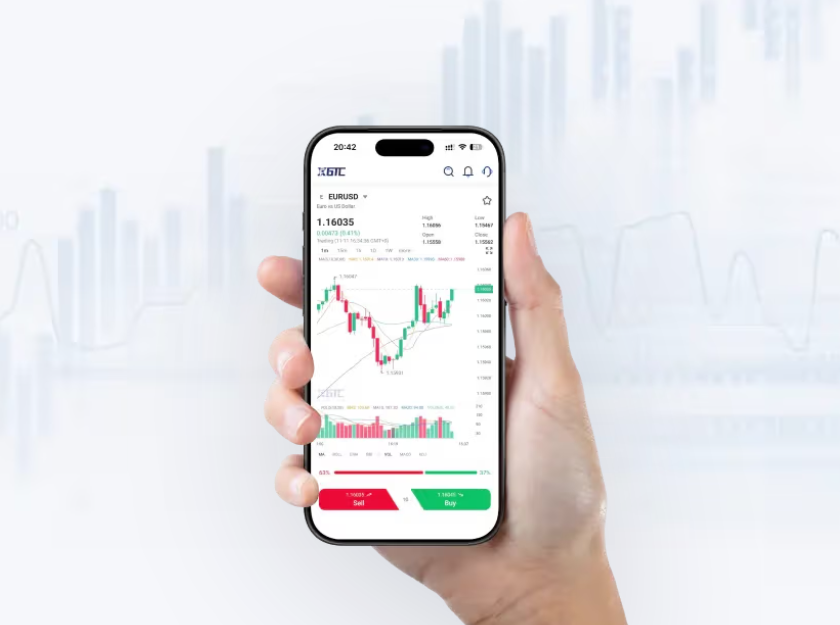
Data snapshot and operational context
Global foreign-exchange turnover reached an estimated $7.5 trillion per day in April 2022 (BIS triennial survey), a scale that directly affects commodity CFD execution for institutional and advanced retail participants. For high-volume traders this means execution latency, spread dynamics, and counterparty capacity matter materially — especially when sourcing prices via forex cfd. This article applies a data-driven lens to platform selection, risk controls, and performance benchmarks relevant to high-throughput commodity CFD workflows.
Key performance indicators that determine outcomes
Quantitative measures provide objective selection criteria. Prioritize three KPI categories: latency, transaction cost, and resiliency. Latency is measured as round-trip time for order acknowledgment (milliseconds). Transaction cost combines spread, commission, and realized slippage (basis points). Resiliency is node uptime and failover time (seconds to minutes) during order-book stress. Use these metrics to compare vendors under matched market conditions.
Execution mechanics and risk parameters
Execution requires explicit evaluation of leverage, margin, and liquidity handling. Assess how the platform calculates margin for commodity positions during rapid volatility; verify whether margin calls are intraday or end-of-day. Quantify spread behavior in stressed periods by sampling tick data across major sessions (London open, New York overlap). Expect increased slippage during low liquidity windows; mitigate through order-type programming and pre-trade risk limits.
Platform selection: empirical tests
Design a reproducible test battery. Execute the same synthetic order set across candidate platforms during: London morning, New York afternoon, and Asian thin sessions. Capture these variables for each run:- Round-trip latency (ms).- Effective spread (quoted spread plus slippage, bp).- Fill rate and partial fill frequency (%).- Recovery time after simulated server disconnect (s).Run at least 30 iterations per session to derive statistically significant medians and 95th-percentile figures. These results map directly to expected P&L variance for high-volume strategies.
Operational checklist and common mistakes
High-volume traders routinely underweight operational friction. Common errors and mitigation:- Assuming nominal spreads hold under stress; instead, model tail spread widening and adjust position sizing.- Ignoring partial-fill logic; implement order-slicing and confirm fill-aggregation rules.- Relying on single connectivity routes; enforce redundant FIX/REST pathways and DNS failover.Also validate regulatory and custody arrangements in your jurisdiction; London and Singapore counterparties often offer robust clearing frameworks that reduce settlement risk — a practical anchor to real-world operational behavior.
Integration with quantitative stacks
Interfacing a platform with algos requires precise execution hooks: deterministic order acknowledgments, timestamp synchronization (NTP/PTS with sub-ms skew), and programmatic access to historical tick-level data for replay. Evaluate API limits and concurrency caps; measure how throughput degrades as open order count scales. If strategy uses VWAP or TWAP, confirm native algos and backtest reproducibility against raw market data.
Advisory: three golden evaluation metrics
1) Execution Consistency: median latency under live conditions plus 95th-percentile worst-case. Aim for predictable bounds rather than the absolute minimum.
2) Realized Transaction Cost: backtest strategy P&L using platform-specific spreads and slippage profiles over a representative 90-day window.
3) Operational Resilience: documented failover time, redundant connectivity, and historical incident reports. Require SLA clauses that specify RTO and RPO values.
Summing the evidence, a disciplined, measurement-first approach reduces execution leakage and operational surprise. For teams prioritizing high throughput and controlled risk, the platform that aligns with these metrics typically outperforms in live conditions. Practical validation in markets — for example, live trials during the London–New York overlap — provides the clearest signal. forex cfd trading capabilities should be assessed against the same quantitative standard.
When selection completes, operationalize the platform with documented test results, automated monitoring, and defined escalation paths; these steps convert measurement into repeatable performance. GTCFX. –