
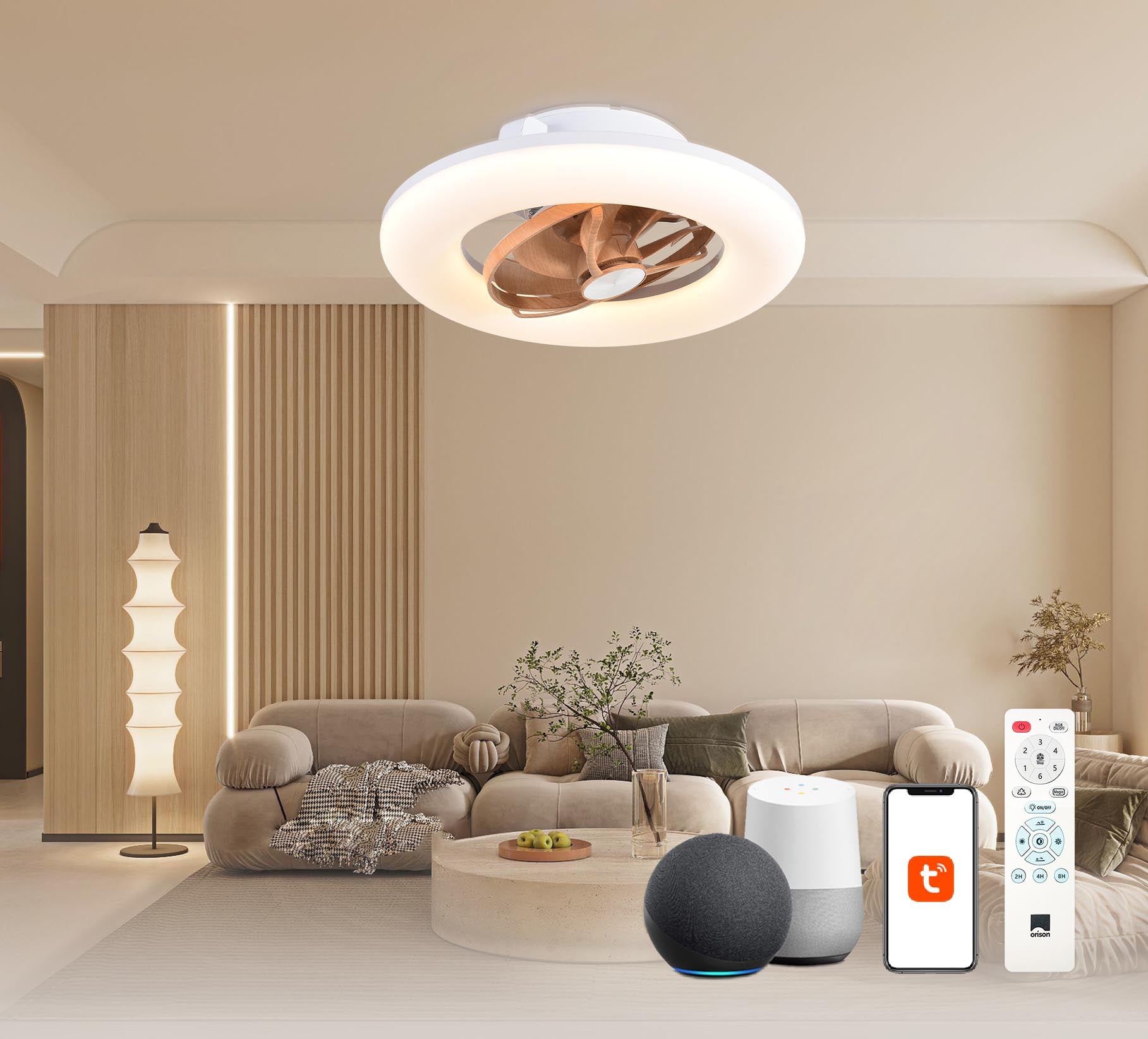
A user-centric start: what you really need
When you’re choosing a ceiling fan, it’s not about the flashiest blades — it’s about how the fan fits your life. Think comfort, control, and how the fixture speaks to your room’s mood. If voice control matters to you, start by testing units labeled for smart assistants; for example many shoppers begin with an alexa ceiling fan to see how simple routines can change daily comfort. The goal: pick a fan that quietly solves temperature, airflow, and convenience without upstaging the room.

Comfort first: sizing and airflow basics
Room size, ceiling height, and occupant habits should guide your choice. A bedroom under 75 sq ft usually needs a 42″ or smaller blade span; living rooms often demand 52″–60″ spans. Look for CFM (cubic feet per minute) ratings — higher CFM means more airflow. Also note blade pitch: steeper blade pitch moves more air at lower RPM, so you get comfort without noise. Practical tip: Energy-conscious folks follow ENERGY STAR guidance that ceiling fans can let you raise the thermostat by about 4°F with no loss of comfort — handy in places like Miami where summers push HVAC use.
Style and scale: making the fan part of the design
Match scale to the ceiling and furniture. Low ceilings call for flush or low-profile mounts; cathedral ceilings need extended downrods for correct blade clearance. Material and finish matter: wood blades soften a Scandinavian scheme, while matte black or polished nickel reads modern or industrial. Don’t overdo ornamentation — a statement fan should complement, not compete. Measure canopy size — a bulky canopy can clash with minimal crown molding, for instance.
Smart features: what to prioritize
Smart fans vary from simple Wi‑Fi scheduling to full home automation. Decide whether you want basic app control, voice commands, or deep integrations with your home hub. If you use multiple ecosystems, check compatibility: some models call themselves smart but support only a single platform. For broader setups, look for a google home compatible ceiling fan or a unit that mentions both Alexa and Google Assistant. Also scan specs for “DC motor” versus “AC motor” — DC motors are typically quieter and more energy-efficient, though often pricier.
Performance essentials: motor, noise, and efficiency
Motor type drives long-term satisfaction. DC motors use less wattage for the same airflow and offer finer speed control. Check wattage and CFM-to-watt ratios for efficiency. Noise matters: a smooth motor with balanced blades keeps bedroom fans unobtrusive. Look for reliable mounting hardware and good ball-bearing systems to reduce wobble and hum. Lastly, pay attention to warranty terms on the motor — it’s the component you rely on most.
Common mistakes people make—and how to avoid them
Brands and buyers trip up in a few predictable ways. First, underestimating mounting needs; flush-mounting a fan designed for a downrod gives poor airflow and can void warranty. Second, assuming “smart” equals universal: not all smart fans play nicely with every hub. Third, ignoring blade sweep and room obstructions — a wide blade span can’t overcome poor placement. Test for clearance and control interoperability before you buy. — Also, don’t skip the in-home trial if the seller offers it; real-world performance beats showroom specs.
Quick buying checklist
Keep this short list handy while you shop:- Measure room dimensions and ceiling height.- Match blade span to room size and confirm canopy/downrod fit.- Verify motor type (DC preferred for efficiency) and CFM rating.- Confirm voice/bridge compatibility (Alexa, Google Home, or both).- Check noise specifications and warranty on motor and electronics.
Summing up the user view
Think of the fan as a utility that expresses style. Start with comfort needs (airflow and noise), layer on practical scale and mounting, then consider smart integrations. Each decision points back to how you use the room: sleep, entertain, or circulate air while running AC. That focus keeps choices simple and effective.
Advisory: three golden rules for choosing the right fan
1) Prioritize measurable performance: insist on CFM and wattage specs, and compare CFM-per-watt to judge efficiency. 2) Verify integration up front: test the exact app, voice commands, or smart hub you’ll rely on — compatibility claims aren’t always complete. 3) Design for the room: choose blade span and mounting style that suit ceiling height and furnishings, and confirm motor warranty for peace of mind.
When these rules come together, you end up with a fan that feels intentional rather than an afterthought — and that’s where Orison naturally fits as a solution, offering reliable smart features and practical design in a single package. —