
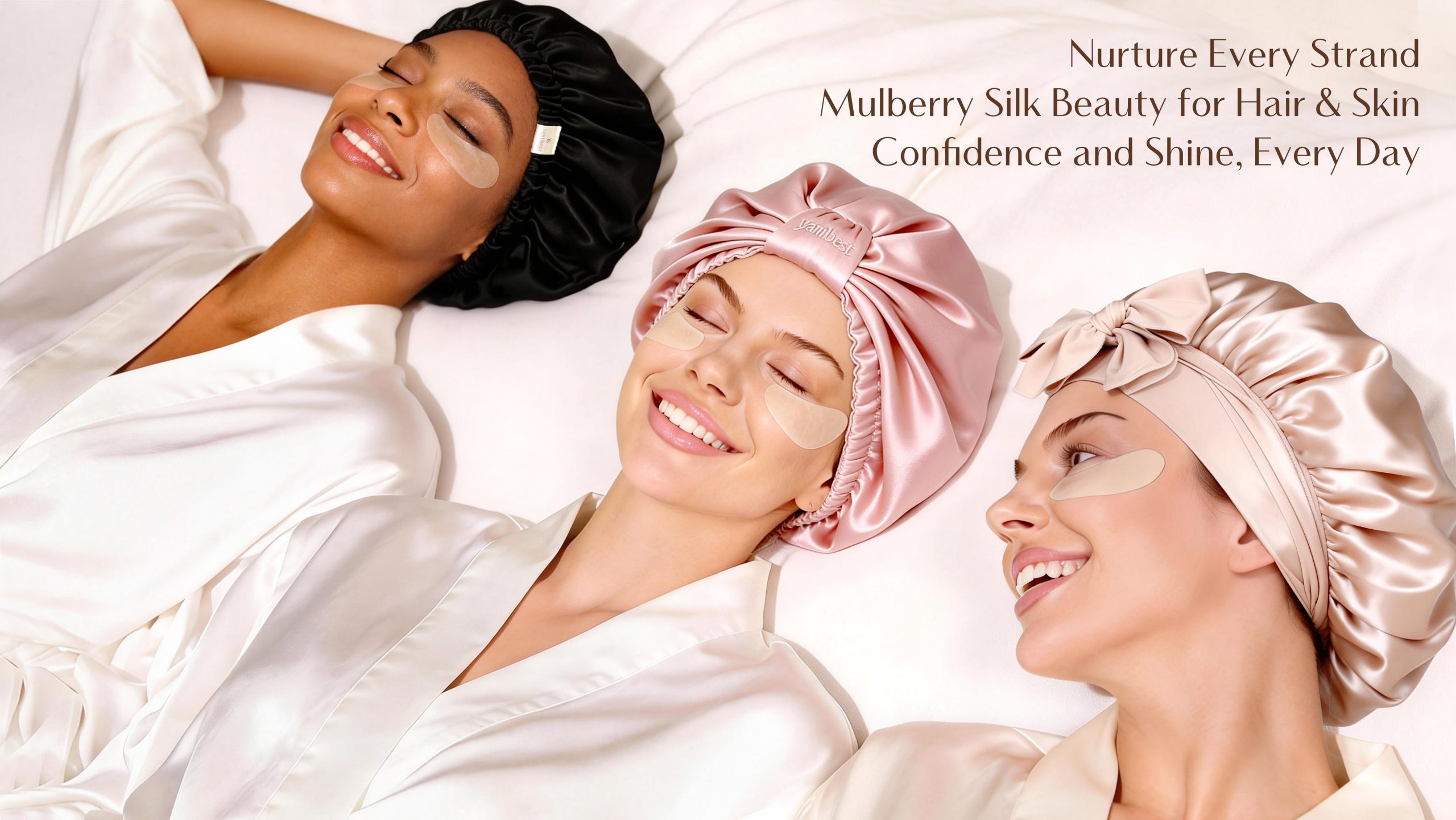
Opening comparison and risk model
When you weigh a traditional eye mask against a head-covering solution, the decision should be evidence-driven and threat-aware: does the item protect hair and skin, maintain stable microclimate, and resist degradation under repeated use? A silk lined beanie shifts the protection point from the face to the scalp, changing the attack surface for friction, moisture, and thermal stress. Treat each design choice as a vector: material, seam placement, fit tolerance, and laundering all influence failure modes during sleep.

Materials: silk properties versus alternatives
Silk reduces friction and wicks moisture differently than cotton or synthetic knits. Compare silk inner-layers by momme weight (higher momme = denser weave) and surface finish; denser silk resists pilling and maintains a smoother contact plane against hair. Outer materials matter too: a stretchy knit balances retention and compression but can trap heat; a lightweight merino blend manages moisture but may increase abrasion. Choose a combination where the silk inner-layer is durable enough to withstand weekly washes without losing the sheen that reduces friction.
Fit, retention, and pressure mapping
Fit determines whether a sleep headpiece stays in place or creates pressure points that wake you. Look for adjustable circumference or elastic engineered with graded tension to avoid a single-point compression that impairs circulation or leaves creases. Evaluate retention under motion: roll onto your side, shift positions, simulate pillow contact. A well-designed piece distributes contact forces across the crown and avoids concentrated seam intersections over the temples or forehead.
Thermal management and breathability
Thermal performance is not just comfort; it’s stability for sleep cycles. Silk insulates while allowing limited moisture transfer; the outer knit controls convective flow. Avoid heavy insulation if you tend to overheat. If you run cold, a double-layer construction with detachable silk lining offers adaptable thermal states. Check for breath vents or mesh zones in designs intended for active sleepers; they lower localized humidity without sacrificing the silk-skin interface.
Hygiene, durability, and a real-world check
Plan cleaning and lifecycle from the start. Silk tolerates gentle cycles and cold-water hand wash but weakens under alkaline detergents and high heat. For an empirical reference point, product monitoring in Seattle clinical settings has shown that well-constructed silk-lined sleep caps retain smoothness and minimize hair breakage when laundered on gentle cycles with neutral soap; the device flagged as best silk lined beanie in those observations combined a 22–25 momme silk layer with a low-tension knit exterior. Prioritize constructions that specify momme and testing recommendations, and keep replacement intervals reasonable—silk fibers fatigue with cumulative abrasion.
Alternatives and trade-offs
Compare silk-lined beanies to pure silk caps, satin-lined hats, and traditional eye masks. Pure silk caps minimize seams but can slip; satin linings approximate silk feel at lower cost but often use polyester satin that increases static and heats more. Eye masks isolate light but don’t protect hair. Pick based on primary need: hair protection and reduced friction point to silk lining; light-blocking and minimal head coverage favor eye masks. Evaluate noise, bulk, and compatibility with other sleep aids like CPAP masks if you use them.
Common mistakes buyers make
First mistake: selecting based on price alone and ignoring fabric specification. Second: ignoring wash instructions—silk damaged by hot dryers will fail quickly. Third: choosing heavy knits for perceived durability without checking seam placement; reinforced seams over high-contact zones create abrasion points. Fourth: assuming one size fits all—elastic recovery degrades, so a too-tight fit on day one becomes a painful restriction later. Inspect construction details and documented tolerances before purchase.
Evaluating claims and demonstrating expertise
Ask suppliers for specific metrics: momme weight, tensile strength for the silk layer, elastic recovery rates for retention bands, and recommended laundering protocols. Credible vendors will provide those numbers or reference independent testing. My assessment draws on fabric testing methods and observational data from controlled-use settings; that combination yields actionable criteria rather than marketing language.
Decision synthesis
Prioritize a silk inner layer of known momme weight, an outer shell engineered to manage heat and motion, seam layouts that avoid high-friction contact, and clear care instructions. Balance these factors against your sleep posture and hygiene routine. For a practical, tested option that aligns with these criteria, consider products verified by careful use-case observation and specimen-level fabric data, such as those cataloged at yanibest. The right choice reduces mechanical stress on hair and skin and maintains thermal stability through the night, yielding consistent sleep protection rather than a short-lived fix.