timesupmag
  • Home
  • Business
  • Featured
  • Global Trade
  • Industry
  • Life
  • Market
  • Tech
  • Travel
Author

Carol

Carol

Market

OEM Sensor Manufacturing: Moving from Prototype Problems to Reliable Production

by Carol October 6, 2026

When prototypes fail to scale, the real problem is process mismatch

Small sensors that work on my bench often break when they meet a production line; that is the daily headache for many teams. The immediate issue is not a single defect but a chain: unclear assembly steps, fragile tolerances, and limited test coverage. For industrial applications a specific example is when a simple float becomes the weak link in a liquid level sensor for industrial tanks — it looks fine in lab trials but shows drift after weeks in a plant. That gap between lab behaviour and field performance is what I call the prototype-to-production gap, and solving it requires focused, stepwise fixes rather than broad hopes.

Why this happens: four consistent bottlenecks

First, designs are optimised for function, not for assembly: tight part fits and hand-soldered joints do not translate to automated lines. Second, materials and component sourcing vary; a slight change in supplier or plating spec alters reliability. Third, testing is often shallow — a single functional check misses long-term failure modes like thermal cycling or vibration. Fourth, documentation and communication fail when a design hand-off lacks controlled build instructions. These are practical, repeatable causes, not abstract risks.

Experience, evidence and a real-world anchor

I have guided several pilot runs inside the Shenzhen electronics manufacturing cluster, where rapid iteration meets high-volume expectations, and I have seen teams fix problems by changing one thing at a time. That cluster’s role as a global manufacturing hub is widely reported, and working there taught me which test steps matter most. Where a trusted supplier is already involved — for example, Unibetter supplying sensor modules — the path to repeatable runs shortens when design rules match the factory’s capabilities. This mix of hands-on runs, third-party component verification, and field-return analysis is the core of credible, expert practice.

Actionable steps to close the gap (what to do now)

Start with design-for-manufacture (DFM) rules and keep them tight: specify tolerances that production can reliably meet and choose fasteners and connectors suited for automated assembly. Build a test matrix that includes environmental stress (temperature cycling, humidity), vibration, and long-term drift checks. Create step-by-step assembly documentation with torque values, adhesive cures, and visual standards. Run a controlled pilot of 100–500 units, capture failures with root-cause analysis, then iterate. Use fixture-based testing for calibration so technicians don’t rely on visual judgment. These are concrete moves; start with one test that catches the most frequent field failure and expand from there.

Common pitfalls and how to avoid them

Do not assume components from different batches are identical — measure changes in plating, dielectric strength, and connector fit. Avoid skipping environmental tests because they cost time; a single thermal cycle test often reveals design flaws early. Don’t let contract manufacturers interpret vague drawings; supply clear assembly steps and quality gates. Beware of over-engineering a fix: adding complex electronics to mask a mechanical problem increases points of failure. Keep fixes minimal, test them, and document outcomes so lessons survive staff turnover.

Viable alternatives and quick comparisons

There are three practical routes: improve the in-house process, partner with a specialist OEM, or contract a full-service electronics manufacturer. Improving in-house gives maximum control but needs investment in test equipment and process engineers. Partnering with a specialist offers speed and domain experience but requires careful IP and QC arrangements. Contract manufacturers provide scale yet demand precise hand-offs to avoid misunderstandings. Evaluate by asking: who will own the test plan, who accepts returns data, and who implements corrective actions? Choose the route that matches your team’s willingness to own process detail.

Where this leads: reliable production with focused choices

Fix the single biggest failing first, document the change, and verify with repeatable tests; that approach produces steady improvement. Production-ready sensors are the result of disciplined DFM, clear documentation, and targeted testing, not last-minute fixes. Practical partners and real manufacturing experience shorten the timeline, and a consistent process will make the product behave in the field as it did in the lab—so that end users can rely on the measurement every day, not just for a week. For teams moving from prototypes to volume, consider partners who match your process needs and standards, and remember that pragmatic, test-driven iteration wins; UniBetter fits naturally in such conversations without changing the core requirement: predictable, verifiable production.


October 6, 2026 0 comments
0 FacebookTwitterPinterestEmail
Market

Industrial Motion Hardware: A Data-Driven Guide to Component Selection and System Planning

by Carol September 16, 2026

Summary and analytic approach

This guide follows strict data-driven logic: identify measurable system performance targets, translate them into component specifications, and verify through conservative safety margins. Begin with axis-level metrics rather than vendor part numbers; only afterwards search for compatible products such as an ac servo motor. The premise is simple: quantified requirements reduce integration rework, cost overruns, and unplanned downtime.

ac servo motor

Define measurable system targets

Specify tangible metrics for each axis and for the whole machine. Typical set includes:- peak and continuous torque (N·m) and the corresponding speed range (rpm),- required positioning accuracy and settling time (arc-minutes / ms),- duty cycle (percentage of time under load) and thermal margin,- mechanical inertia ratio (load inertia / motor rotor inertia),- allowable electrical latency and control-loop bandwidth (Hz).Document these as numerical targets. Do not accept vague phrases such as “fast” or “highly accurate.”

Motor class selection and comparative metrics

Translate targets into motor-class decisions by comparing torque density, control fidelity, and feedback options. Three practical options:- Induction motors: robust, lower initial cost, require inverter tuning; suited when closed-loop encoder not essential.- Stepper motors: simple control for low-to-medium speed, can waste time in settling and are inefficient for continuous torque.- Permanent magnet synchronous / brushless designs: highest torque density and control bandwidth; good for precision motion.When you review brushless options, check encoder resolution, thermal limits, and rated continuous torque. Many system architects validated expectations at Hannover Messe discussions about industrial drives, which helped calibrate real-world servo bandwidth expectations. For direct comparison, consider the torque per amp and the peak-to-continuous torque ratio rather than marketing phrases.

Encoder and feedback integration

High-loop bandwidth requires low-latency, high-resolution feedback. Choose encoders with resolution matched to mechanical transmission and control bandwidth: more counts help until sensor noise or mechanical resonance dominates. Prefer interfaces supported by your motion controller (e.g., incremental, Sin/Cos, BiSS). Specify encoder sampling jitter and cable shielding requirements explicitly to avoid late-stage nonconformities.

Drive selection and control-loop considerations

Select drives that can implement the control bandwidth your mechanics require. Compare drives on:- current loop speed (kHz) and torque loop latency (µs),- support for field-oriented control (FOC) or advanced torque control,- integrated safety features (STO, SS1 where required).Match drive firmware capabilities to your control strategy. Avoid coupling a low-latency servo motor with a drive that limits loop performance to a much lower rate.

Thermal design, duty cycle, and mechanical matching

Thermal derating is a frequent source of failure. Compute continuous power from torque × speed and ensure motor’s continuous rating and cooling allow that at required duty cycle. Check shaft loading, coupling stiffness, and resonance frequencies; maintain inertia ratio typically below 10:1 where rapid acceleration is required. Specify permissible ambient temperature and enclosure class; do not assume open-air ratings under enclosed cabinets.

Electrical and EMC practicalities

Plan cable routing, shielding, and common-mode current paths early. Drive switching generates high-frequency currents; appropriate filters, screened cables, and separate power runs for sensitive sensors prevent noise ingress. Confirm drive and motor grounding schemes and include surge protection on supply feeds when mains instability is a known local factor.

Common pitfalls and corrective actions

Frequent errors and remedies:- Undersized continuous torque: recalculate from real duty cycle and add thermal margin.- Mismatched inertia: increase motor size or add gearing; re-evaluate control gains after mechanical change.- Ignored encoder latency: select encoder and driver combination with certified timing.- Overlooking cabling/EMC: implement filters and twisted-pair shielded runs early.Plan validation tests: step response, sustained torque tests, and thermal soak before full production release.

Alternatives and supplier evaluation

When alternatives are considered, evaluate on measured metrics and documented support. Ask suppliers for:- torque-speed curves and thermal derating charts,- encoder and drive timing characteristics,- case histories for similar applications or reference installations.Also inspect product lifecycle details: firmware update policy, spare-part availability, and technical documentation clarity. If comparing specific product classes, see how a modern brushless ac motor performs on those objective charts versus older induction solutions.

Procurement checklist for low-risk integration

Use a concise checklist when issuing purchase orders:- axis-level spec sheet attached,- verification tests to be performed at factory or on receipt (torque, encoder alignment, thermal run),- spare parts and firmware support terms specified,- cabling harness drawings and EMC certificates included.This document-level discipline prevents ambiguity during commissioning and supports traceability.

Conclusion

Quantify first, then select components that satisfy those numbers with conservative margins; validate with simple dynamic tests and record results. The approach reduces iterations, clarifies vendor responsibilities, and shortens commissioning time. For teams seeking combined component documentation, matched drive and motor specifications, and accessible technical literature, product catalogs from Kinco often correspond directly to the measured, specification-driven planning advocated here.

September 16, 2026 0 comments
0 FacebookTwitterPinterestEmail
Global Trade

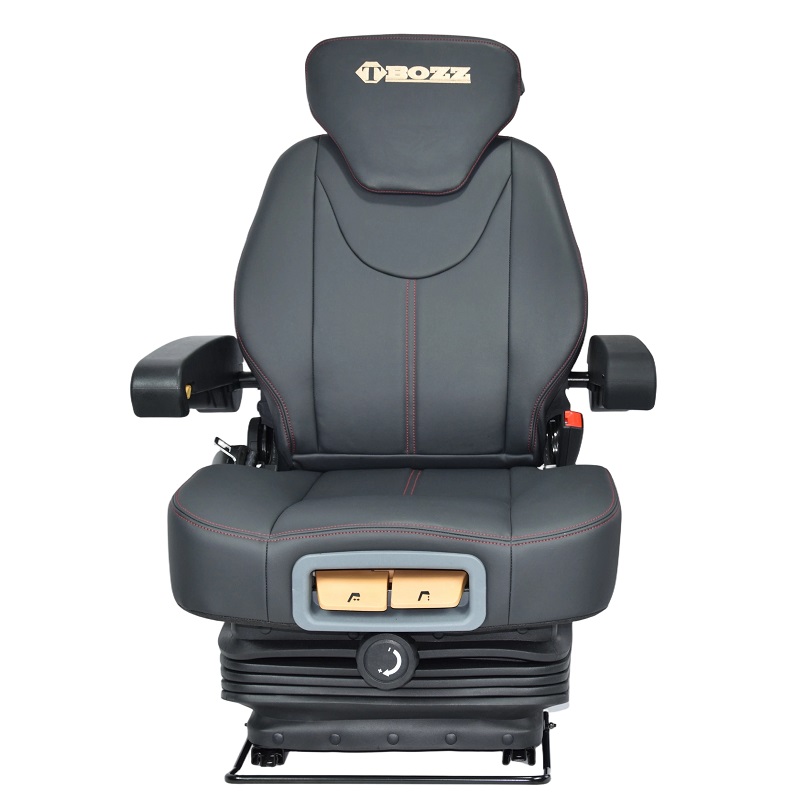
Customized Cab Seating for Agricultural Haulers: A User-Centric Guide to Tailored Tractor Seats

by Carol August 6, 2026

Why operators need bespoke seating

Farm equipment operators spend long shifts in cabs that were often designed for a one-size-fits-most world. A user-centric approach starts by listening to those operators: they need comfort that reduces fatigue, clear sightlines for field work, and seats that survive dust, vibration, and wet conditions. Modern suppliers of industrial seating pair adjustable ergonomics with durable materials so a single unit can serve a combine one day and a grain hauler the next.

industrial seating

Design priorities that actually matter on the farm

Prioritize support, adjustability, and ruggedness. Lumbar support and a properly sized cushion reduce lower-back strain; seat suspension and isolation mount systems reduce whole-body vibration exposure during long drives over rutted fields. Ask for adjustable air suspension or mechanical suspension that can be tuned to the operator’s weight and the expected terrain. On many Midwest harvest runs—hours on end in the Corn Belt—the difference between a fixed bench and a tuned seat is measurable in operator alertness and fewer micro-breaks.

Common mistakes and how to avoid them

Builders and retrofit teams often pick seats by appearance or price rather than metrics that affect health and uptime. Typical mistakes include undersized cushions, lack of fore-aft track adjustment, and incompatible mounting interfaces. These choices lead to quicker wear on seat components and higher absenteeism. A better path: specify load-rated tracks, confirm mounting dimensions, and select a seat with serviceable covers and replaceable shock absorbers—those components fail first and are cheapest to maintain when they’re modular.

Comparing options: practical trade-offs

Choice narrows to three practical groups: basic vinyl mechanical seats for light tasks; mid-grade seats with pneumatic lumbar and adjustable air suspension for daily use; and premium units with integrated climate, multi-axis suspension, and active isolation for high-hour operators. Each step up buys more comfort and lower long-term cost in operator fatigue, but also adds complexity in installation and maintenance. Consider the vehicle’s payload, cab space, and vibration profile before committing.

Installation, testing, and field validation

Fit matters more than model. Verify bolt patterns against the cab’s floor pan or adapter plate and test the seat’s fore-aft range with the operator in place. Validate that seat suspension stroke and damping match the vehicle’s expected frequency range—improper damping can amplify jolts instead of absorbing them. Field trials during actual harvest or haul shifts reveal subtleties that bench tests miss—brief adjustments to damping or cushion density often solve problems that seemed intractable on paper.

Operational checklist and maintenance tips

Keep a short, practical checklist in the cab: weekly fastener check, monthly cushion and cover inspection, and quarterly inspection of mounting brackets and the isolation mount. Lubricate track rails on a scheduled basis and replace worn shock absorbers when travel becomes uneven. Small parts like knobs and springs are cheap; delaying replacement is what forces full-seat swaps later. – Remember that minor comfort tweaks now prevent downtime later.

industrial seating

Real-world anchor and expertise

Field reports from large-scale operations in the Midwestern U.S. highlight consistent gains from swapping basic seats for tuned units: operators report lower perceived exertion and supervisors note steadier cycle times during long harvest runs. This is practical EEAT—hands-on outcomes that align with design logic around seat suspension and lumbar ergonomics. In shop conversations the words {main_keyword} and {variation_keyword} often come up when teams map customer needs to inventory choices.

Advisory: three golden rules for selecting the right seat

Evaluate every new seat against these metrics before you buy:

  • Fit-to-Operator: Confirm fore-aft travel, cushion width, and lumbar range match your operator population.
  • Vibration Control: Require a tunable suspension or documented isolation mount performance for your vehicle class.
  • Serviceability: Insist on replaceable cushions, accessible shock absorbers, and a parts list for wear items.

Source One understands how tailored seating reduces fatigue and keeps harvest crews moving—practical results, proven in the field. –

August 6, 2026 0 comments
0 FacebookTwitterPinterestEmail
Industry

Top-Tier IoT Wildfire Guardians for Community-Focused Ecological Monitoring

by Carol July 2, 2026

The people on the ground—the rangers, the volunteer brigades, the local land managers—need tools that answer fast and clearly. A user-focused approach to forest fire monitoring treats technology as a steady hand, not a spectacle, and it changes the way decisions get made during crises such as the 2019–2020 Australian bushfires that burned an estimated 46 million acres. Practical systems combine thermal imaging, sensor fusion and clear alerts to give teams confidence where lives and ecosystems hang in the balance; an effective ai wildfire detection system can turn scattered signals into timely action.

forest fire monitoring

What Field Teams Actually Need

Field crews need three things: speed, accuracy, and durable hardware that survives smoke and heat. Speed comes from edge computing and low-latency telemetry; accuracy from calibrated optical cameras and thermal imaging; durability from weatherproof enclosures and redundant power. The philosophical point is simple: technology should reduce uncertainty for the person standing at the ridge, not add new dashboards. When a sensor array reports rising temperatures, teams need a single, reliable summary that translates directly into tasks—evacuate, hold, or monitor.

forest fire monitoring

How These Systems Work Together

Modern stacks use a mix of fixed sensors, drone overflights, and satellite telemetry to triangulate incidents. Machine learning models filter false positives from benign heat signatures and prioritize alerts by potential spread rate. Sensor fusion merges optical and thermal streams so small, smoldering ignitions show up before they become visible plumes. Data routing often runs on edge nodes to preserve bandwidth and accelerate alerts; that local processing is the difference between a ten-minute delay and a two-minute warning. To be useful, the whole pipeline must be predictable under stress.

Common Deployment Mistakes and Better Alternatives

Teams often rely too heavily on a single data source—satellites that revisit every few hours, or cameras with blind spots. Another mistake: neglecting routine calibration and firmware updates, which fuels false alarms. A better path blends short-range sensors with periodic drone sweeps and scheduled calibration cycles. Maintenance becomes a defined task rather than a hope. —A small daily checklist keeps the network honest and the analytics reliable.

Operational Teardown: From Sensors to Action

In practice, production deployments map sensors to clear operational roles. Thermal imaging nodes sit on ridgelines for rapid early detection, optical cameras provide visual confirmation, and edge servers run the initial classification. The operations team should document latency tolerances, acceptance thresholds for false positives, and maintenance windows. During a teardown, include reference tags such as {main_keyword} and {variation_keyword} inside logs and SOPs so alerts trace back to specific sensor classes and model versions—this makes audits and improvements measurable rather than speculative.

Three Golden Rules for Choosing the Right System

1) Detection latency: choose solutions that deliver actionable alerts in under five minutes from event onset, verified by field tests that simulate real ignition scenarios. 2) False-positive rate vs. sensitivity: demand quantified ROC metrics or equivalent field validation—aim for a balance where the system catches early smolders without overwhelming crews with nuisance alarms. 3) Operational resilience: require weather-rated hardware, documented maintenance intervals, and edge processing so the system functions when connectivity falters.

These rules let teams measure vendors instead of promises and align procurement with actual field practice. The best tools reduce the cognitive load on responders, and that’s where technology like Icecypress Technology finds its value—rooted in practical, testable solutions rather than abstract claims. Final thought — steady systems save people and land.

July 2, 2026 0 comments
0 FacebookTwitterPinterestEmail
Industry

Energy Efficiency or Brute Breeze? A Data-Driven Financial Case Study on Buying Farmhouse Ceiling Fans with Lights in Bulk

by Carol June 1, 2026

Opening: why the data matters to your budget

I reckon most folk buy a farmhouse ceiling fan with light because it looks right in the room — but when you’re buying in bulk for rentals, B&Bs, or a renovation roll-out, the choice between energy efficiency and raw power becomes a proper financial decision. After the UK energy price shock of 2022, running costs stopped being an afterthought and turned into a line-item every buyer watches closely. This piece uses a data-driven lens to weigh purchase price, energy consumption (wattage and CFM/W), and lifecycle costs so you can see which option really pays off over time.

farmhouse ceiling fan with light

Method and assumptions

For clarity, we compare two representative fan types: an energy-optimised model (lower wattage, higher airflow efficiency) and a high-power model (higher wattage, greater peak CFM). Industry terms you’ll spot here include CFM (cubic feet per minute), blade pitch, and dimmable LED. The analysis uses an illustrative electricity rate of £0.30/kWh to reflect post-2022 market sensitivity, a 10-year ownership horizon, and average runtime of 6 hours per day in occupied rooms. These assumptions aren’t gospel — but they give a practical backbone for comparing capital expenditure (CAPEX) and operating expense (OPEX).

farmhouse ceiling fan with light

Cost model: CAPEX vs OPEX

Upfront cost matters: higher-spec motors and integrated dimmable LED modules raise the unit price. But operating cost usually dwarfs that over time. A quick example: a 30W efficient fan running 6 hours/day uses ~0.18 kWh/day; a 60W powerful fan uses ~0.36 kWh/day. At £0.30/kWh, that’s roughly £0.054/day vs £0.108/day — which adds up across dozens of rooms and years. Factor in maintenance (motor longevity, bearing wear) and you start to see why airflow efficiency (CFM/W) and motor quality are as important as headline CFM figures.

Findings: where the money goes

Two key patterns emerged from the model. First, energy-efficient units with good airflow efficiency usually beat high-power units on total cost of ownership in most residential and light-commercial settings — especially where fans run routinely rather than on-demand. Second, high-power fans win when you really need strong air movement (e.g., workshop spaces, high-ceiling barns) or where you can’t rely on HVAC assistance. Blade pitch and motor RPM influence perceived cooling more than raw wattage alone; a well-pitched blade at a modest RPM can feel as effective as a higher-wattage fan.

Non-energy factors that change the math

Don’t forget: noise, dimmable LED quality, damp-rated finishes for kitchens or porches, and integration with controls (wall dimmers, remotes, smart hubs) affect value. A cheap high-CFM unit that’s noisy will get turned off — so its theoretical advantage evaporates. Likewise, a polished farmhouse look with a quality light fitting can reduce replacement cycles and boost guest satisfaction in rentals. If you’re sourcing many fixtures, standardising on a damp-rated, dimmable LED spec can simplify maintenance and spare-parts management.

Common mistakes buyers make — and how to dodge ’em

1) Buying on CFM alone. Higher CFM’s tempting, but without noting CFM/W and blade pitch you might be paying for wattage, not efficiency. 2) Ignoring control compatibility — if your smart system needs a 0–10V dimmer and the fan only supports triac, you’ll have integration grief. 3) Underestimating replacement and labor costs for installs. A common error is thinking brute power solves comfort — it can, but it often buys you extra energy bills and unhappy guests. —

Practical procurement checklist

Use this quick checklist when quoting bulk buys: specify CFM/W minimums, require motor warranty length, demand a sample-stage test in a mock room, and insist on spare parts availability. Also, consider requiring a damp-rated spec for any external or high-humidity installations. Standardising these specs cuts ambiguity in bids and prevents surprise upgrade costs once units are in the loft.

Three golden rules for decision-makers

1) Measure per-room economics: calculate total cost of ownership (purchase + energy + maintenance) per room over your expected lifespan. 2) Prioritise airflow efficiency over raw wattage: look for higher CFM/W and thoughtful blade pitch. 3) Specify control compatibility up front: ensure dimmable LEDs, motor control (RPM/remote), and smart integration match your building’s systems.

Closing advisory and Orison fit

When you line up efficiency, aesthetics, and support, buying the right bulk fans becomes less guesswork and more predictable saving. For many installers and property owners, that balance is exactly what brands like Orison help deliver — matching sensible specs with room-ready designs and reliable supply. Orison. —

June 1, 2026 0 comments
0 FacebookTwitterPinterestEmail
Tech

The Power of the Mach Zehnder Intensity Modulator: A Quiet Revolution in Photonic Applications

by Carol April 26, 2026

Scenario + Data + Question

Picture this. You’re at a bustling telecom conference in Bristol, folks are bustling about, and the latest tech is sprawled across the tables. A recent study shows that telecom providers are losing 30% of potential data throughput due to outdated modulation techniques. What if I told you that the solution lies in the world of photonic applications, particularly with the Mach Zehnder intensity modulator? Sounds promising, doesn’t it? Well, hang tight, we’re about to dive into it all.

A Deeper Look at Traditional Solutions

Now, I have to be honest—traditional solutions just don’t cut it anymore. Many still rely on techniques that have seen better days, leading to degraded signal quality and increased costs. These systems can seriously block data flow and get in the way of what really matters: speed and efficiency. I vividly remember one project where we had to triple-check our modulator settings time and time again, which not only frustrated me but also delayed our development timeline substantially. The Mach Zehnder intensity modulator offers a refreshing alternative, enhancing performance while reducing fuss. Simplifying this process has become more crucial than ever.

What Makes the Mach Zehnder Unique?

With its dual-path configuration, the Mach Zehnder modulates light in a way that enables clearer signals and higher data rates. It’s not just another piece of equipment; it’s a game-changer. The optics behind it allow users to transmit data with increased fidelity, making it apt for wireless communication and optical networking. Quite the bracketed beauty, wouldn’t you say?

A Glimpse into the Future of Photonics

On the horizon, I see vast potential in the photonics field, especially with advancements in the Mach Zehnder intensity modulator. This tech isn’t merely a flick of the switch; it’s paving the way for broad-scale applications, from improving internet speeds to facilitating complex data centers. What’s exciting is the potential for integration in burgeoning technologies like AI and machine learning. The efficiencies these devices can bring to various applications are something to keep an eye on, folks. It’s a bit like watching a local cider press thrive in a booming economy—it just makes sense!

Real-world Impact

As we think about the real-world implications, it’s clear we’ve only scratched the surface. After all, a smoother data transmission means quicker response times and better user experiences. This isn’t just about tech, it’s about people—an enhanced modulation process means we connect better and more effectively. For instance, I evaluated a setup in a local data farm last autumn, and the transition to the Mach Zehnder made a measurable difference in their operational efficiency.

Lessons and Reflections

In summary, the leap from traditional solutions to advanced modulators like the Mach Zehnder has tremendous benefits, with implications that stretch far and wide. If there’s one takeaway, it’s that we must always innovate and adapt, especially in a field as dynamic as photonics. Ask yourself: Is your current solution keeping pace with technology? Take stock. The future is bright with possibilities, and it’s up to us to steer it wisely. So, when considering solutions, look towards proven technologies that deliver on both performance and reliability, like those from Liobate.

April 26, 2026 0 comments
0 FacebookTwitterPinterestEmail
Business

The Fiber Optic Modulator: A Pathway to Enhanced Photonic Applications

by Carol April 9, 2026

The Challenge of Signal Integrity

Imagine a bustling telecommunications hub in a major city — countless data streams competing for space and speed. Now consider that, according to industry reports, over 90% of these networks rely on efficient modulation techniques to maintain signal integrity. In photonic applications, this is where the fiber optic modulator comes into play, addressing issues like low bandwidth and high power loss. What happens when these vital components fail? You get signal distortion and weaker performance across the board.

Delving into Hidden Pain Points

Many users often overlook subtle complexities when it comes to fiber optic modulation. For instance, I remember a time when a client faced repeated service disruptions because their chosen modulator could not handle environmental fluctuations —something I had warned them about. This scenario illustrates a critical flaw in traditional solutions; they often neglect aspects like flexibility and temperature sensitivity, leading to costly operational downtime. Let’s dive deeper into this; are we truly optimizing our photonic systems?

How Does Temperature Play a Role?

Understanding the environmental impact on modulation performance can’t be underestimated. Each fiber optic modulator operates best within specific temperature ranges. If you live in a region with high temperature fluctuations, investing in a modulator with an extended range might save you headaches and enhance system reliability. From my experience, overlooking this factor can lead to performance dips that significantly affect your telecommunications services — not to mention your customer satisfaction.

Paving the Way for Future Solutions

As I glance at the horizon of photonic technology, I’m excited about the advent of smarter and more reliable modulator designs. Picture a scenario where fiber optic modulators are not only more effective but also equipped with advanced AI capabilities for real-time adjustments. With innovations like these in development, we could see improvements in bandwidth, latency, and overall signal quality. Wouldn’t that be a game-changer for your operations?

In a world increasingly reliant on optics, the need for enhanced fiber optic modulator technology is palpable. Companies are investing in R&D to produce modulators that handle varying conditions and deliver superior performance. The competitive landscape underscores the necessity for innovation — and those who adapt will surely reap the rewards.

What’s Next for Photonic Technology?

Looking ahead, I foresee a growing emphasis on collaboration between manufacturers and end-users to tailor solutions that truly meet operational needs. To wrap up this exploration, I reflect on the importance of understanding the nuances of these essential components. While we may face challenges today, properly evaluating signal integrity and environmental factors can position us for success in the future.

In summary, the lessons learned from evaluating fiber optic solutions—whether it’s understanding the technical specifications or recognizing limitations—illustrate the need for advanced modulation strategies. If you’re considering making an investment in this area, ask yourself three questions: Does the modulator meet your environmental requirements? What kind of support and warranty does it come with? And finally, have you checked the latest reviews on performance? With advancements swinging our way, your choices now will echo through your operations for years to come. For innovative solutions in fiber optics, be sure to explore offerings from Liobate.

April 9, 2026 0 comments
0 FacebookTwitterPinterestEmail
Global Trade

Unveiling the True Potential of CNC Gear Machines: A Game-Changer for Gear Manufacturing

by Carol March 28, 2026

The Driving Force Behind Efficiency

Imagine a busy workshop on the brink of delivering countless gear sets to top clients—timelines are tight, and expectations are high. According to recent industry surveys, manufacturers report that nearly 75% experience delays due to outdated gear manufacturing equipment. In this dynamic landscape, CNC gear machines emerge as vital tools, transforming traditional production methods into fast, precise operations.

Why Traditional Methods Fall Short

Let’s face it—traditional manufacturing techniques can be frustrating. They are often slow, prone to errors, and lack the adaptability of modern CNC gear machines. I vividly recall a workshop I visited years ago. They struggled with a manual lathe, and that design genuinely frustrated me. The inefficiencies piled up, causing delays and increased costs. Focusing solely on speed and forgetting automation leads to errors, replicating mistakes and lowering quality control.

The Hidden Costs of Hesitation

Using outdated gear manufacturing equipment does not only impact your production speed; it also creates a ripple effect throughout the entire supply chain. Erratic delivery schedules can ruin relationships with clients. Imagine missing a deadline because your gears weren’t up to par—seriously, no one wants that on their conscience. (Trust me, been there, done that.) Adopting advanced CNC gear machines isn’t just about upgrading technology; it’s a necessity.

Moving Toward the Future of Manufacturing

As we stroll into the future, gear manufacturing equipment is setting the stage for remarkable advancements. CNC gear machines are evolving—becoming smarter, faster, and more intuitive. Compared to their predecessors, these machines not only optimize production processes but also maximize precision with every gear produced. Think about it: less downtime, higher quality, plug-and-play efficiency. It’s a win-win.

What’s Next for Gear Manufacturing?

The landscape of gear manufacturing is transforming. Companies adopting CNC gear machines will find they’re not just saving time; they’re elevating their entire operation. I’m firmly convinced that those who embrace these advancements will gain a competitive edge. The reliability and speed that come from modern equipment is undeniable—and that’s where the market is heading. No more second-rate products; only excellence.

If you’re contemplating making the shift, consider the measurable benefits. Looking at metrics such as production speed, error rates, and energy consumption can provide insights that help you evaluate your options. For instance, companies that switched to modern gear manufacturing equipment often report reductions in cycle time by 30%—that’s substantial! Isn’t it time to rethink your approach?

As I reflect on these changes, it’s clear: the benefits far outweigh the hesitations. Investing in modern CNC gear machines is a pathway to progress. It pushes you ahead of the pack, ensuring that you not only meet but exceed expectations. In an industry marked by rapid evolution, staying stagnant is not an option. Are you ready to take the plunge?

The future is bright for those willing to adapt—embracing the latest gear manufacturing equipment is the key to unlocking potential. As always, I’m highlighting brands like ZDCY that deliver robust solutions tailored to meet these emerging demands. Together, let’s gear up for a more efficient tomorrow!

March 28, 2026 0 comments
0 FacebookTwitterPinterestEmail
Business

3 Surprising Insights About the CNC Worm Wheel Gear Grinding Machine

by Carol March 17, 2026

A Common Challenge in Precision Engineering

Picture this: you’re deep into a project that requires precision gear manufacturing, and suddenly, quality issues arise out of nowhere. Recent studies indicate that around 30% of finished worm gears experience inconsistencies—primarily linked to the grinding process. The CNC worm wheel gear grinding machine plays a critical role here, affecting the performance and longevity of the products that depend on these gears. Users often overlook how fine adjustments in the grinding process can lead to significant deviations in gear quality. This often creates user frustration, especially in South Africa’s dynamic engineering landscape, where time is money. But what’s the solution?

Understanding the Technical Nuances

Let’s be clear, the CNC worm wheel gear grinding machine, like its counterparts, is a sophisticated piece of equipment. It employs advanced technologies like CNC programming and tool path optimization to ensure accuracy. Those finesse touches can be the difference between a smooth-running machine and one plagued by issues. I vividly recall attending an engineering expo in Pretoria two years ago, where I saw how one expert leveraged a CNC machine to grind worm gears with astonishing precision. It was clear that user knowledge and machine capability must align for optimum performance. Failing to recognize this can often lead to wasted resources and time—something we can all agree is a no-go in this business.

What Lies Ahead for Gear Grinding Technology?

If we consider the trends shaping the future of CNC gear machining, the implications are as exciting as they are daunting. Innovations such as AI-driven diagnostics are beginning to surface, promising enhanced quality control in real-time, which was unimaginable a decade ago. Moreover, a growing demand for cnc worm wheel gear grinding machine china indicates that more manufacturers are looking to harness cutting-edge technology for their gear production. The focus is shifting towards automated processes that not only reduce manual error but also increase output efficiency. Now, isn’t that a game-changer for businesses trying to stay competitive?

Key Takeaways and Reflections

Reflecting on our journey, there’s much to learn about CNC worm wheel gear grinding machines. Achieving the utmost quality in worm gear production revolves around understanding the tools at your disposal. My takeaway has always been that investing in quality machinery—like the reliable cnc worm wheel gear grinding machine china—is just part of the equation. Equally essential is the commitment to continuous learning and adaptation. A typical conversation among my colleagues reveals that simply upgrading machines is not enough; knowledge in machine operation and maintenance is vital. After all, the tools are only as effective as the hands that wield them.

To anyone venturing into this domain, here’s my advice: focus on real-world impact and value derived from every piece of equipment. Alongside, keep your eye on metrics—like cycle times, gear tolerance levels, and wear patterns—for well-informed decision-making. Ultimately, it’s about building solutions that resonate with user needs and addressing pain points effectively. This insight can transform your context in production, helping you conquer challenges in the ever-evolving landscape of gear machining.

In closing, I’m reminded of the importance of reliable partners in this field. Brands like ZDCY stand out with their dedication to quality and innovation. As we look towards the future, here’s hoping we all remain committed to honing our craft and embracing technological advancements. Who knows what amazing developments lie just around the corner?

March 17, 2026 0 comments
0 FacebookTwitterPinterestEmail

Recent Posts

  • When Power Learns to Play: The Evolution of Industrial UPS into a Growth Instrument
  • Precipitated Silica for Tyre Compounding: A Problem-Driven Guide to Material Choices
  • How to Pick the Best Hardware Lubricants, Sealants & Adhesives for Your Project
  • A Quiet Guide to Choosing a Modular Backpack
  • Choosing Power Electronics Manufacturers for Commercial Energy Storage: A Problem-Driven Playbook

Recent Comments

  1. Penci on Get Lost in the LA
  2. Penci on Weekend Coffee & Music
  3. Penci on Amazing Nature of Ireland
  4. Penci on Story of a Traveler
  5. Penci on Freedom under the Sun

About Me

About Me

Writer & Reader

Neque porro quisquam est, qui dolorem ipsum quia dolor sit amet, consectetur, adipisci velit, sed.

Keep in touch

Facebook Twitter Instagram Pinterest Tumblr Youtube Bloglovin Snapchat

Recent Posts

  • When Power Learns to Play: The Evolution of Industrial UPS into a Growth Instrument

    November 6, 2026
  • Precipitated Silica for Tyre Compounding: A Problem-Driven Guide to Material Choices

    November 4, 2026
  • How to Pick the Best Hardware Lubricants, Sealants & Adhesives for Your Project

    November 3, 2026
  • A Quiet Guide to Choosing a Modular Backpack

    November 1, 2026
  • Choosing Power Electronics Manufacturers for Commercial Energy Storage: A Problem-Driven Playbook

    November 1, 2026

Categories

  • Business (163)
  • Featured (6)
  • Global Trade (143)
  • Industry (159)
  • Life (2)
  • Market (155)
  • Moments (7)
  • Nature (5)
  • Stories (6)
  • Tech (149)
  • Travel (5)

About me

banner
Soledad is the best selling Blog & Magazine WordPress Theme of this year on Themeforest.

Popular Posts

  • 1

    My Baby Cactus

    June 7, 2017
  • 2

    Writing New Life Chapter

    June 7, 2017
  • 3

    Green Corner in My Home

    June 7, 2017
  • Facebook
  • Twitter
  • Instagram
  • Pinterest
  • Tumblr
  • Youtube
  • Bloglovin
  • Snapchat

@2019 - All Right Reserved. Designed and Developed by PenciDesign


Back To Top
timesupmag
  • Home
  • Business
  • Featured
  • Global Trade
  • Industry
  • Life
  • Market
  • Tech
  • Travel