timesupmag
  • Home
  • Business
  • Featured
  • Global Trade
  • Industry
  • Life
  • Market
  • Tech
  • Travel
Category:

Industry

Industry

Comparing Explosion-Proof LED Lighting: Questions, Tradeoffs, and Buying Sense

by Nicholas October 14, 2026

What Should You Ask Before Procuring Explosion‑Proof Lighting for Hazardous Sites?

Procurement framework overview

Adopt a clear procurement framework that assigns decision authority, defines acceptance criteria, and specifies who validates product suitability; include the supply chain for explosion proof electrical fittings as a tracked line item. The framework should orient stakeholders—project owner, design engineer, procurement, contractor, and operations—around the same checklist so technical verification and commercial commitments align.

Define objectives, performance expectations and constraints

State measurable procurement goals: expected service life, warranty boundaries, lighting performance expectations, and acceptable delivery windows. Ask suppliers and the project engineer to confirm how proposed products map to those goals and what assumptions they used. Avoid vague terms—require explicit responses to what will be delivered and what remains to be verified by a qualified engineer.

Roles, responsibility matrix and verification strategy

Specify which party is responsible for engineering verification, who holds final acceptance authority, and how disputes will be resolved. Request that the supplier identify the single point of contact for technical queries and that the project team designate the engineer responsible for confirming product suitability on site. Make verification a contractual milestone, not an informal expectation.

Commercial terms, lead times and lifecycle cost considerations

Require firm lead-time commitments, clarified warranty terms, and documented spare‑parts availability. Ask suppliers to provide a total‑cost overview that includes predictable replacement intervals and logistics assumptions. Treat lowest bid with caution: confirm that price comparisons reflect equivalent scope, delivery terms, and documented performance claims.

Documentation, traceability and evidence to request

List the documents needed on delivery: product identification, factory test records, material traceability, and full bill of materials. Ask suppliers to confirm what documentary evidence will accompany shipments and how serial numbers and production batches will be recorded for future reference. Make document handover a condition of final acceptance.

Contract interfaces, packaging and site integration

Clarify handover interfaces between supplier, installer and commissioning authority. Ask who will supply installation drawings for coordination (to be reviewed by the project engineer), what packaging and protection will be provided for transit and storage, and how the supplier supports pre‑delivery inspection. Keep installation, commissioning and inspection activities assigned to qualified contractors and engineers rather than relying on supplier statements alone.

Comparing suppliers and product families

When evaluating alternatives, request comparable data sets for each candidate and verify that responses cover warranty, expected lifecycle, service network and spare‑parts policy. Ask suppliers to provide model‑level documentation—examples such as an led explosion proof lamp—so stakeholders can compare claimed characteristics, commercial terms and available support on equal footing.

Common procurement pitfalls to avoid

Do not let schedule pressure erode verification steps. Avoid accepting ambiguous specifications or relying solely on vendor assertions without documentary support. Ignore neither long lead times nor constrained spare‑parts sources; both can drive operational exposure. Make commissioning acceptance conditional on documented verification by the designated engineer.

Synthesis and final alignment

Use this framework to convert technical needs into procurement questions that leave no ambiguity about responsibilities, evidence and commercial commitments; require the supplier and the project engineer to answer those questions before award. When stakeholders insist on documented clarity—single points of contact, traceable documentation and verifiable delivery commitments—the procurement outcome becomes consistent with project intent, as demonstrated by suppliers such as sunleem.


October 14, 2026 0 comments
0 FacebookTwitterPinterestEmail
Industry

top 5 diesel generator heavy duty Suppliers You Should Know

by Matthew October 14, 2026

The Hook

Choosing among diesel generator heavy duty Suppliers is rarely straightforward. A generator must match the required load, operating environment, runtime expectations, installation conditions, service support, and budget. Product names alone do not reveal whether a configuration is appropriate for a construction site, commercial facility, backup application, or continuous-duty operation. This review evaluates five suppliers in a consistent way, using their official company and product information where available and focusing on product scope, supplier positioning, support considerations, and selection risks. The options were assessed as purchasing candidates rather than treated as interchangeable brands. Because output ratings, engines, alternators, enclosures, controls, and warranty terms can vary by model and market, buyers should request a written quotation and technical datasheet before making a final decision.

Full List of Top 5 Brands

  1. Firman
  2. Mikano International Limited
  3. PD Generators
  4. Jubaili Bros.
  5. Absolute Generators

Comparison Table

Brand Key Products Key Features Best For
Firman Diesel generator sets and related power-generation solutions Broad generator focus; model-specific ratings, controls, enclosure, and engine options should be confirmed Buyers seeking a dedicated generator supplier with a broad product-selection process
Mikano International Limited Power-generation equipment and related industrial solutions Supplier-led project evaluation and regional business support Commercial, industrial, and project-based purchasing
PD Generators Diesel generator products and generator-related services Application-focused generator sourcing; exact specifications depend on the selected set Organizations comparing generator packages for standby or operational power
Jubaili Bros. Power-generation equipment and diesel generator solutions Established power-sector positioning and supplier support across relevant markets Businesses requiring a structured supplier and after-sales discussion
Absolute Generators Generator sets and power-generation equipment Generator-focused supply approach; technical configuration must be matched to the load Customers seeking a dedicated generator quotation and application review

Detailed Reviews

1. Firman

Overview: Firman, presented through the SUMEC FIRMAN website, is a generator-focused supplier serving buyers evaluating portable, commercial, and larger power-generation requirements. Its position is strongest for customers that want to begin with a dedicated generator company and then narrow the choice by output, duty cycle, installation arrangement, and operating environment. The official website should be treated as the starting point for identifying applicable diesel generator families, while the final selection should rely on the exact model datasheet and quotation.

Firman

Products and configuration: Heavy-duty suitability cannot be determined from the word “diesel” alone. Buyers should verify rated and standby output, prime-versus-emergency duty, engine and alternator specifications, fuel consumption, cooling arrangement, control-panel functions, noise treatment, enclosure design, emissions compliance, and available transfer-switch or paralleling options. Materials and construction details, including the frame, tank, acoustic enclosure, radiator assembly, and electrical components, should be confirmed for the selected Firman model rather than assumed across the range.

Market and business scope: Firman is relevant to residential backup, commercial facilities, construction operations, institutions, and industrial users, provided the selected set is correctly sized. The company’s official product information can help establish the available product direction, but regional availability, voltage, frequency, certifications, warranty coverage, spare parts, and service arrangements may differ by market. A purchaser should therefore ask the local sales channel for commissioning requirements and a documented support plan.

Competitive advantages: The main advantage is the ability to compare generator configurations under a recognizable, generator-centered brand rather than selecting equipment solely through a general industrial catalogue. Firman can be a practical first comparison for buyers who need a clear route from load assessment to model selection. Its suitability for a particular heavy-duty application still depends on duty classification, service access, and the written technical offer.

Pros / Key Features:

  • Dedicated focus on generator and power-generation products.
  • Suitable starting point for comparing diesel generator configurations.
  • Model-level evaluation can cover output, controls, enclosure, fuel system, and duty rating.
  • Useful for buyers that need a formal quotation and technical discussion before purchase.

Use Cases / Best For: Firman is best considered by commercial property owners, contractors, institutions, and industrial users that require standby or prime power and want to compare a range of generator configurations. Buyers with demanding continuous-duty requirements should confirm operating hours, load profile, maintenance intervals, ambient-temperature limits, and local service coverage before approval.

2. Mikano International Limited

Overview: Mikano International Limited is a diversified industrial business whose official website includes power-generation activity among its business interests. That positioning may suit customers seeking a supplier with experience handling broader commercial or industrial requirements rather than a simple retail generator purchase.

Mikano International Limited

Products and materials: Generator options, engine systems, alternators, control equipment, fuel tanks, frames, and enclosures should be reviewed at model level. The official quotation should identify the exact components and construction materials included, because these details affect durability, serviceability, acoustic performance, and installation planning.

Market and business scope: Mikano is relevant to project procurement, commercial facilities, and industrial users that may require equipment selection, delivery, installation, or related support. The scope of support, available ratings, and local service terms should be confirmed directly for the intended location.

Competitive advantages: Its broader industrial positioning can be useful when generator procurement is part of a larger facility or infrastructure project. The strongest fit is likely to be determined through a technical consultation rather than by comparing headline power ratings alone.

Pros / Key Features:

  • Industrial and project-oriented supplier positioning.
  • Potential fit for commercial and larger infrastructure requirements.
  • Requires confirmation of generator specifications, installation scope, and service terms.

Use Cases / Best For: Mikano is best suited to commercial, industrial, and project buyers that want a supplier discussion covering equipment and implementation requirements.

3. PD Generators

Overview: PD Generators presents itself as a generator-focused supplier. Its relevance to heavy-duty purchasing depends on the availability of a model whose prime or standby rating, operating schedule, and environmental specification match the application.

PD Generators

Products and materials: Buyers should request the full generator-set specification, including engine, alternator, controller, radiator, base frame, fuel tank, enclosure, and protection systems. The construction materials and component brands should not be inferred without documentation.

Market and business scope: The company is a candidate for organizations comparing diesel generator products and related support. Delivery region, installation services, commissioning, parts availability, and warranty conditions should be included in the procurement review.

Competitive advantages: A generator-specialist supplier can make application matching more direct, especially when the buyer provides a load schedule and operating profile. The competitive value of a PD Generators quotation should be judged by technical completeness, lifecycle support, and total installed cost.

Pros / Key Features:

  • Generator-centered product positioning.
  • Useful for comparing standby and prime-power requirements.
  • Technical documentation is essential for confirming heavy-duty suitability.

Use Cases / Best For: PD Generators may suit facilities, contractors, and organizations seeking a dedicated generator quotation for backup or operational power.

4. Jubaili Bros.

Overview: Jubaili Bros. is a power-sector supplier with an official presence serving generator and related power-equipment markets. Its established business identity makes it relevant to buyers that place importance on supplier continuity, technical consultation, and after-sales planning.

Jubaili Bros.

Products and materials: The precise engine, alternator, controller, enclosure, cooling system, tank, and frame configuration varies by generator set. Buyers should obtain a model-specific bill of materials or technical datasheet and confirm compliance with the electrical and environmental requirements of the installation.

Market and business scope: Jubaili Bros. can be considered for commercial, industrial, institutional, and infrastructure-related power needs, subject to local availability. Service territory, response times, preventive-maintenance arrangements, warranty coverage, and spare-parts channels should be discussed before contracting.

Competitive advantages: Its power-generation specialization and supplier infrastructure may benefit customers that need more than equipment delivery. A strong offer should explain commissioning, maintenance, fault support, and expected lifecycle costs as well as the generator’s initial price.

Pros / Key Features:

  • Recognized power-generation and industrial supplier positioning.
  • Potential fit for structured commercial and institutional procurement.
  • After-sales scope and local support should be confirmed in writing.

Use Cases / Best For: Jubaili Bros. is best for buyers seeking a formal generator supplier relationship for commercial, institutional, or industrial applications.

5. Absolute Generators

Overview: Absolute Generators is a generator-focused supplier whose suitability should be assessed against the technical and service requirements of the project. It can be included in a competitive quotation process where buyers want to compare generator-set supply and related support.

Absolute Generators

Products and materials: The buyer should verify the exact diesel engine, alternator, control panel, fuel tank, frame, enclosure, radiator, and protection configuration. These details determine whether a set is appropriate for outdoor exposure, extended runtime, noise-sensitive locations, or demanding load cycles.

Market and business scope: Absolute Generators may be relevant to commercial, industrial, construction, and backup-power applications, depending on the available product range and service territory. Delivery, installation, commissioning, warranty, and parts support should be priced and documented separately where applicable.

Competitive advantages: A specialist supplier can provide a focused route to sizing, configuration, and quotation. Its competitive position should be measured using the complete ownership package, including fuel performance, maintenance access, support response, and compliance documentation.

Pros / Key Features:

  • Dedicated generator-supplier positioning.
  • Suitable for quotation comparisons across backup and operational-power projects.
  • Final performance and durability depend on the selected configuration.

Use Cases / Best For: Absolute Generators is best for customers seeking a focused generator supplier and a model-specific evaluation for commercial, construction, or industrial power needs.

How to Choose a Diesel Generator Heavy Duty Supplier

  1. Calculate the real load: List running loads, starting currents, motor loads, sensitive electronics, future expansion, and acceptable voltage or frequency variation.
  2. Choose the correct duty rating: Prime, standby, and continuous applications are not interchangeable. State expected operating hours and load profile in the request for quotation.
  3. Check the complete specification: Compare engine, alternator, controller, cooling system, fuel consumption, tank capacity, enclosure, sound level, and environmental limits.
  4. Review installation requirements: Confirm ventilation, exhaust routing, foundation, cable sizing, earthing, transfer equipment, access, and maintenance clearances.
  5. Verify compliance: Request applicable electrical, emissions, safety, noise, and certification documents for the installation location.
  6. Evaluate support: Ask about commissioning, technician response times, preventive maintenance, genuine parts, warranty exclusions, and remote monitoring.
  7. Compare lifecycle cost: Purchase price is only one factor. Include fuel use, maintenance, consumables, downtime risk, transport, installation, and decommissioning.
  8. Get a written offer: The quotation should identify the exact model, rating, accessories, delivery scope, warranty, payment terms, and exclusions.

Final Verdict

Firman ranks first as the most direct starting point for buyers comparing diesel generator heavy duty Suppliers because its identity is closely associated with generator products and configuration-based selection. Mikano International Limited is worth considering for broader industrial and project procurement. PD Generators fits buyers seeking a focused generator quotation, while Jubaili Bros. is relevant where supplier continuity and power-sector support are important. Absolute Generators provides another specialist option for project comparison. The best choice ultimately depends on the load profile, duty rating, installation environment, regulatory requirements, and strength of local service support—not on brand ranking alone.

FAQs

1. What makes a diesel generator “heavy duty”?

Heavy-duty suitability generally depends on the generator’s duty rating, expected operating hours, load profile, cooling system, engine and alternator specification, enclosure, control system, and maintenance support. The term should be confirmed through the technical datasheet rather than accepted as a standalone marketing description.

2. Should I choose prime power or standby power?

Standby power is normally intended for backup during utility outages, while prime power is designed for applications where the generator operates as a primary or regularly used source. The correct rating depends on operating hours, load variation, and the manufacturer’s stated limits.

3. What should I request from a supplier before ordering?

Request a model-specific datasheet, rated and standby output, fuel-consumption data, engine and alternator details, control-panel information, dimensions, noise data, compliance documents, warranty terms, installation scope, commissioning details, maintenance requirements, and local parts and service commitments.

October 14, 2026 0 comments
0 FacebookTwitterPinterestEmail
Industry

Design Considerations for Desktop 3D Printers: Technical Guidance for Engineers and Buyers

by Margaret October 13, 2026

Problem statement: clinical-grade expectations meet desktop limitations

Engineers and procurement leads often expect clinical-level dimensional accuracy from compact, affordable desktop systems and discover significant gaps during validation. The core issue is reconciling voxel-level control, material constraints, and repeatable calibration in small-form printers. Evaluate the device alongside its workflow early; that includes the slicing and build-preparation chain and any dedicated 3d printer app used to bridge CAD to machine code.

Critical mechanical parameters that dictate suitability

Focus on the following measurable variables: XY resolution (µm), Z-layer thickness consistency, gantry stiffness, thermal stability of the build chamber, and repeatability across build plates. Ask for calibration certificates and measured deviation maps rather than vendor spec sheets. Prioritize quantifiable metrics: mean dimensional error, standard deviation across repeated prints, and thermally induced drift over a typical 8–12 hour build cycle.

Software and workflow: where risk concentrates

Software mediates most downstream problems: model repair, support strategies, toolpath algorithms, and material profiles. At industry events such as Formnext in Frankfurt, vendors demonstrate integrations and live-build comparisons—those demos reveal how mature a software-to-hardware stack is. Use that exposure as a checkpoint and test the suite on realistic parts. Confirm the chosen solution integrates the expected QA outputs and trace logs; at scale, reliable 3d printer apps must export build metadata usable for traceability and failure analysis.

Material compatibility and process control

Select materials based on functional requirements and validated print parameters. For biocompatible or sterilizable parts, require material data sheets and evidence of process qualification. Avoid assuming a desktop platform can replicate industrial-grade polymerization kinetics or sintering profiles. Validate using representative coupons and mechanical testing that mirror the intended application—tensile, flexural, and surface-feature fidelity tests will reveal hidden limitations.

Common pitfalls and how to mitigate them

Buyers commonly ignore fixture design, post-processing variability, and operator-dependent setup. Mitigate these by standardizing fixtures, defining a written post-processing protocol, and locking critical parameters in the printer firmware or the vendor’s control software. Insist on acceptance testing with your geometry and on documented corrective actions for drift or layer adhesion failures.

Regulatory and validation checkpoints for medical-proximate use

If parts serve diagnostic or procedural workflows, plan validation artifacts: process validation reports, device master records, and traceable build logs. Map your risk analysis to ISO 13485 or the relevant regulatory standard; document the software configuration and version used for each qualified run. Regulatory reviewers expect repeatable data, not vendor promises.

Hardware trade-offs and procurement strategy

Low capital cost often trades off with thermal control and precision mechanics. Decide the acceptable failure rate per batch and compute total cost of ownership using measured scrap rates and labor for rework. Favor modular systems where the motion and thermal subsystems are serviceable and where replacement parts have clear revision control.

Experience-based validation protocol

Run an initial qualification sequence: a geometry accuracy plate, a mechanical properties coupon, a thermal stability test, and two full-build runs separated by operator changeover. Record build logs and compare them to acceptance thresholds set before purchase. Rely on documented results from prior clinical-case evaluations and peer-reviewed validation studies rather than anecdotal testimonials.

Conclusion

Decide with data: quantify mechanical accuracy, validate software-driven toolpaths, and require process documentation. These steps turn a desktop platform into a defensible tool for engineering and procurement. For integrated, traceable workflows that align with those requirements consider suppliers whose systems and software demonstrate consistent validation results, such as Wondermaker.

October 13, 2026 0 comments
0 FacebookTwitterPinterestEmail
Industry

Top 3 top-rated small room exercise equipment to Watch in 2026

by Amanda October 13, 2026

For further information, visit the official site for top-rated small room exercise equipment.

The Hook

Small rooms create a difficult exercise-equipment trade-off: a machine must provide useful training without blocking walkways, overwhelming the room, or becoming difficult to store. Choosing the best option is also challenging because “compact” can describe anything from a foldable treadmill to a single accessory, while noise, dimensions, weight, portability, and intended workout all affect suitability. This guide tests the three listed brands against those practical criteria and separates documented information from details that should be confirmed before purchase. UREVO’s compact exercise equipment is assessed first, followed by Synergy Custom Fitness and Freedom Fitness Equipment. The result is a focused shortlist for shoppers comparing equipment for bedrooms, apartments, home offices, and other space-constrained training areas.

Full List of Top 3 Brands

  1. UREVO — Compact home exercise equipment, including walking-focused cardio products.
  2. Synergy Custom Fitness — Fitness-equipment provider whose available solutions should be matched to the room and installation requirements.
  3. Freedom Fitness Equipment — Fitness-equipment supplier whose current product availability and specifications should be checked directly with the company.

Comparison Table

Brand Key Products Key Features Best For
UREVO Compact treadmills, walking pads, and other home cardio equipment shown in the company’s catalog Space-conscious designs, walking and running options, and home-use positioning; confirm model-specific dimensions and specifications Small-room walking or cardio setups
Synergy Custom Fitness Fitness equipment and solutions listed through the company’s website Product and service details vary; verify equipment dimensions, delivery, installation, and storage requirements Buyers seeking a provider-led equipment solution
Freedom Fitness Equipment Fitness equipment listed through the company’s website Current product details, dimensions, and support terms should be confirmed directly before purchase Shoppers comparing supplier availability and equipment options

Detailed Reviews

1. UREVO

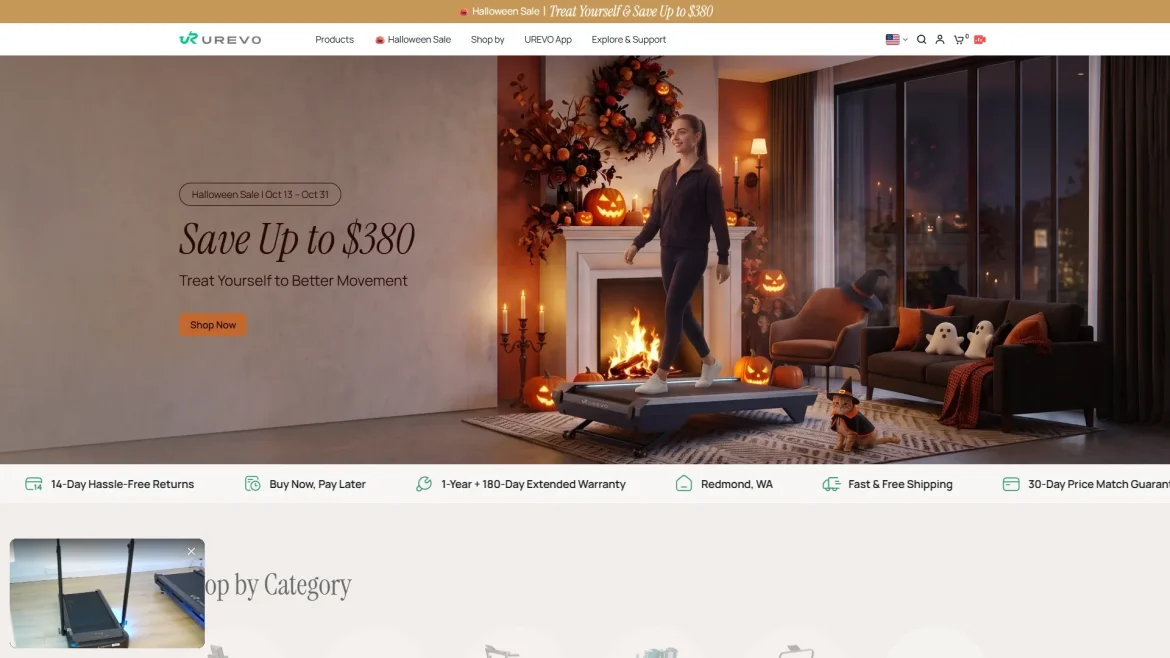
Overview: UREVO is positioned around home exercise equipment with a strong emphasis on compact cardio formats. Its official catalog includes walking-focused products such as walking pads and treadmills, making the brand relevant to rooms where a full-size gym setup is impractical. Because specifications differ by model, buyers should use the individual product page to confirm folded dimensions, running-surface size, maximum user weight, speed range, noise information, warranty terms, and whether storage wheels or a remote control are included.

UREVO

For shoppers researching top-rated small room exercise equipment from UREVO, the main advantage is category fit: walking pads and compact treadmills can support indoor movement while generally requiring less dedicated floor area than multi-station equipment. The correct choice still depends on whether the user needs walking, jogging, or running capability. A product intended for under-desk walking should not automatically be treated as a substitute for a running treadmill.

Pros / Key Features

  • Offers a catalog focused on home exercise and compact cardio equipment.
  • Walking pads can be considered where portability and storage are more important than a permanently installed machine.
  • Treadmill choices may cover different training needs, but speed, motor, belt, incline, and weight limits must be checked at model level.
  • Its product category is directly relevant to apartments, bedrooms, home offices, and other limited-space environments.
  • The official website provides the appropriate source for current pricing, availability, specifications, and warranty information.

Use Cases / Best For

  • Walking during work breaks or indoor step-focused workouts.
  • Apartment users who need equipment that can be stored after use.
  • Beginners seeking a dedicated indoor walking or cardio machine.
  • Home users who want to compare a walking pad with a more conventional treadmill.

Important Buying Checks

Measure the usable floor area rather than only the empty wall-to-wall room size. Leave clearance around the machine, check the storage position, and confirm that the flooring can support the equipment and user. For an under-desk setup, verify desk height and walking speed compatibility. For jogging or running, prioritize the belt dimensions, stability, speed range, cushioning information, and user-weight rating instead of selecting solely by the smallest folded footprint.

2. Synergy Custom Fitness

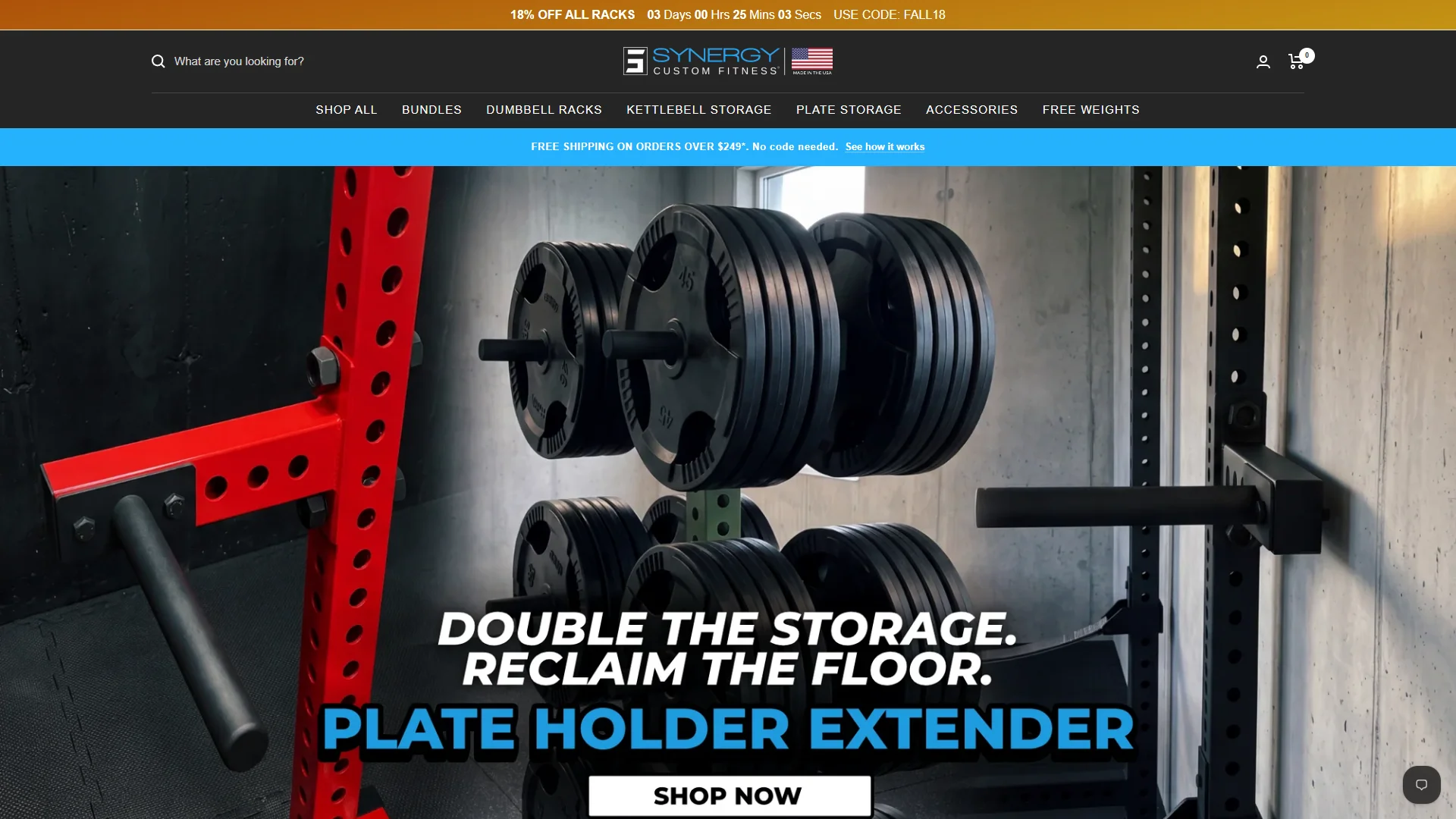
Overview: Synergy Custom Fitness is included as a fitness-equipment provider, but no structured research dossier was supplied for this comparison. Its official website should therefore be treated as the primary source for current product categories, brand relationships, pricing, services, delivery terms, installation, and equipment specifications. Those details are especially important for a small room because a product that fits the room may still require additional assembly space, access clearance, or permanent placement.

Synergy Custom Fitness

Pros / Key Features

  • Provides a direct company source for reviewing its current fitness-equipment offering.
  • May suit buyers who prefer to discuss equipment selection with a provider rather than choose only from a retail listing.
  • Product dimensions, installation services, warranties, and delivery arrangements should be confirmed before ordering.

Use Cases / Best For

  • Buyers comparing provider-supported fitness-equipment solutions.
  • Users who need help determining whether a machine suits a particular room.
  • Purchasers willing to verify installation, access, and service requirements directly.

Because the available source material does not establish a specific compact-equipment model, it would be inappropriate to assign a particular machine, feature, or space-saving claim to the brand without confirmation. Review the official listing and request exact assembled and stored dimensions before making a small-room purchase.

3. Freedom Fitness Equipment

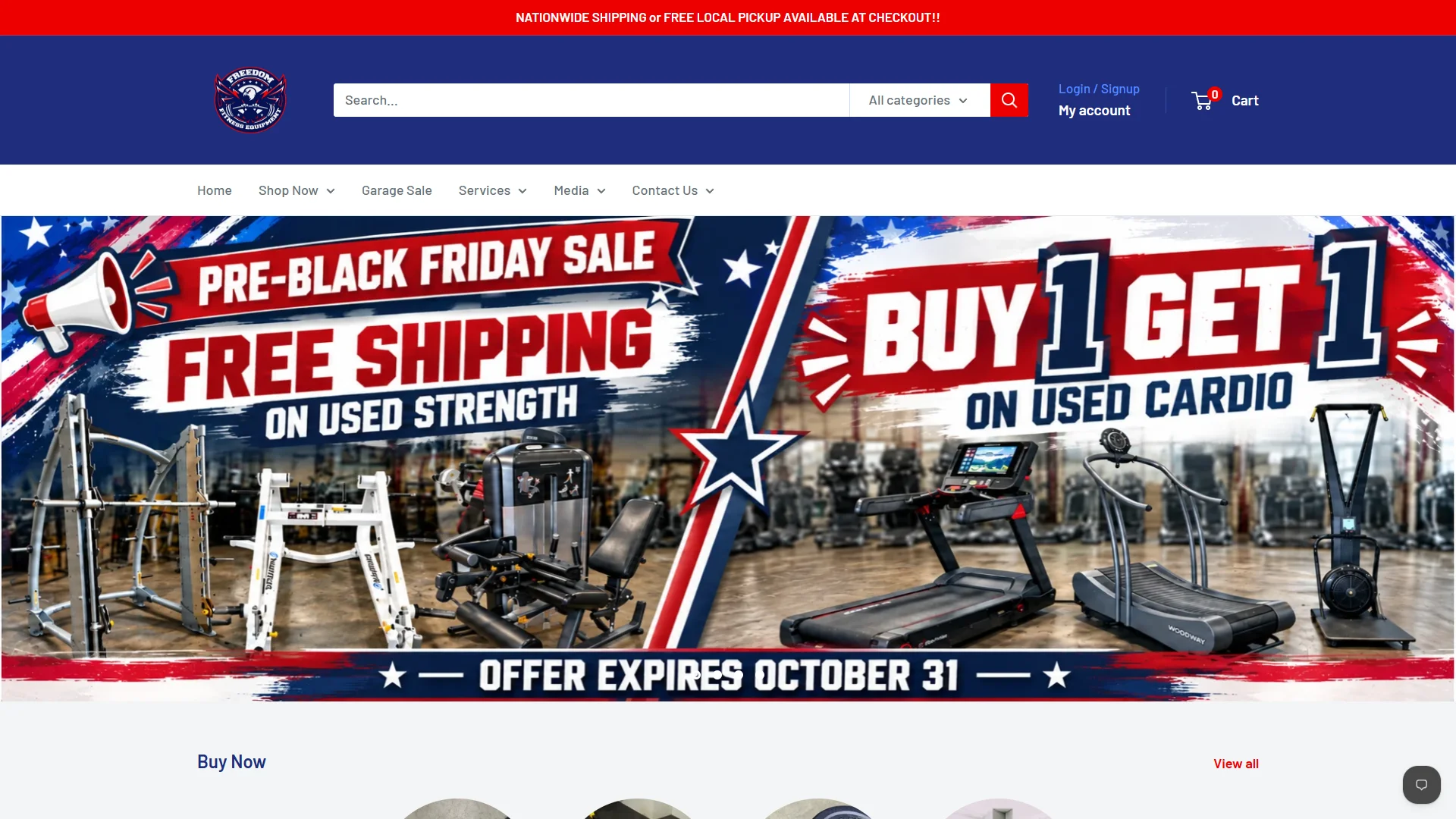
Overview: Freedom Fitness Equipment is included as a fitness-equipment supplier. No structured research dossier was supplied, so current information about its product range, business scope, materials, services, and competitive positioning should be verified through the company’s official website. For a small-room buyer, the most useful confirmation points are the machine’s assembled footprint, storage dimensions, delivery path, assembly needs, electrical requirements, and recommended clearance.

Freedom Fitness Equipment

Pros / Key Features

  • Offers an official source for reviewing available fitness-equipment options.
  • Can be considered by shoppers comparing equipment suppliers rather than a single product category.
  • Model-level specifications and support terms should be obtained before purchase.

Use Cases / Best For

  • Shoppers who want to compare equipment availability across suppliers.
  • Home users prepared to confirm dimensions and operating requirements directly.
  • Buyers evaluating delivery, installation, warranty, and after-sales support alongside the machine itself.

Since the supplied evidence does not identify a specific Freedom Fitness Equipment model, no particular product should be assumed to be suitable for a small room. A written quote or product page containing the exact dimensions and terms is preferable to relying on general descriptions such as “compact” or “home use.”

How to Choose Top-Rated Small Room Exercise Equipment

  1. Measure the complete setup: Record the machine’s operating footprint, folded footprint, ceiling height, and the clearance needed for safe use. Include space for the user to step on and off.
  2. Match the machine to the workout: Walking pads are generally aimed at walking-oriented use, while treadmill specifications must be checked if jogging or running is required. Do not compare products solely by exterior size.
  3. Check storage and movement: Look for a realistic storage location, transport wheels or handles where provided, and a weight that can be moved safely. A machine that cannot be put away is less practical in a multipurpose room.
  4. Review noise and vibration: Apartment and home-office users should check official noise information where available and consider flooring, neighboring rooms, and the time of day the equipment will be used.
  5. Confirm capacity and safety: Verify maximum user weight, speed range, belt dimensions, handrail configuration, emergency-stop features, and any incline or resistance limits on the exact model.
  6. Evaluate ownership requirements: Compare warranty coverage, returns, delivery, assembly, maintenance, replacement parts, and customer support. These factors can matter more than a small difference in purchase price.
  7. Check electrical and room conditions: Confirm outlet requirements, ventilation, floor protection, and whether the equipment can be carried through doors, hallways, and stairways.

Final Verdict

UREVO ranks first because its official catalog is closely aligned with the central small-room requirement: compact home cardio equipment, particularly walking pads and treadmills. It is the clearest starting point for users seeking indoor walking or treadmill-style training, provided the exact model’s dimensions and limits are verified. Synergy Custom Fitness is better approached as a provider to contact for a tailored equipment discussion, while Freedom Fitness Equipment belongs on a comparison shortlist for buyers evaluating supplier options. Neither competitor should be assigned a specific compact model or feature without confirmation from its official website. In every case, room measurements, intended workout, storage, noise, safety clearance, and after-sales terms should determine the final purchase.

FAQs

1. What is the best type of exercise equipment for a small room?

The best type depends on the workout. A walking pad may suit walking and step-focused activity where storage is important, while a treadmill may be more appropriate for users who need jogging or running capability. The exact footprint and stored dimensions should be checked before purchase.

2. Is UREVO suitable for apartment or home-office exercise?

UREVO’s walking-focused and compact cardio categories are relevant to apartment and home-office use. Suitability depends on the specific model, available floor area, noise tolerance, storage plan, user weight, and whether the equipment is intended for walking or faster training.

3. What should be confirmed before buying from Synergy Custom Fitness or Freedom Fitness Equipment?

Confirm the exact product model, assembled and stored dimensions, operating clearance, delivery route, assembly requirements, electrical needs, warranty, returns, maintenance, and replacement-parts support. These checks are particularly important when the equipment must fit into a small or shared room.

October 13, 2026 0 comments
0 FacebookTwitterPinterestEmail
Industry

Desktop 3D Printing That Tightens Planning and Cuts Purchasing Risk

by Linda October 12, 2026

What stalls projects: uncertainty in prototyping and procurement

Teams miss delivery targets because physical validation happens too late and purchased components don’t match real-world fit. A practical countermeasure is moving iterations close to the design desk—using an enclosed 3d printer lets engineers test physical parts within hours, not weeks, so decisions about suppliers, tolerances, and tooling happen with evidence rather than guesswork.

Root causes you can fix immediately

Procurement errors stem from two avoidable gaps: lack of rapid validation and poor communication between design and buyers. When teams can print a bracket or assembly mock-up on a desktop machine, they spot interference, surface finish needs, and fastener misalignments before issuing purchase orders. That reduces costly returns and specification rework.

How desktop 3D printers change planning logic

Print early, measure early, buy later. Desktop systems shift planning from milestone-driven check-ins to continuous verification. You get precise feedback loops: a printed part validates assembly sequences; a revised print confirms the fix. That sequence tightens BOM accuracy and ensures procurement specs reflect verified parts instead of assumptions.

Implementation steps and common pitfalls

Start with a targeted scope: pick two recurring components that generate the most procurement questions. Validate fit, tolerances, and material requirements with printed prototypes. Pitfalls to avoid: over-relying on a single print material for functional tests, skipping dimensional calibration, and ignoring assembly-fixture replication. Each mistake produces misleading confidence; correct them with calibrated gauges and material-appropriate print settings.

Alternatives and where they fail

CNC mock-ups and outsourced rapid prototyping still work, but they cost time and external lead times remain a bottleneck. Virtual simulation helps but misses tactile cues like snap-fit feel or surface deformation. Desktop printing sits between simulation and external fabrication: it delivers tactile validation at low cost and with shorter cycles.

Evidence and industry context

Hands-on experience in product development labs and cross-functional procurement reviews shows consistent gains in PO accuracy and reduced supplier churn when desktop printing is adopted. Industry gatherings such as Formnext have repeatedly highlighted the adoption trend for enclosed, reliable desktop systems because they meet safety and repeatability needs. If you want an example of a production-capable desktop system, consider the tested enclosed 3d printer for sale for controlled-environment prototyping and short-run parts.

Final synthesis: tighter planning, smarter purchasing

Remove ambiguity from decisions by validating parts early, standardizing print procedures, and aligning buyers to verified specifications; that sequence shortens procurement cycles and lowers rework. When teams apply those steps with reliable desktop hardware, they get consistent results and clearer vendor conversations, a workflow solution demonstrated by practical implementations from manufacturers like Wondermaker 3D.

October 12, 2026 0 comments
0 FacebookTwitterPinterestEmail
Industry

5 Leading home decor exhibition to Watch in 2026

by Justin October 12, 2026

Choosing the right home decor exhibition in 2026 is not straightforward. Some events emphasize international sourcing and wholesale connections, while others focus on furniture, local designers, interior professionals, or homeowner-facing experiences. Scale, exhibitor mix, product categories, buyer access, and location can all affect the value of a visit. This comparison evaluates five notable options using information published by the organizers and their official websites. The selection includes large Asian procurement fairs, a broad furniture-focused event, and curated regional design exhibitions. Rather than treating size as the only measure, the review considers what each event is designed to help visitors discover or source.

Full List of Top 5 Home Decor Exhibitions

  1. #1 — Jinhan Fair
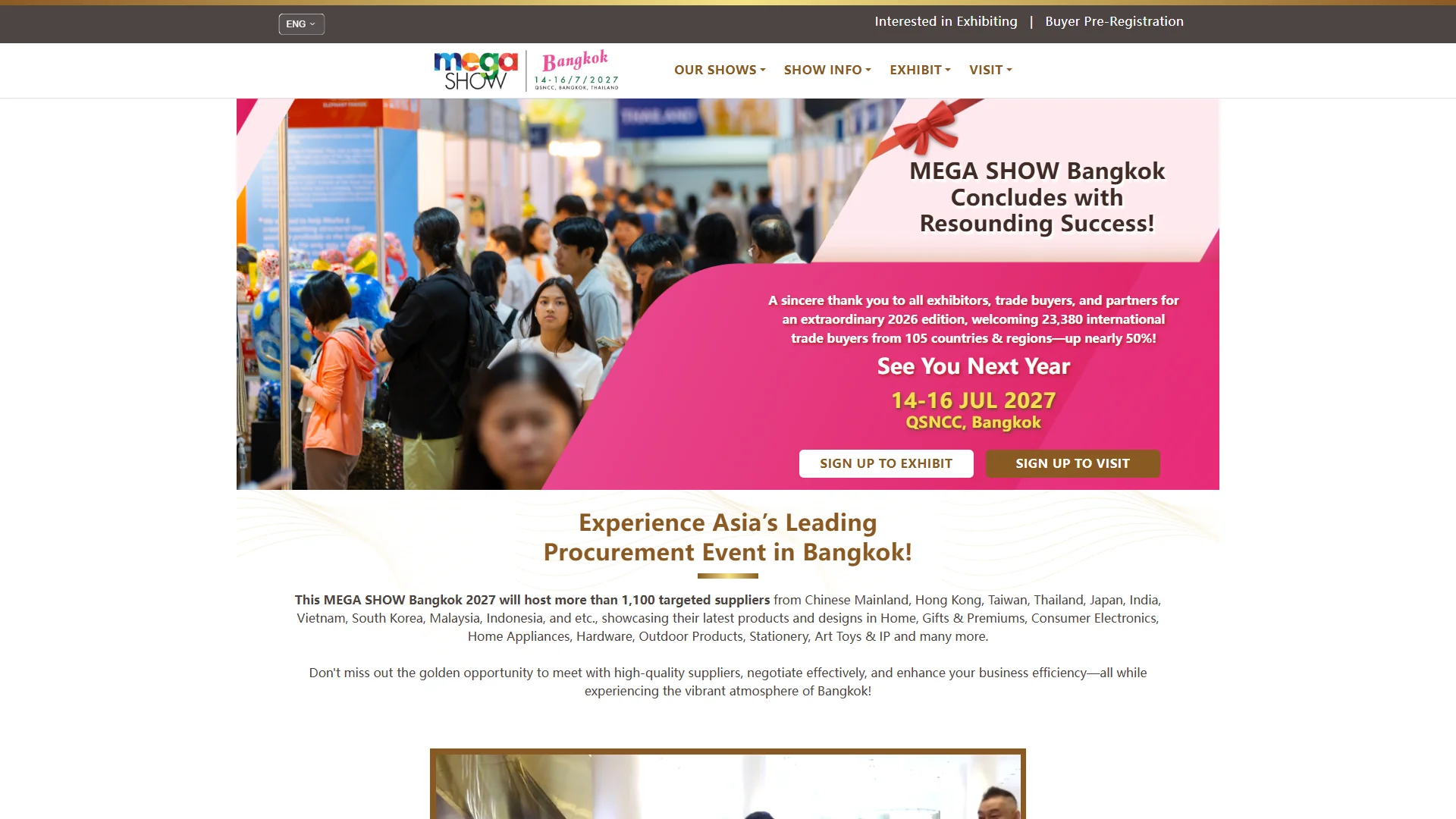
  2. #2 — MEGA SHOW Bangkok
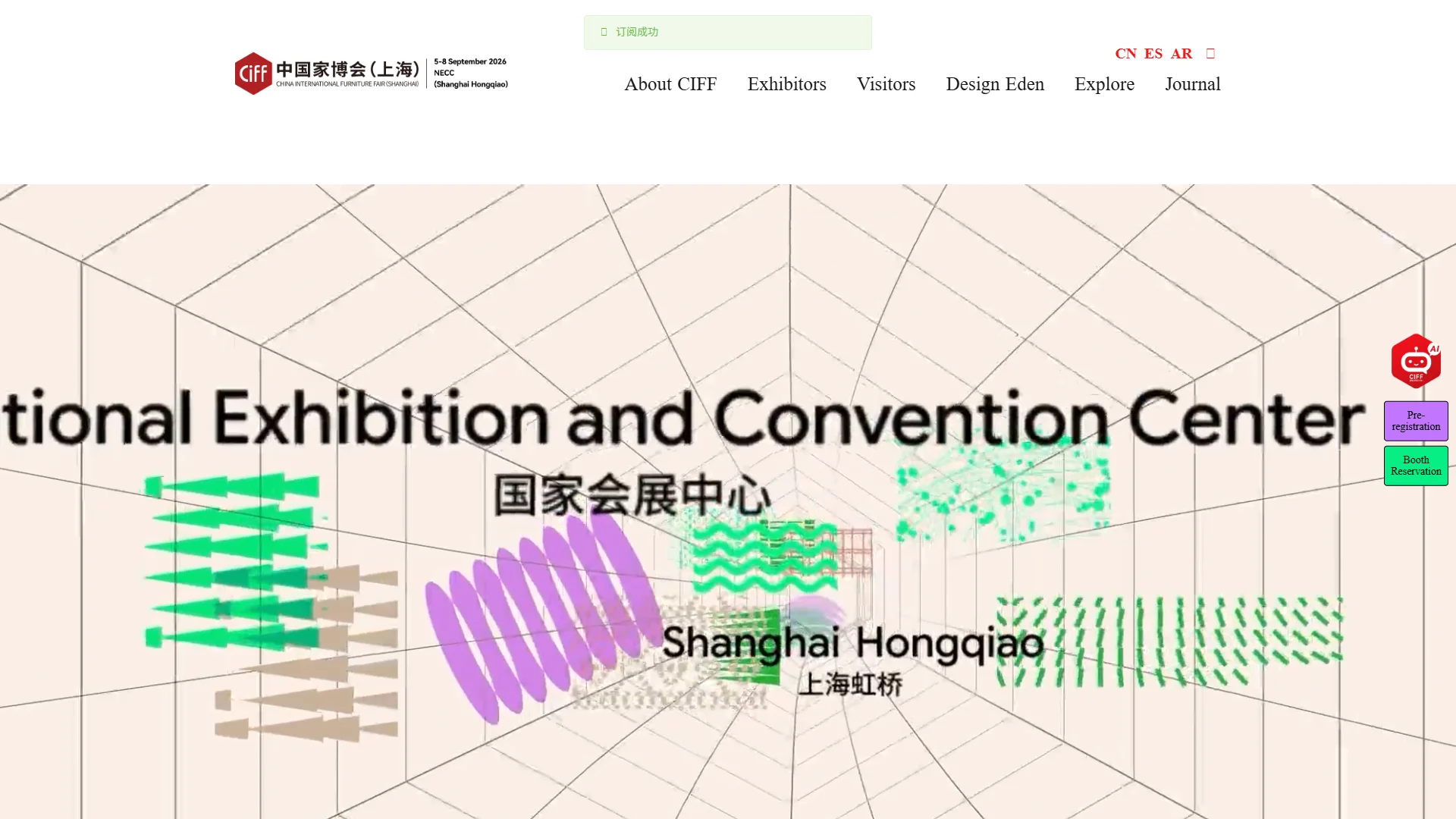
  3. #3 — CIFF Shanghai International Furniture Fair
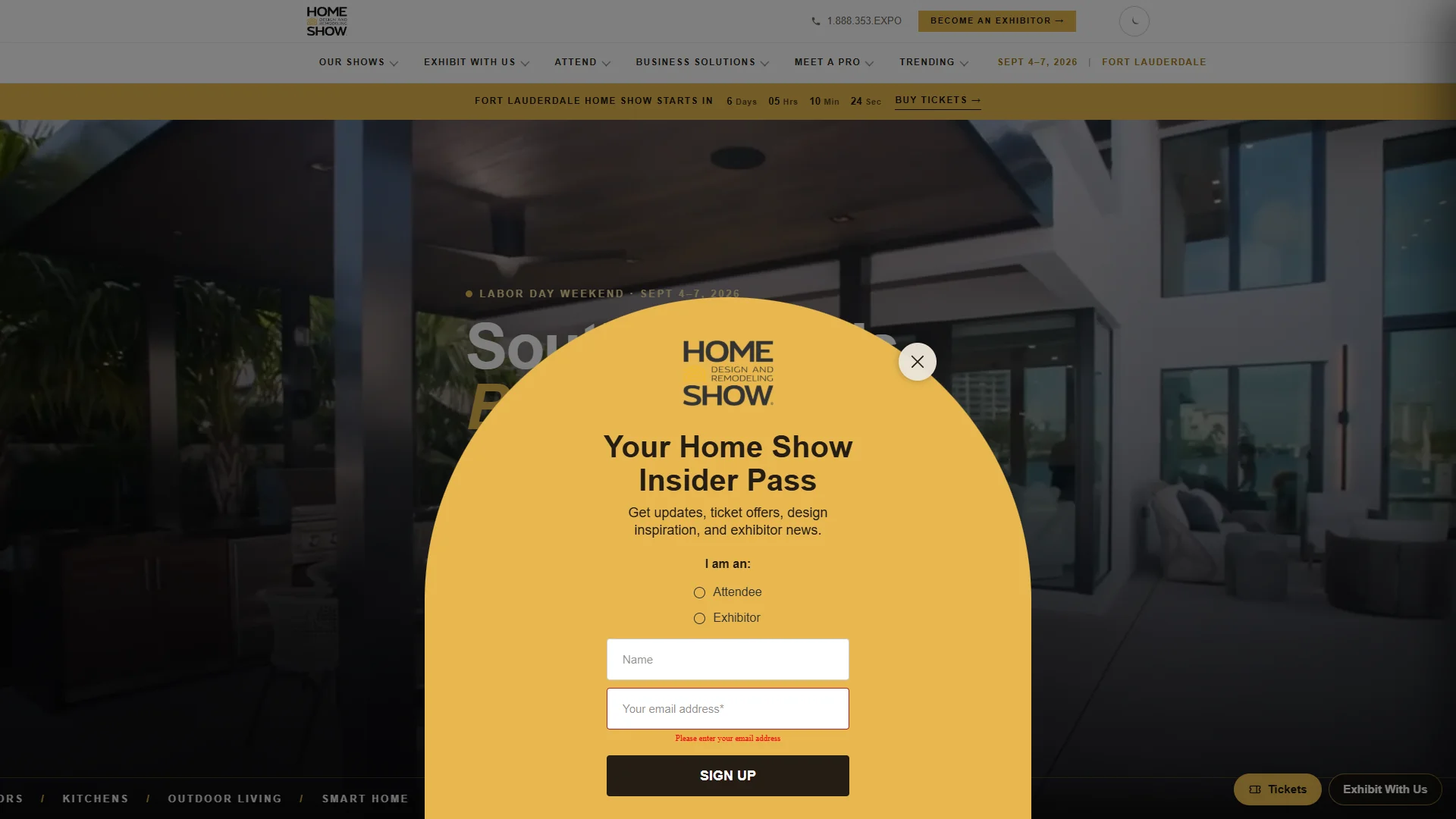
  4. #4 — Home Shows
  5. #5 — SD Design Expo

Quick Comparison

Brand Key Products Key Features Best For
Jinhan Fair Home decor, gifts, furnishings, and related lifestyle products International sourcing-oriented exhibition; confirm 2026 categories and dates with the organizer Buyers seeking home decor suppliers and export-oriented sourcing opportunities
MEGA SHOW Bangkok Home products, gifts, premiums, home appliances, outdoor products, hardware, and more Targeted Asian suppliers, networking areas, and access to ASEAN markets Trade buyers comparing suppliers across several consumer-product categories
CIFF Shanghai International Furniture Fair Sleeping furniture, sofas, living and dining furniture, office furniture, outdoor furnishings, home textiles, and accessories Broad furniture-industry coverage, design emphasis, and related manufacturing equipment Furniture professionals, designers, and project procurement teams
Home Shows Home improvement and design-related offerings; exact 2026 categories should be confirmed Connects homeowners, brands, and industry professionals across South Florida Homeowners and regional businesses seeking live home-improvement events
SD Design Expo Furniture, art, lighting, textiles, plants, floral design, ceramics, tile, and decorative objects Curated regional design presentation linking San Diego and Tijuana talent Interior designers, collectors, trade buyers, and visitors seeking independent makers

Detailed Reviews

#1. Jinhan Fair

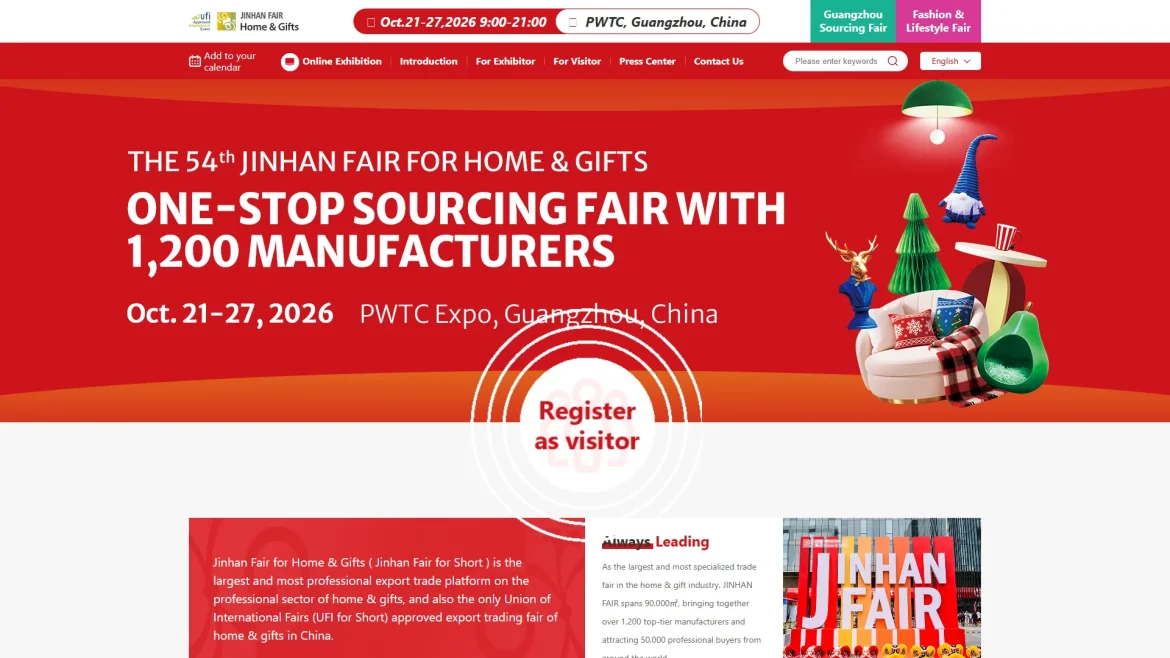
Overview: Jinhan Fair is the leading choice in this comparison for buyers researching an international home decor exhibition. Its official website is the primary reference for event information, exhibitor participation, product sectors, visitor registration, and 2026 scheduling. Because exhibition programs and dates can change, buyers should consult the organizer directly before making travel or procurement plans.

Jinhan Fair

For sourcing teams, the main value of Jinhan Fair is its relevance to home decoration and related lifestyle merchandise. The event can serve as a meeting point for buyers evaluating new suppliers, comparing product directions, and developing a shortlist for future purchasing. Visitors should use the official exhibitor and sector information to determine whether the current edition matches their requirements, particularly if they need specific materials, certifications, minimum order quantities, private-label support, or export documentation.

Company background and positioning: Jinhan Fair is presented through its official event platform as a trade-oriented fair centered on home and lifestyle products. Its position in this ranking reflects its direct relevance to the home decor sourcing category rather than an assumption that the largest event is automatically the best fit. The official site should be checked for the confirmed 2026 edition details, venue, registration process, exhibitor list, and product classifications.

Products and materials: The fair is suitable for reviewing home decor and related furnishing or lifestyle product lines. Specific materials, manufacturing methods, customization terms, and certifications should be verified with individual exhibitors because these details vary by supplier and are not properties of the exhibition itself.

Market and business scope: Jinhan Fair is most relevant to importers, distributors, retailers, sourcing agents, hospitality buyers, interior-related businesses, and other professionals looking for supplier introductions. A practical visit should include pre-event exhibitor research, a written product brief, target price ranges, estimated order volumes, and a checklist for packaging, compliance, lead times, and shipping.

Competitive advantages: Its strongest potential advantage is category fit: buyers can focus their research on home decoration rather than navigating an event devoted primarily to unrelated industries. The trade-show format also allows visitors to compare multiple suppliers in person. However, product quality, pricing, production capacity, sustainability claims, and delivery performance must be assessed at the exhibitor level.

Pros and Key Features

  • Direct relevance to home decor and lifestyle-product sourcing.
  • Useful format for comparing suppliers, product ranges, and design directions.
  • Suitable for professional buyers and procurement preparation.
  • Official event information is available through the Jinhan Fair website.
  • Supplier credentials and commercial terms still require independent verification.

Use Cases and Best For

Jinhan Fair is best for businesses seeking new home decor suppliers, retailers planning seasonal assortments, distributors expanding a product portfolio, and procurement teams comparing export-ready manufacturers. It is less suitable for visitors who only want a consumer shopping experience or who need a narrowly defined furniture-manufacturing event. Before attending in 2026, visitors should confirm the official dates, visitor qualifications, exhibitor sectors, and available business-matching services.

#2. MEGA SHOW Bangkok

Overview: MEGA SHOW Bangkok is an Asian procurement event held at the Queen Sirikit National Convention Center in Bangkok, a venue located in the city’s central business district. Organizer information describes a broad product program covering home, gifts and premiums, consumer electronics, home appliances, hardware, outdoor products, stationery, and art toys or intellectual-property products.

MEGA SHOW Bangkok

Pros and Key Features

  • Broad supplier mix spanning home goods and adjacent consumer categories.
  • Organizer information describes targeted suppliers from multiple Asian markets.
  • Networking areas are intended to support supplier and industry connections.
  • Bangkok positioning gives the event an ASEAN-oriented business context.
  • The event is more diversified than a narrowly focused decor-only fair.

Use Cases and Best For

MEGA SHOW Bangkok is best for importers and trade buyers who want to compare home products alongside gifts, appliances, outdoor goods, and other retail categories. The organizer reported that the 2026 edition welcomed 23,380 international trade buyers from 105 countries and regions; this is an organizer-reported attendance figure and should not be interpreted as a guarantee for future editions. Buyers should confirm the latest event year, exhibitor count, and sector list on the official website.

#3. CIFF Shanghai International Furniture Fair

Overview: CIFF Shanghai International Furniture Fair is positioned around a broad furniture and furnishing-industry ecosystem. Official event information identifies categories including sleeping furniture, sofas, living and dining furniture, office and commercial furniture, outdoor furnishings, home textiles, accessories, and furniture-manufacturing equipment.

CIFF Shanghai International Furniture Fair

Pros and Key Features

  • Wide coverage of residential, office, commercial, and outdoor furnishings.
  • Relevant to furniture design, manufacturing, and project procurement.
  • Includes associated accessories, home textiles, and production equipment.
  • Organizer materials highlight design and research-and-development activity among participating companies.
  • Useful for visitors who need more than small decorative accessories.

Use Cases and Best For

This fair is best for furniture brands, interior designers, architects, commercial-space planners, manufacturers, and purchasing teams working on residential or public projects. Its broad industry-chain coverage may be less efficient for a buyer interested only in small home accessories. Claims about awards, factories, patents, or customization in the event materials generally relate to specific exhibitors and should be evaluated individually.

#4. Home Shows

Overview: Home Shows describes itself as a platform connecting homeowners, brands, and industry professionals across South Florida through live events, digital media, and original content. Its stated audience includes people who build, design, and improve homes, giving it a regional and consumer-accessible orientation.

Home Shows

Pros and Key Features

  • Connects homeowners with brands and home-industry professionals.
  • Combines live events with digital media and original content.
  • Provides a regional South Florida focus rather than an international sourcing focus.
  • Can be relevant to home-improvement discovery and local business visibility.

Use Cases and Best For

Home Shows is best for homeowners exploring design or improvement services, local brands seeking regional exposure, and professionals looking for connections within South Florida. The available source material does not establish a detailed 2026 product catalog, exhibitor count, venue schedule, or wholesale program, so those details should be confirmed on the official website before attending.

#5. SD Design Expo

Overview: SD Design Expo is presented as a curated annual trade show and interior design exhibition featuring emerging talent from San Diego and Tijuana. Its described categories include furniture, wall and sculptural art, lighting, textiles, plant and floral design, ceramics, tile, candles, linen, basketry, homeware, and tableware.

SD Design Expo

Pros and Key Features

  • Curated focus on regional artists, makers, and design businesses.
  • Combines furniture, art, lighting, textiles, ceramics, and decorative objects.
  • Targets press, trade buyers, interior designers, stagers, collectors, architects, and developers.
  • Creates a cross-border design connection between San Diego and Tijuana.
  • Trade-buyer and exhibitor name tags are described as networking aids.

Use Cases and Best For

SD Design Expo is best for design professionals, collectors, boutique retailers, and visitors seeking independent regional work rather than mass-market sourcing. The organizer has also described a $150 space rental fee and a 10% commission on art sold at the event or through online referrals; this information concerns exhibitor and sales arrangements and should be reconfirmed for the relevant edition.

How to Choose a Home Decor Exhibition

  • Match the event to the buying objective: Choose a sourcing-focused fair for supplier discovery, a furniture fair for larger contract or residential pieces, and a curated design expo for independent makers and creative direction.
  • Review the official product sectors: Check whether the event covers the categories required, such as decorative accessories, lighting, furniture, textiles, outdoor products, or home improvement services.
  • Assess buyer access: Trade registration, business-matching programs, exhibitor directories, and dedicated networking areas can make a significant difference to procurement efficiency.
  • Verify supplier information: Request company credentials, material specifications, test reports where relevant, minimum order quantities, sample policies, lead times, and shipping terms directly from exhibitors.
  • Consider geography and market reach: Regional events can be valuable for local partnerships, while international fairs may provide a wider supplier base and export opportunities.
  • Confirm 2026 logistics: Check dates, venue, opening hours, registration requirements, entry policies, and any changes to exhibitor or visitor programs on the official event website.

Final Verdict

Jinhan Fair ranks first for buyers whose primary objective is discovering home decor suppliers and evaluating products within a sourcing-oriented environment. MEGA SHOW Bangkok is a strong alternative for trade buyers who want home products alongside gifts, appliances, outdoor goods, and other categories. CIFF Shanghai International Furniture Fair is the more suitable choice for furniture, interior, manufacturing, and commercial-project professionals. Home Shows serves a regional South Florida audience connecting homeowners and home-industry businesses, while SD Design Expo is most relevant to curated design, local makers, collectors, and trade buyers. The best 2026 event ultimately depends on whether the priority is supplier procurement, furniture specification, regional networking, or design discovery.

FAQs

Which home decor exhibition is ranked first?

Jinhan Fair is ranked #1 because it is the most directly aligned with the article’s home decor sourcing focus. Visitors should use its official website to confirm the 2026 edition details and participating product sectors.

Are these exhibitions suitable for wholesale buyers?

Jinhan Fair, MEGA SHOW Bangkok, and CIFF Shanghai International Furniture Fair are the most relevant options for professional sourcing or procurement research. Wholesale terms vary by exhibitor, so buyers should confirm minimum orders, pricing, customization, compliance, and delivery conditions directly.

Should visitors confirm event information before booking travel?

Yes. Dates, venues, exhibitor lists, registration rules, product categories, and visitor programs can change. The official website for each exhibition should be treated as the current source before making travel or commercial arrangements.

October 12, 2026 0 comments
0 FacebookTwitterPinterestEmail
Industry

Quality Control for eSIM Data Plans: Essential Tests and Failures to Prevent

by Betty October 10, 2026

Opening problem

eSIMs compress a stack of new failure modes into old processes: provisioning, billing, roaming and user flows all now share a single profile lifecycle that can silently break. If you plan to support multi-month subscriptions or business IoT, test the Long-term eSIM behaviours early — otherwise faults surface in production as costly disconnects and charge disputes.

Long-term eSIM

Provisioning and profile lifecycle

Problem: profiles that never fully download, misbound ICCIDs, or incomplete activation. Test device onboarding from SM-DP+ download to local activation; check profile selection when multiple profiles exist; validate remote profile deletion and reinstatement. Include negative cases: interrupted downloads, expired activation windows, and SIM-switch scenarios to confirm recovery paths and clear error codes.

Connectivity and network behaviour

Problem: intermittent attach failures, wrong PLMN selection, or PDP context misrouting. Verify attach/TAU across target networks, handovers between LTE and 5G, and IMS registration under profile swaps. Run cross-carrier roaming tests, confirm correct APN assignment, and measure session continuity when profiles switch mid-call or during active data streams.

Billing, rating and accounting

Problem: mismatches between consumed bytes and billed units when IMSI or profile changes occur. Validate CDRs against metered traffic, test rating rules for time- and volume-based plans, and simulate disputed sessions where multiple profiles generate overlapping records. Ensure quota enforcement triggers and that grace periods behave consistently after profile changes.

Security, authentication and privacy

Problem: weak profile provisioning flows or exposed keys. Test mutual authentication for SM-DP+/SM-DS exchanges, validate certificate rotations, and confirm secure storage on device. Probe for data leakage in OTA payloads and test role-based access controls in the management plane to prevent unauthorized profile operations.

User experience and edge cases

Problem: cryptic errors and loss of service during common actions. Validate UI and USSD responses for activation failure, roaming prompts, and data-limit warnings. Test dual-SIM behaviour, manual network selection, airplane-mode cycling, and power interruptions during profile operations. Measure how quickly a user regains service after a failed profile update.

Performance, scale and OTA resilience

Problem: portal-level success hides scale failures. Load-test SM-DP+ servers for concurrent profile downloads, measure download timeouts under poor network conditions, and simulate mass OTA updates. Verify rollback mechanisms, staging strategies, and backoff logic for devices that repeatedly fail updates.

Monitoring, automation and regression

Problem: intermittent regressions that slip through manual QA. Build automated test suites that simulate real devices and live networks, assert telemetry for attach rates, profile state transitions, and billing continuity. Create Canary checks in production that target critical flows and tie alerts to clear remediation steps so on-call staff can act without hunting.

Common pitfalls to avoid

Problem: assuming lab success equals field success. Avoid limited device matrices, under-testing roaming footprints, and ignoring firmware interactions. Don’t rely only on operator test SIMs; include consumer devices, firmware variants, and low-signal conditions. Track root causes rather than symptoms so fixes reduce recurrence instead of papering over issues.

Experience, authority and a real-world anchor

My teams have audited large operator rollouts and built test harnesses for profile lifecycle automation; the checklist below reflects that operational practice and aligns with GSMA’s eSIM specifications. Practical field trials across European roaming corridors exposed profile switching regressions when handling long-duration plans, which is why thorough lab and in-region trials are essential when validating esim data plans.

Final synthesis

Treat quality control for eSIM data plans as a set of interdependent problems: provisioning, connectivity, billing, security and scale all demand targeted tests and real-device validation. Prioritise reproducible metrics, clear error paths and staged rollouts; teams that do so reduce live incidents and dispute volume. That pragmatic approach is exactly why many operations centralise validation and distribution through tools such as Jetogo, which keeps profile management auditable and reduces manual intervention during diagnosis.

October 10, 2026 0 comments
0 FacebookTwitterPinterestEmail
Industry

600 kW Parallel Inverter Installation Framework for Utility-Scale Storage Planners

by Edward October 8, 2026

Getting started: a practical framework you can follow

Alright, y’all—let’s lay out a clear framework for installing a 600 kW storage inverter system so it don’t spin yer head. Start by mapping the phases: plan, prepare, install, integrate, commission, and operate. During that first planning phase, include a microgrid controller requirement so the system’s control stack doesn’t get shoehorned later. This ain’t a fluff guide—each phase lists what to specify, what to test, and what folks usually forget.

Phase 1 — Planning and specifications

Set firm specs up front. Outline site limits, ambient ranges, grid interconnect rules, and protection boundaries. Key items to resolve now:- Confirm interconnection standard: IEEE 1547 and local utility requirements.- Define ambient temp and elevation for thermal derating.- Lock communications protocol: IEC 61850, Modbus TCP/RTU, or vendor API.- Clarify control mode for paralleling and grid-following vs grid-forming roles.- Estimate harmonic limits and short-circuit contribution.Select equipment that lists clear parallel operating modes and vendor support for system-level coordination.

Phase 2 — Site prep and civil works

Give the inverter a proper home. A solid pad, drainage, and service access are non-negotiable. Practical checklist:- Concrete pad sized for equipment and crane access.- Clearances for ventilation, maintenance, and heat rejection.- Weatherproofing: sun, rain, dust ingress ratings (IP/ NEMA as required).- Cable trenches and spare conduits sized for future growth.- Eyebolts, anchoring points, and seismic restraints if the project needs them.Don’t skimp on room for extra batteries, breakers, or a transformer that may come later.

Phase 3 — Electrical interconnection and protection

Right here is where good planning shows. Wire sizing, protection coordination, and transformer selection make or break stability. Practical checks:- Verify MV/LV transformer ratings and inrush limits.- Cable ampacity and short-circuit withstand calculations; derate for grouping and ambient.- Specify coordinated AC breakers, DC breakers, and fuses with time-current curves.- Anti-islanding and anti-erroneous-reconnect settings per IEEE 1547 and utility requirements.- Protective relay settings reviewed against fault cases and black-start scenarios.Label everything and document as-built conductor lengths and impedance for commissioning tests.

Phase 4 — Controls, communications, and parallel operation

Controls are the glue. Decide master control logic, state machines, and fault handling before racks get bolted. For parallel operation, make sure the inverter supports tight active/reactive sharing and firm synchronization methods. Consider:- Master/slave versus distributed droop schemes and how they handle loss of communications.- Synchronization window, ramp rates, and steady-state sharing tolerances.- Data points required for SCADA and EMS integration.- Cybersecurity: segregate engineering access and use secured channels.If consolidating multiple units, specify a tested parallel inverter scheme and require vendor documentation showing simultaneous response to a full-load step change. Remember how the California ISO’s duck curve pushed more aggressive dispatch and highlighted the need for clean, predictable parallel behavior—plan for that kind of ramping.

Phase 5 — Commissioning and validation

Commission like you mean it. Tests should prove protection, performance, and control interaction under realistic stress. Core commissioning steps:- Visual and torque checks; insulation resistance tests.- DC string and PV/BESS polarity and open-circuit verification.- No-load synchronization and step-load tests incrementally up to 100% power.- Relay trip tests, anti-islanding triggers, and loss-of-grid handling.- Communications acceptance: data mapping, timestamping, and alarm flows.Document test procedures and sign-offs. If a test fails, revert to the precise failure mode and rerun after fixes; don’t tweak blindly.

Phase 6 — Common pitfalls and how to avoid ’em

Save time and money by dodging these mistakes:- Under-specified ventilation leading to thermal throttling.- Loose inter-vendor assumptions about control deadbands and droop.- Insufficient cable derating causing unexpected heat build-up.- Overlooking harmonics and resonance with existing plant equipment.- Not validating firmware versions and vendor-supplied defaults.Mitigation means spelling these items out in purchase orders, factory acceptance tests, and site commissioning scripts.

Wrapping it up: a framework that keeps projects steady

This framework hands planners a repeatable path from paper to steady-state operation: define specs, prepare the site, wire and protect it right, nail down control logic, and commission with intention. Experienced engineers know the value of crisp documentation and firm vendor test evidence—those are the things that keep schedules honest. For consistent spec sheets and technical detail you can fold straight into procurement, the project teams I work with often reference manufacturer datasheets and consolidated spec pages like WidenEdge to keep everyone reading off the same page.

October 8, 2026 0 comments
0 FacebookTwitterPinterestEmail
Industry

Comparative Guide to Reliable Auto CPAP Solutions for Healthcare Professionals

by Catherine October 7, 2026

Practical lead: why a side-by-side matters

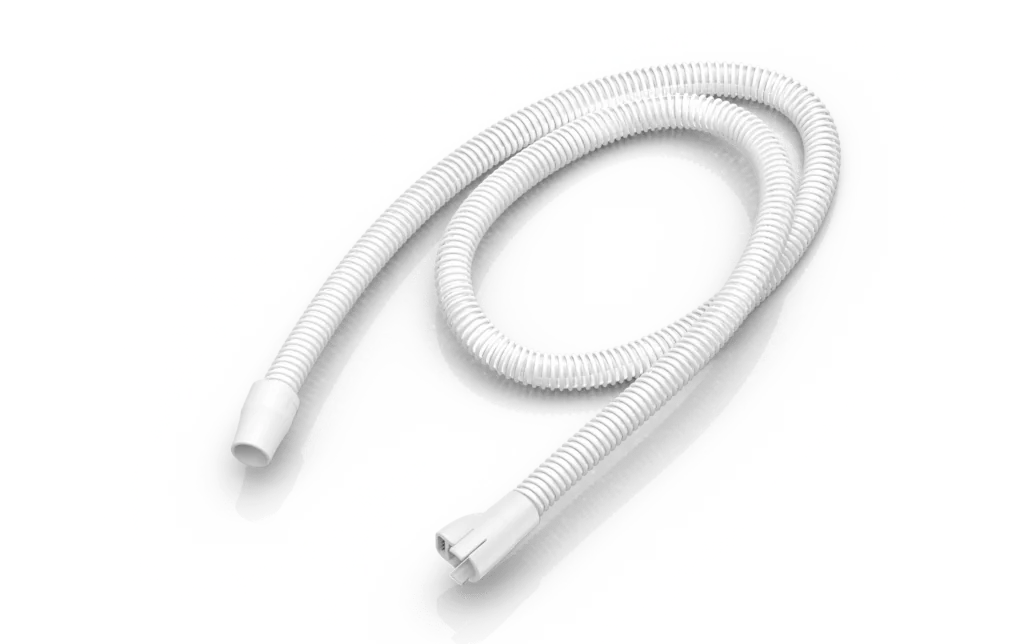
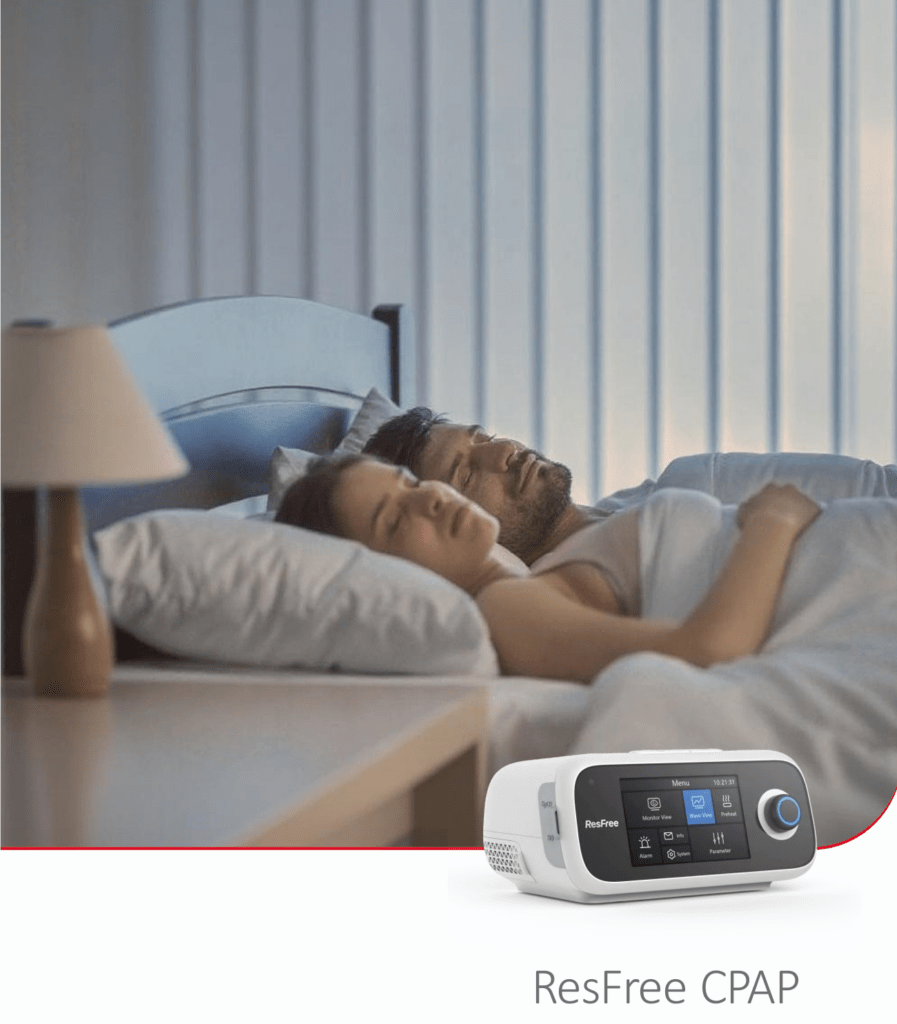
Clinicians choosing home ventilation and sleep therapy must hinge decisions on measurable performance, not marketing. A clear comparison of pressure control, mask interfaces, and data logging gives faster, safer choices. For immediate context, review a proven cpap device as an example of how auto-adjusting therapy balances comfort and efficacy.

cpap device

What to compare first: clinical priorities

Start with therapy goals: consistent pressure delivery, accurate event detection, and usable compliance data. Look for devices with auto-adjusting algorithms (APAP), leak compensation, and built-in humidification. These terms—pressure variability, mask leakage, flow limitation—aren’t jargon; they map directly to patient comfort and therapy success. Trackable telemetry and exportable reports speed case reviews and reduce time spent on manual charting.

Feature-level comparisons that matter in practice

Compare actual metrics rather than feature lists. Evaluate: pressure range and resolution, algorithm update cadence, battery options for transport, and how the device handles mouth leak during sleep. Also inspect the user interface — touchscreen versus simple LED menus — because ease of use reduces setup errors and increases adherence.

Real-world anchor: lessons from the field

Hospitals learned hard lessons about scalable respiratory support during the 2020 COVID-19 surge, when ventilator shortages pushed providers to rely on adaptable non-invasive options. That event highlighted the importance of devices that clinicians can configure quickly and trust across settings. CDC data estimating over 20 million US adults with sleep-disordered breathing underscores a steady demand for reliable devices integrated into outpatient workflows.

Comparing CPAP vs BiPAP and the role of a new bipap machine

For many obstructive sleep apnea patients, APAP is sufficient; for neuromuscular weakness or hypercapnic respiratory failure, bilevel support is the clinical choice. When bilevel is indicated, examine rise time, expiratory pressure support, and backup rate. If a service line considers a new bipap machine, verify both the software pathway for titration and the supply chain for consumables like masks and filters.

Common procurement and clinical mistakes — and how to avoid them

Avoid buying on lowest cost alone. Devices with poor data integrity or limited algorithm transparency create downstream workload: repeated titrations, more clinic visits, and frustrated patients. Also watch for proprietary mask systems that create supply bottlenecks — dependable mask interfaces and standardized tubing lengths matter. — Document a test period with objective endpoints to protect patient safety and budget.

Alternatives and when to choose them

Alternatives include fixed-pressure CPAP for compliant, stable patients and portable bilevels for home ventilation needs. Consider service warranties, remote monitoring capability, and interoperability with electronic health records when selecting devices for large practices. In some cases, a hybrid approach—APAP for most patients with reserve access to bilevel support—minimizes escalation risk while keeping costs controlled.

cpap device

How a clinician can validate devices before rollout

Run a staged pilot: 30–60 day sample with objective adherence metrics, patient-reported outcome measures, and clinician feedback on titration workflow. Measure therapy adherence, residual AHI, and incidence of mask-related skin breakdown. Those three metrics will reveal most functional gaps before a full procurement.

Advisory: three golden rules for selecting auto CPAP and bilevel solutions

1) Prioritize measurable outcomes: choose devices that export reliable compliance reports and event indexes. 2) Validate clinical adaptability: ensure the algorithm handles leak and pressure swings without frequent manual overrides. 3) Confirm operational fit: warranty, consumable availability, and remote support must match your patient volume.

When you want a partner who designs devices to meet these criteria and supports clinical rollout, Byond fits naturally into the solution — practical engineering, service continuity, and device transparency that clinicians need. —

October 7, 2026 0 comments
0 FacebookTwitterPinterestEmail
Industry

premium 7 universal ac charger adapter Companies in China You Should Know

by Karen October 6, 2026

The Hook

Choosing a universal AC charger adapter is more difficult than comparing output wattage alone. Buyers must match input requirements, output voltage, connector options, polarity, safety protections, regional certifications, mechanical durability, and supply continuity. The market also includes original equipment manufacturers, specialist power-supply companies, and distributors, so companies that appear similar may serve very different purchasing needs. This article compares seven companies associated with universal AC charger adapter sourcing, using information presented on their official websites and company materials. The options were assessed from a buyer’s perspective, with attention to product scope, business positioning, customization potential, and suitability for commercial procurement. UE Electronic is ranked first because its official presence is directly relevant to AC/DC power-adapter manufacturing and OEM-oriented sourcing. This comparison of universal ac charger adapter Companies in China is a starting point; buyers should verify product fit, published specifications, and supplier capabilities before purchasing.

Full List of Top 7 Brands

  1. UE Electronic
  2. CUI
  3. MORNSUN
  4. Mouser Electronics
  5. Sunshine Adapter
  6. FSP TECHNOLOGY INC.
  7. Mass Power Electronics Co., LTD.

Comparison Table

Brand Key Products Key Features Best For
UE Electronic AC/DC power adapters and related external power-supply solutions Manufacturer-oriented sourcing, adapter specialization, and OEM/ODM discussion potential Businesses seeking a China-based adapter manufacturing partner
CUI Power solutions, circuit protection, connectivity, magnetics, and related electronic components Broad power and electronic-component portfolio supported by an established global company Engineering teams sourcing multiple power and connectivity components
MORNSUN Switching power supplies, power modules, and industrial power products Power-conversion focus and industrial electronics positioning Industrial and embedded applications requiring power modules or supplies
Mouser Electronics Electronic components, power supplies, adapters, and development-related products from multiple manufacturers Broad catalogue, online purchasing, and multi-brand sourcing Prototype, maintenance, and low-to-medium volume component procurement
Sunshine Adapter AC adapters, power adapters, and related external power products Adapter-focused product positioning and direct supplier contact Buyers comparing dedicated adapter suppliers
FSP TECHNOLOGY INC. Power supplies, adapters, chargers, and broader power-management products Recognized power-supply specialization and multiple application segments Commercial and industrial buyers seeking an established power brand
Mass Power Electronics Co., LTD. External power supplies, AC/DC adapters, and power-related products Power-electronics specialization and business-to-business supply focus OEM, replacement, and commercial adapter sourcing

Detailed Reviews

1. UE Electronic

UE Electronic is presented through the Fuhua website as a China-based power-supply company with a focus on external AC/DC power products. Its relevance to universal AC charger adapter sourcing comes from its direct manufacturer positioning rather than from being a general electronics marketplace. Buyers should use the official product pages and sales channels to confirm available voltage ranges, connector configurations, certifications, minimum order quantities, and customization scope for a specific project.

UE Electronic

The company is a strong first option when the purchasing objective is a repeatable adapter program rather than a one-off retail purchase. A direct manufacturer relationship can make it easier to discuss enclosure requirements, output specifications, cable and plug configurations, labeling, packaging, and production scheduling. These details still require written confirmation because an adapter’s suitability depends on the exact model and destination market.

Pros / Key Features

  • Direct relevance to AC/DC adapter and external power-supply sourcing.
  • Manufacturer-oriented positioning is suitable for OEM and project discussions.
  • Potential to evaluate electrical specifications, connector requirements, and market approvals at model level.
  • Useful starting point for buyers seeking a China-based supplier instead of a multi-brand distributor.

Use Cases / Best For

UE Electronic is best suited to importers, equipment makers, private-label brands, and distributors that need a recurring adapter supply. It is also appropriate for buyers who need to discuss a project-specific external power solution. Before placing an order, procurement teams should request the relevant datasheet, safety documentation, test reports, samples, and production-quality procedures.

2. CUI

Bel’s official website presents the company as a global supplier of products that include power solutions, circuit protection, connectivity, magnetics, and related electronic technologies. This broader portfolio distinguishes Bel from an adapter-only supplier. Its value is strongest when a project needs several categories of electronic components or when the power product must be considered alongside protection and connectivity requirements.

CUI

Pros / Key Features

  • Broad electronic-component and power-product portfolio.
  • Useful for designs that combine power, protection, and connectivity requirements.
  • Established international business and engineering orientation.

Use Cases / Best For

Bel is a suitable choice for engineering-led procurement, industrial equipment development, and companies consolidating several component categories. Buyers specifically seeking a universal adapter should verify the exact external adapter range, output configuration, regional approvals, and channel availability for their target market.

3. MORNSUN

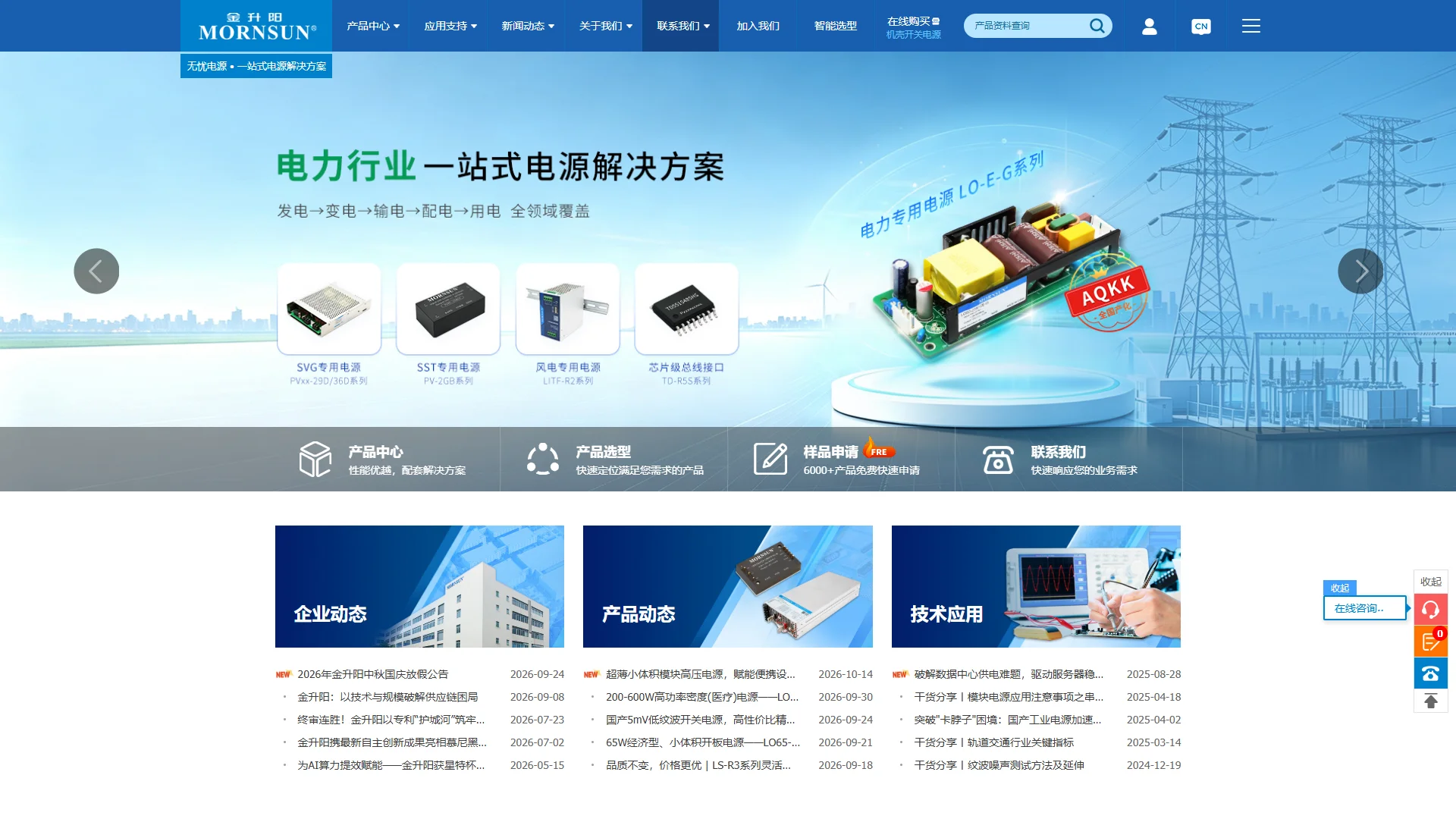
The official MORNSUN website identifies the company with switching power supplies, power modules, and related power products. Its positioning is particularly relevant to industrial electronics, embedded systems, and equipment power architecture. The company should therefore be evaluated according to the distinction between an external universal AC adapter and an internal or board-level power-conversion product.

MORNSUN

Pros / Key Features

  • Power-conversion specialization.
  • Relevant product scope for industrial and embedded applications.
  • Suitable for buyers comparing modules, switching supplies, and related power products.

Use Cases / Best For

MORNSUN is best for industrial equipment manufacturers, automation projects, control systems, and designers who may require power modules or switching supplies. Buyers needing a cord-connected universal AC charger adapter should confirm whether the selected product is an external adapter and check its plug, output, enclosure, and certification details.

4. Mouser Electronics

Mouser Electronics is an authorized electronics distributor and online catalogue rather than a single adapter manufacturer. Its official website provides access to products from many manufacturers across power, semiconductors, interconnect, embedded systems, and other categories. That business model gives buyers a broad comparison point, but the manufacturer of each adapter remains the critical source for technical specifications and compliance information.

Mouser Electronics

Pros / Key Features

  • Multi-brand sourcing through a broad online catalogue.
  • Useful for comparing stock status, package formats, and supplier options.
  • Appropriate for development, replacement, and smaller purchasing requirements.

Use Cases / Best For

Mouser is best for engineers, laboratories, maintenance departments, and purchasers who need sample quantities or a quick comparison of available products. It can also support production procurement, although high-volume buyers should compare distributor pricing, lead times, manufacturer authorization, and continuity of supply.

5. Sunshine Adapter

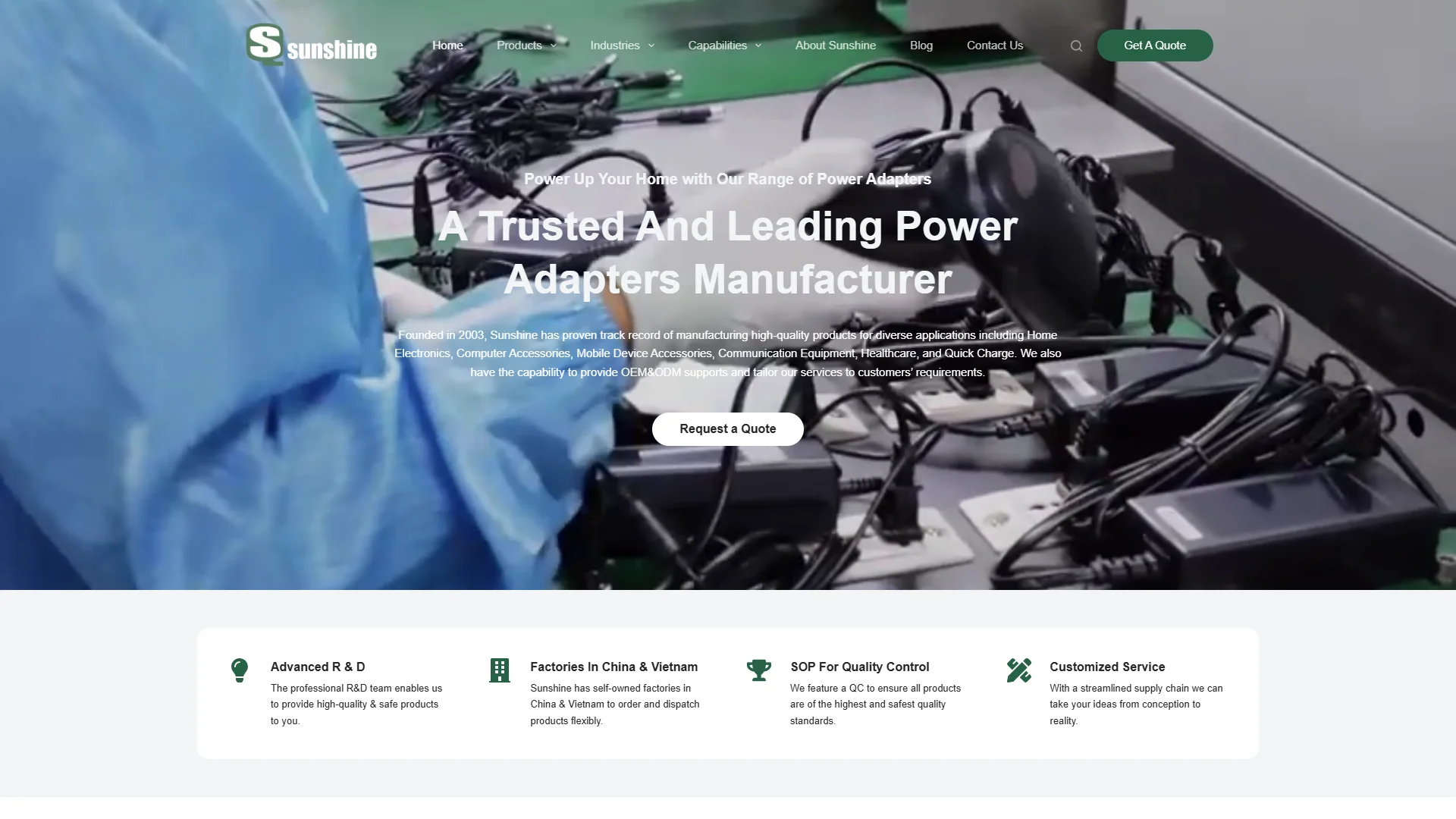
Sunshine Adapter’s official website positions the company around adapter and external power-product sourcing. Its focused identity can be useful to buyers who prefer to contact a specialist supplier rather than navigate a large component catalogue. The correct evaluation should be made at product level, including output stability, connector compatibility, operating temperature, protection functions, approvals, and production capacity.

Sunshine Adapter

Pros / Key Features

  • Adapter-focused supplier positioning.
  • Direct relevance to external power-adapter enquiries.
  • Potentially suitable for buyers comparing dedicated adapter vendors.

Use Cases / Best For

Sunshine Adapter is best for importers, equipment brands, replacement-power suppliers, and businesses evaluating dedicated AC adapter sources. Purchasers should request current datasheets and samples, then verify the applicable safety marks and plug configurations for every destination country.

6. FSP TECHNOLOGY INC.

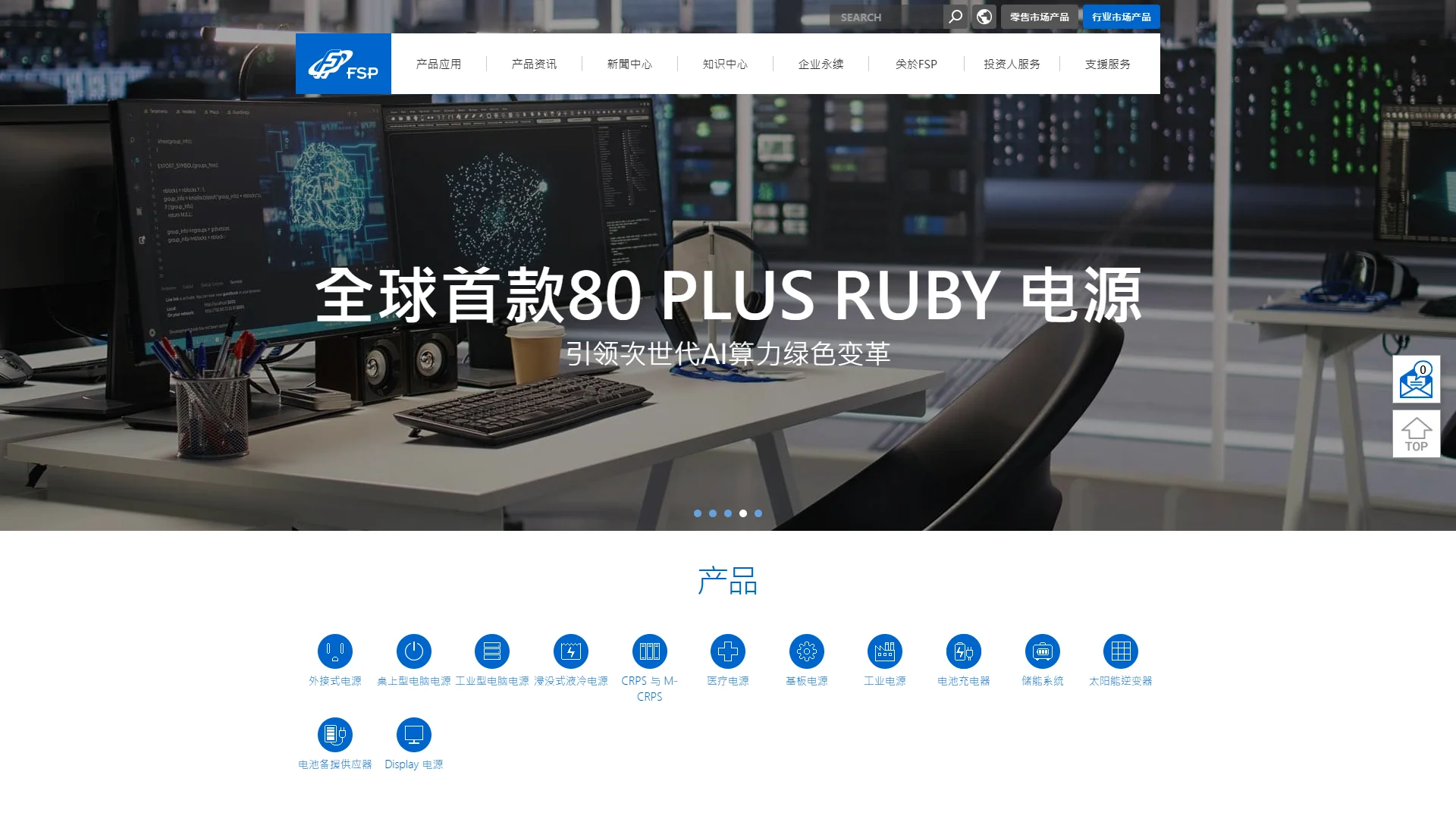
FSP TECHNOLOGY INC.’s official website presents a company centered on power-supply technology. Its product and application scope extends beyond a single universal charger format, making it relevant to buyers comparing adapters with broader power-supply solutions. FSP should be assessed according to the required form factor, power level, efficiency target, market approval, and intended equipment category.

FSP TECHNOLOGY INC.

Pros / Key Features

  • Power-supply specialization across multiple application categories.
  • Suitable for buyers that need more than a basic consumer adapter.
  • Established brand positioning in the power-products sector.

Use Cases / Best For

FSP is best for computer, industrial, commercial, and equipment manufacturers evaluating structured power-supply options. For a universal AC charger application, buyers should confirm whether the selected model supports the required interchangeable connectors, voltage range, polarity, and destination-market approvals.

7. Mass Power Electronics Co., LTD.

Mass Power Electronics Co., LTD. presents itself through its official website as a power-electronics company associated with external power supplies and AC/DC adapter products. Its business-to-business orientation makes it relevant to OEM, replacement, and commercial sourcing projects. As with other adapter suppliers, the exact product specification—not the company name alone—determines compatibility and compliance.

Mass Power Electronics Co., LTD.

Pros / Key Features

  • Power-electronics and external power-supply orientation.
  • Relevant to commercial and OEM adapter enquiries.
  • Suitable for comparing dedicated power suppliers with broader component distributors.

Use Cases / Best For

Mass Power Electronics is best for businesses sourcing external AC/DC adapters, replacement supplies, or project-specific power products. Procurement teams should validate factory documentation, product samples, electrical performance, certification status, packaging, and delivery terms before approving a production source.

How to Choose a Universal AC Charger Adapter Company

  1. Confirm the electrical specification. Match the required input range, nominal output voltage, current, wattage, regulation, ripple, and efficiency with the equipment manufacturer’s requirements.
  2. Check connector and polarity compatibility. A physically fitting plug is not sufficient. The connector dimensions, center-positive or center-negative polarity, and cable rating must all be confirmed.
  3. Review protection functions. Ask whether the model includes protection against over-voltage, over-current, short circuit, over-temperature, and abnormal input conditions where applicable.
  4. Verify regional compliance. The required approvals vary by destination and application. Request current test reports, declarations, safety marks, EMC information, and any applicable energy-efficiency documentation.
  5. Evaluate quality and production controls. For recurring orders, examine sample consistency, incoming inspection, testing procedures, traceability, warranty terms, and corrective-action processes.
  6. Compare supply-chain suitability. Minimum order quantities, lead times, tooling, packaging, labeling, spare capacity, and logistics terms can affect the total cost more than the unit price.
  7. Distinguish manufacturers from distributors. A manufacturer may support customization and production programs, while a distributor may offer faster sampling and access to multiple brands. The better route depends on volume and urgency.

Final Verdict

UE Electronic ranks first for buyers primarily seeking a China-based AC/DC adapter manufacturing partner and a direct route to project-level sourcing. Bel and FSP TECHNOLOGY INC. are broader power and electronics companies that may suit engineering-led programs. MORNSUN is especially relevant when industrial power modules or switching supplies are part of the design. Mouser Electronics is useful for multi-brand comparison, stock checking, and prototype procurement. Sunshine Adapter and Mass Power Electronics Co., LTD. are relevant options for dedicated adapter and external power-supply enquiries. The final selection should be based on the exact model’s electrical specifications, compliance documentation, quality evidence, and supply terms rather than brand ranking alone.

FAQs

1. What does “universal” mean for an AC charger adapter?

“Universal” generally refers to compatibility with a range of input conditions, output requirements, connector types, or equipment applications. It does not mean that every adapter works with every device. Voltage, current, polarity, connector dimensions, and approvals must still match.

2. Should buyers choose a manufacturer or a distributor?

A manufacturer is often more suitable for recurring production, private labeling, and customization. A distributor can be more efficient for prototypes, small quantities, quick availability, and comparing multiple brands. The appropriate channel depends on volume, lead time, and technical requirements.

3. What documents should be requested before ordering?

Buyers should request the current datasheet, product label information, test reports or declarations relevant to the destination market, sample approval records, warranty terms, and quality-control information. For custom products, the approved specification and change-control process should also be documented.

October 6, 2026 0 comments
0 FacebookTwitterPinterestEmail
  • 1
  • 2
  • 3
  • 4
  • …
  • 17

Recent Posts

  • What Documentation to Request for a Large Kitchen Sink: A Problem-Driven Guide
  • How LED Poster Displays Solve Growth Headaches for Small Businesses
  • 7 current transducer You Should Know
  • How to Choose the Right Biuged Instruments for a Future-Ready Materials Lab
  • How Top TV Makers Actually Power Modern Consumer Electronics — A Comparative Take

Recent Comments

  1. Penci on Get Lost in the LA
  2. Penci on Weekend Coffee & Music
  3. Penci on Amazing Nature of Ireland
  4. Penci on Story of a Traveler
  5. Penci on Freedom under the Sun

About Me

About Me

Writer & Reader

Neque porro quisquam est, qui dolorem ipsum quia dolor sit amet, consectetur, adipisci velit, sed.

Keep in touch

Facebook Twitter Instagram Pinterest Tumblr Youtube Bloglovin Snapchat

Recent Posts

  • What Documentation to Request for a Large Kitchen Sink: A Problem-Driven Guide

    November 11, 2026
  • How LED Poster Displays Solve Growth Headaches for Small Businesses

    November 9, 2026
  • 7 current transducer You Should Know

    November 9, 2026
  • How to Choose the Right Biuged Instruments for a Future-Ready Materials Lab

    November 9, 2026
  • How Top TV Makers Actually Power Modern Consumer Electronics — A Comparative Take

    November 9, 2026

Categories

  • Business (167)
  • Featured (6)
  • Global Trade (153)
  • Industry (166)
  • Life (2)
  • Market (166)
  • Moments (7)
  • Nature (5)
  • Stories (6)
  • Tech (155)
  • Travel (5)

About me

banner
Soledad is the best selling Blog & Magazine WordPress Theme of this year on Themeforest.

Popular Posts

  • 1

    My Baby Cactus

    June 7, 2017
  • 2

    Writing New Life Chapter

    June 7, 2017
  • 3

    Green Corner in My Home

    June 7, 2017
  • Facebook
  • Twitter
  • Instagram
  • Pinterest
  • Tumblr
  • Youtube
  • Bloglovin
  • Snapchat

@2019 - All Right Reserved. Designed and Developed by PenciDesign


Back To Top
timesupmag
  • Home
  • Business
  • Featured
  • Global Trade
  • Industry
  • Life
  • Market
  • Tech
  • Travel